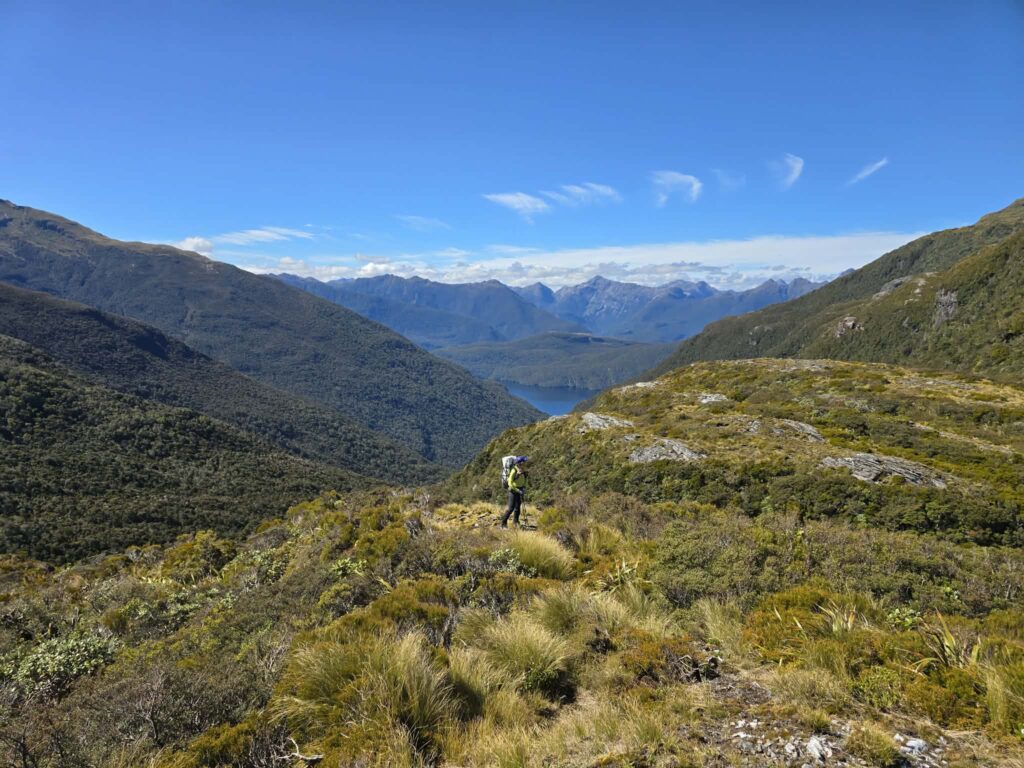
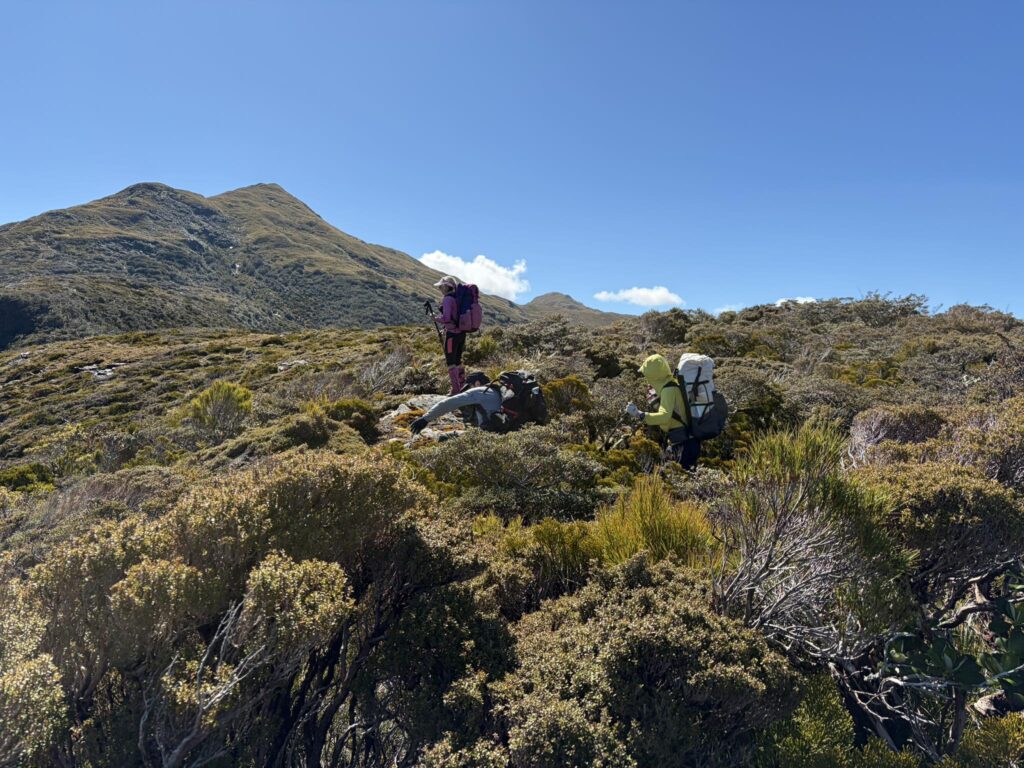
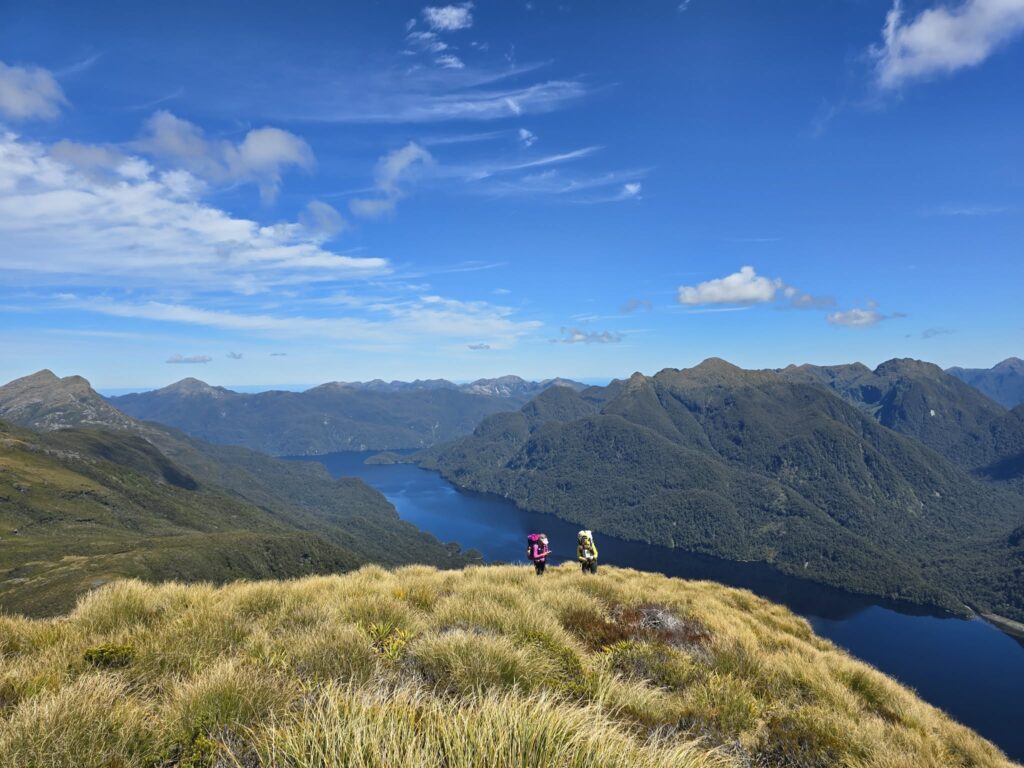
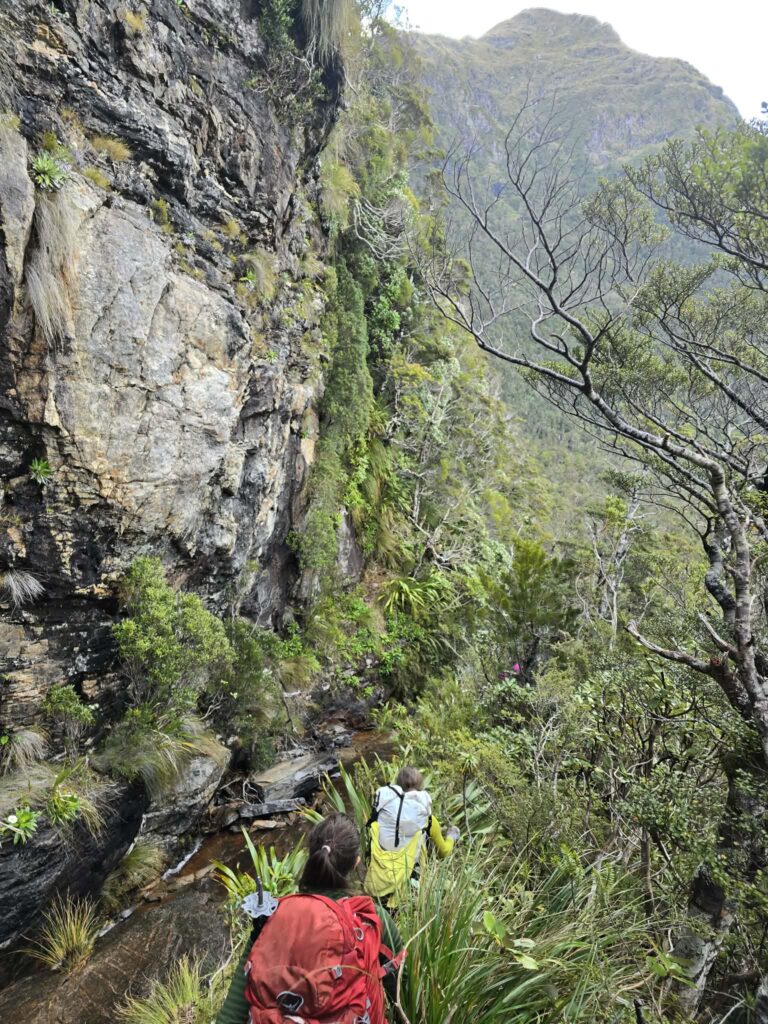
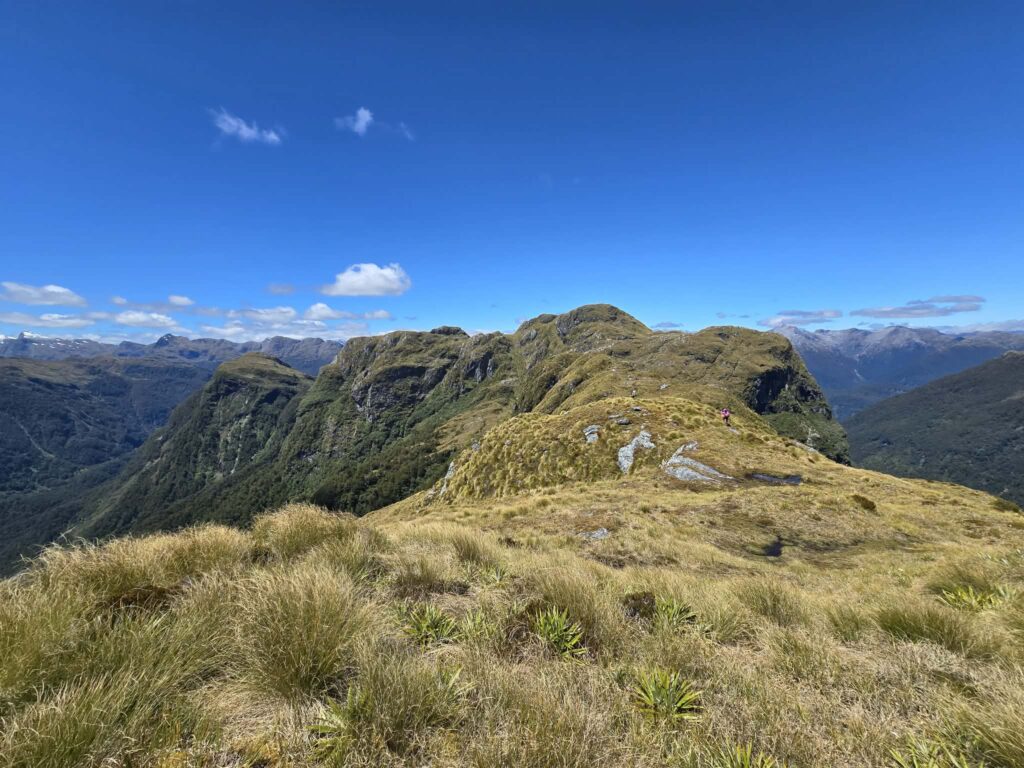
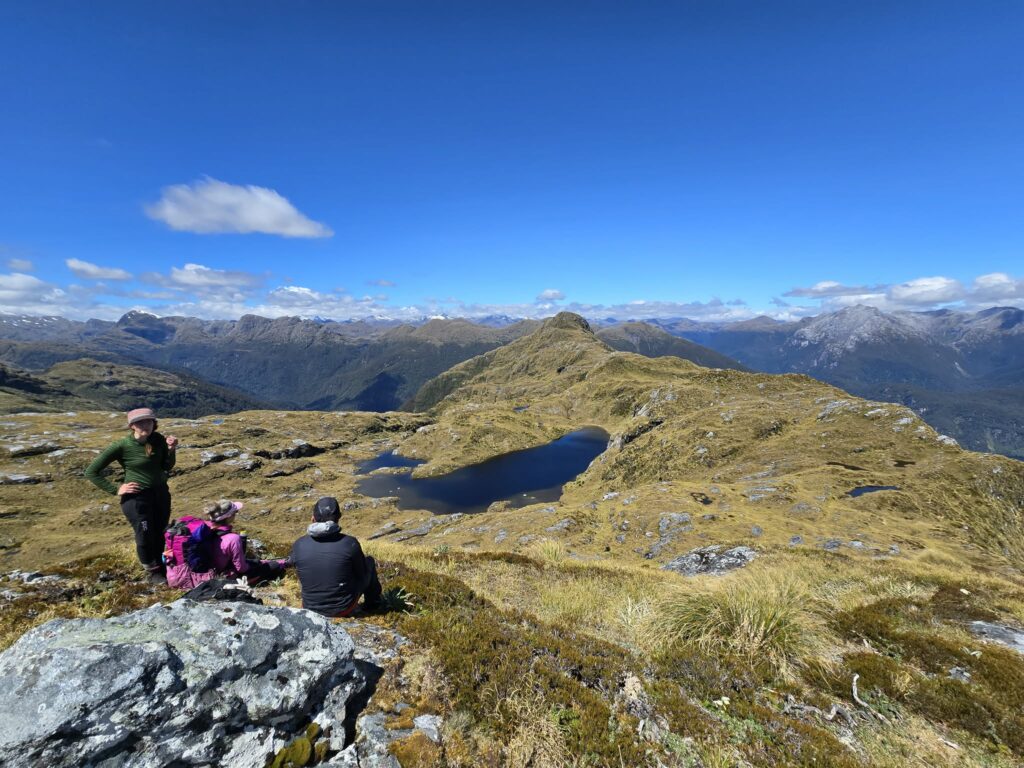
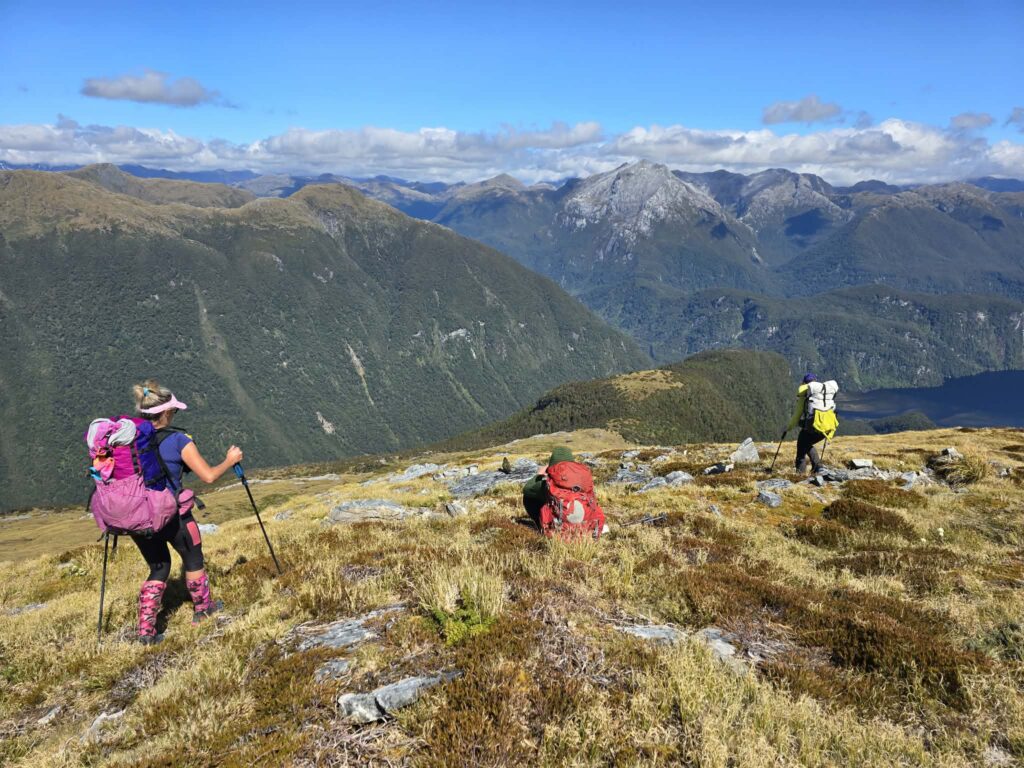
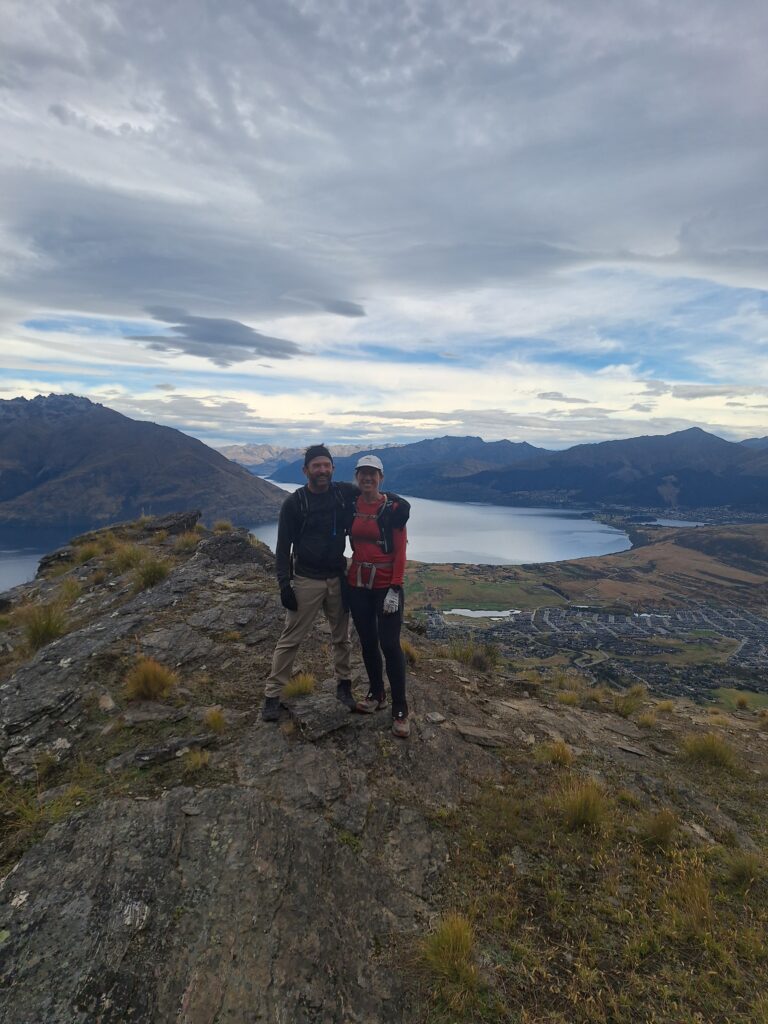
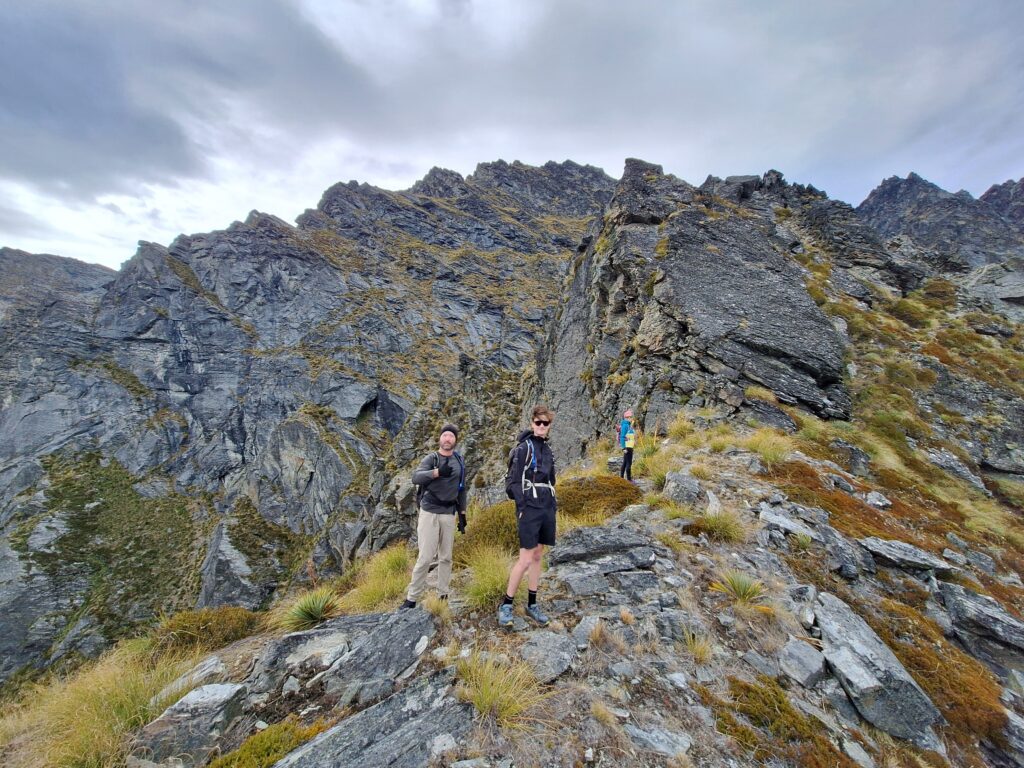
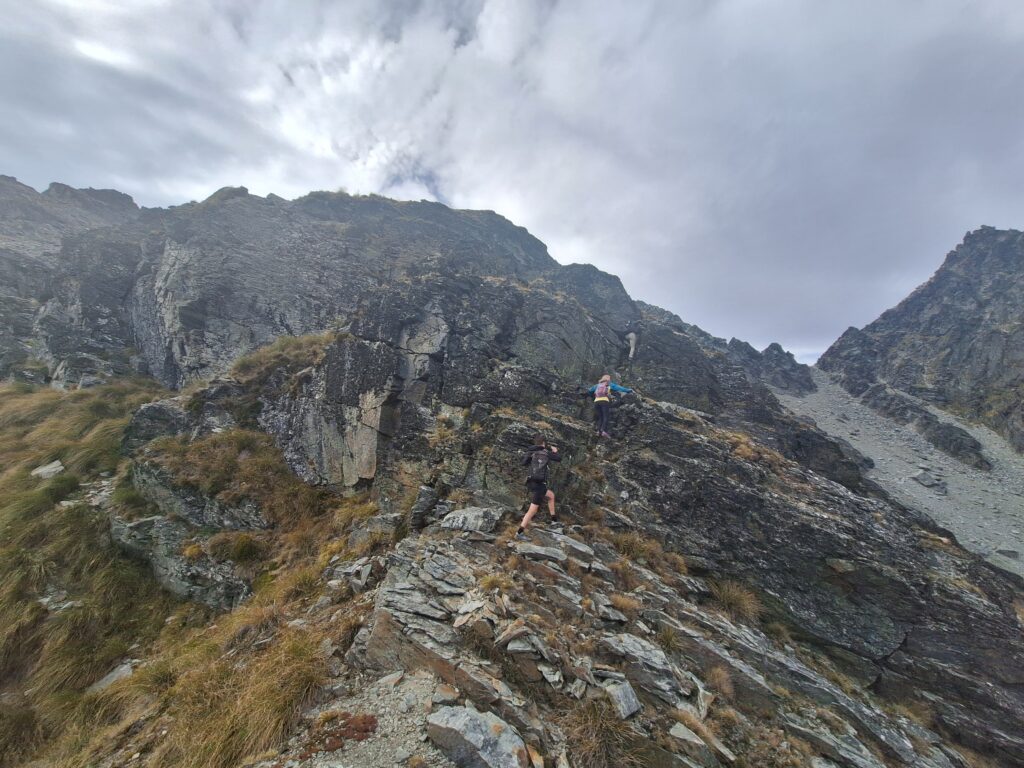
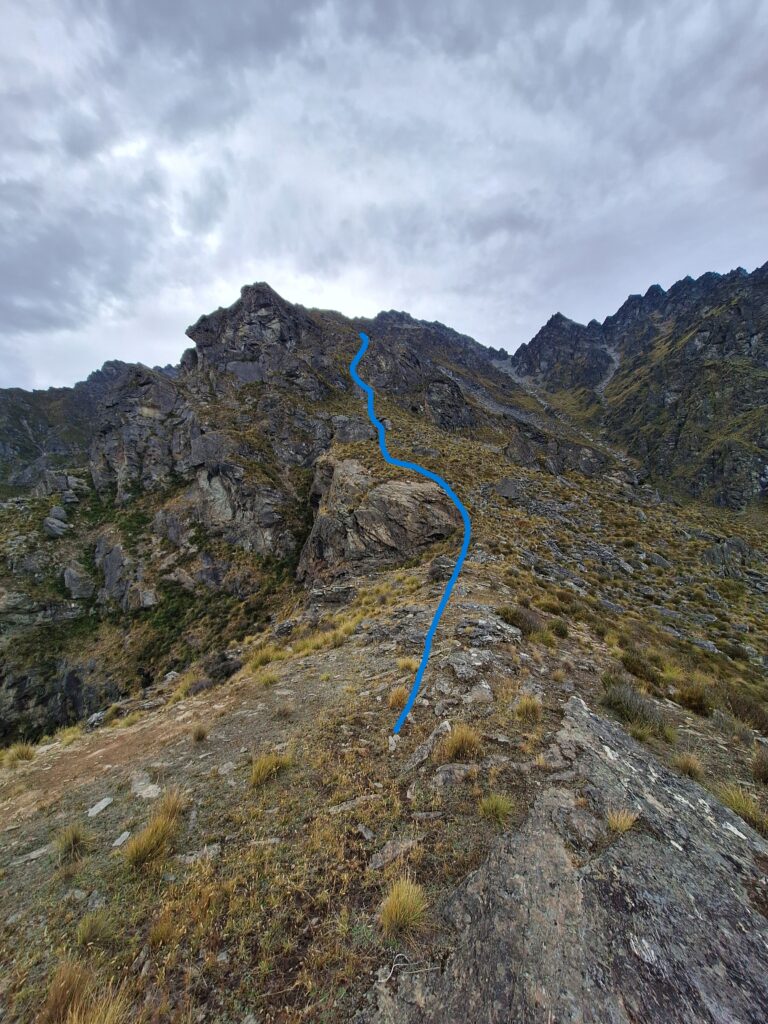
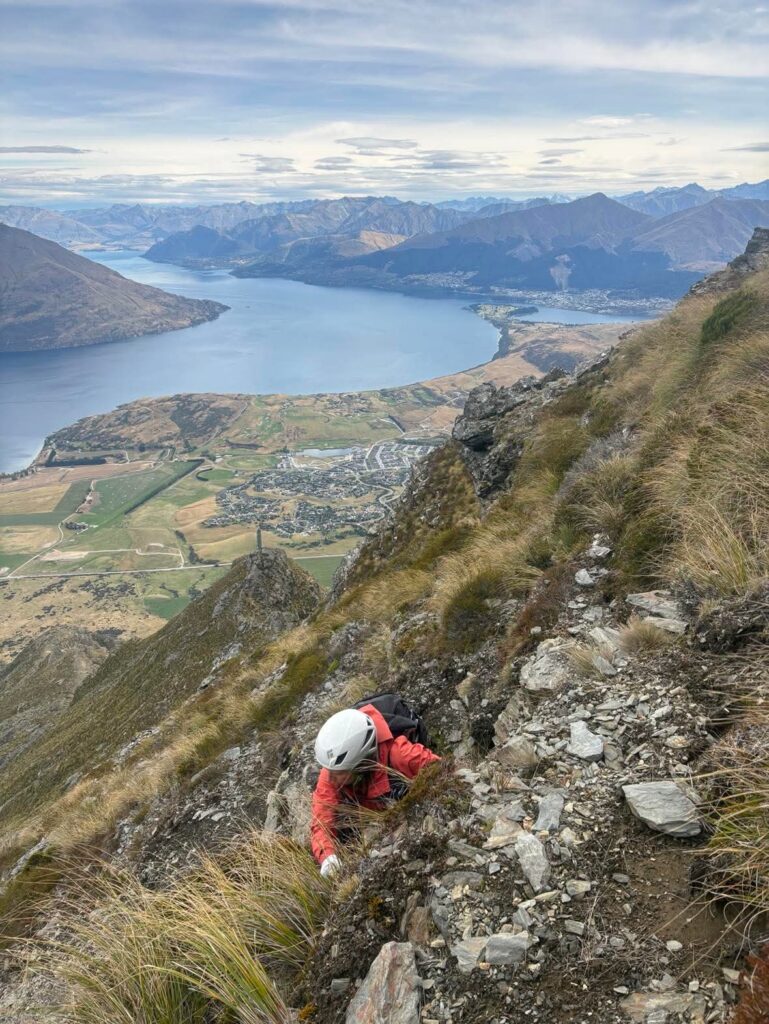
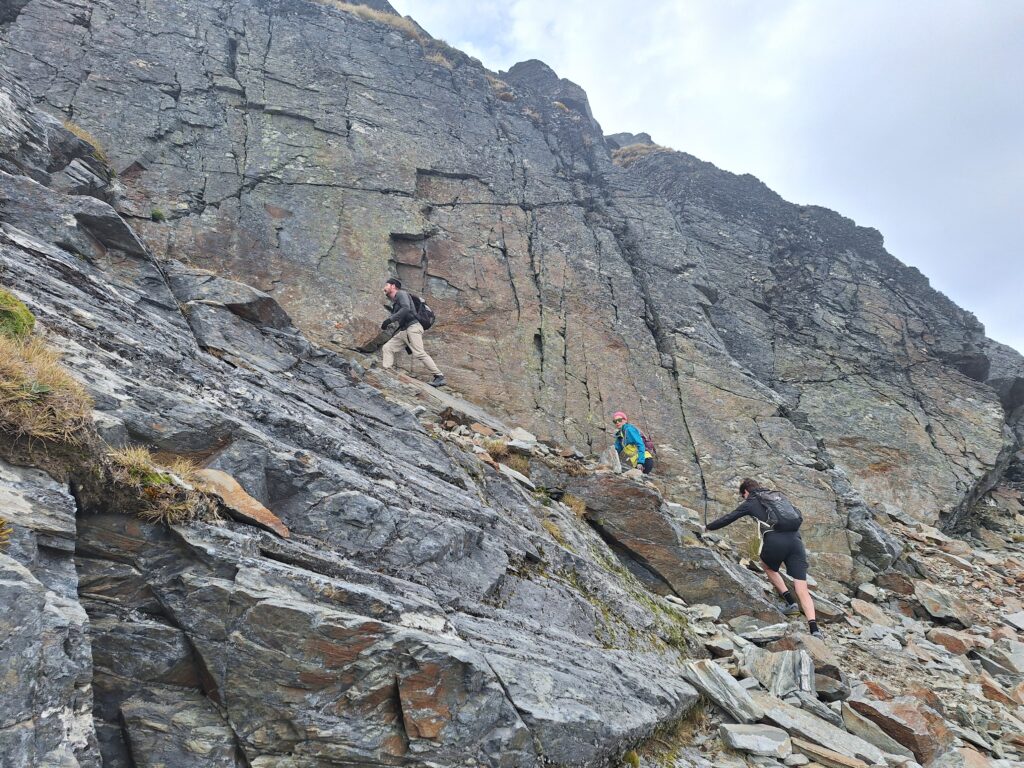
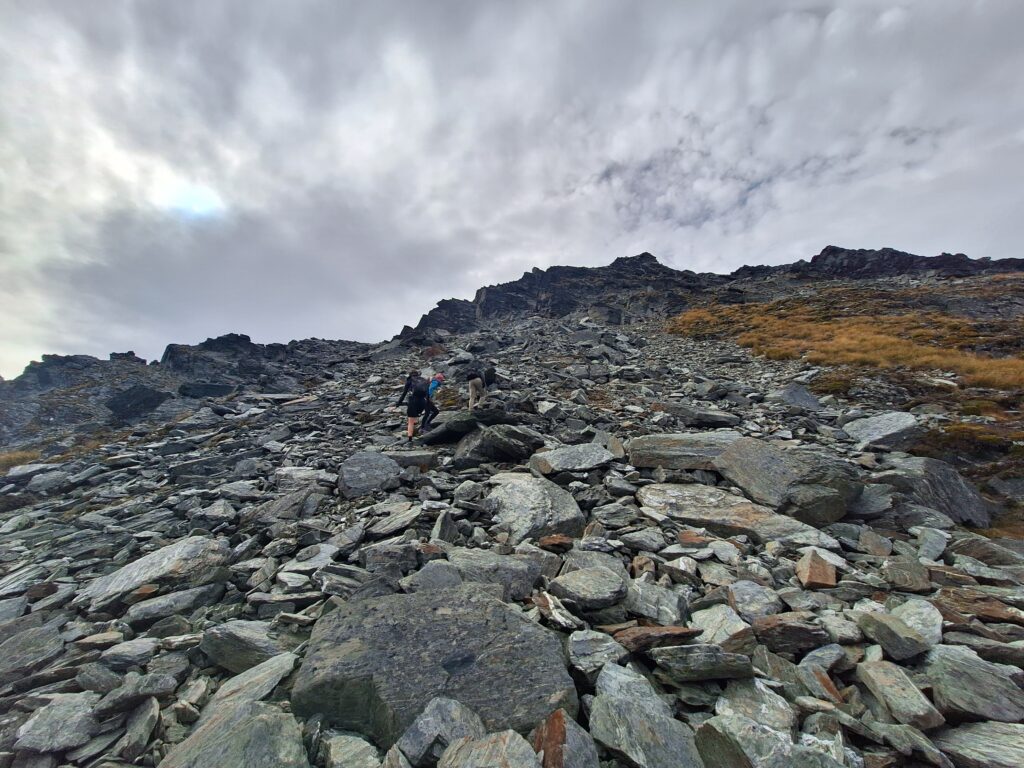
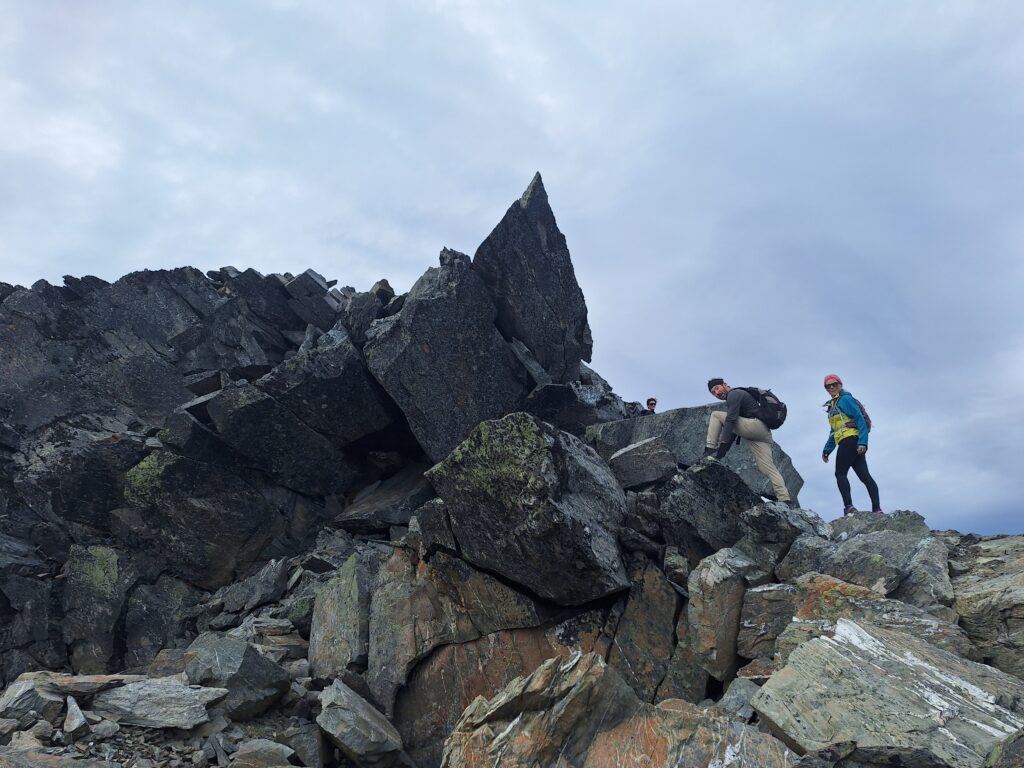
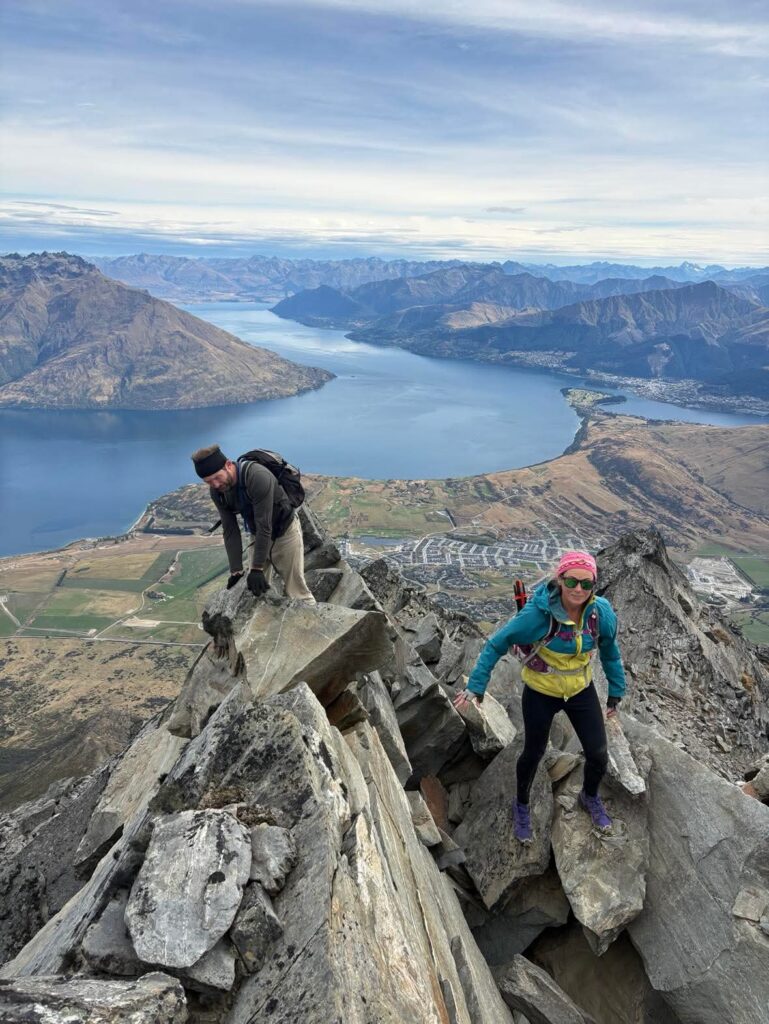
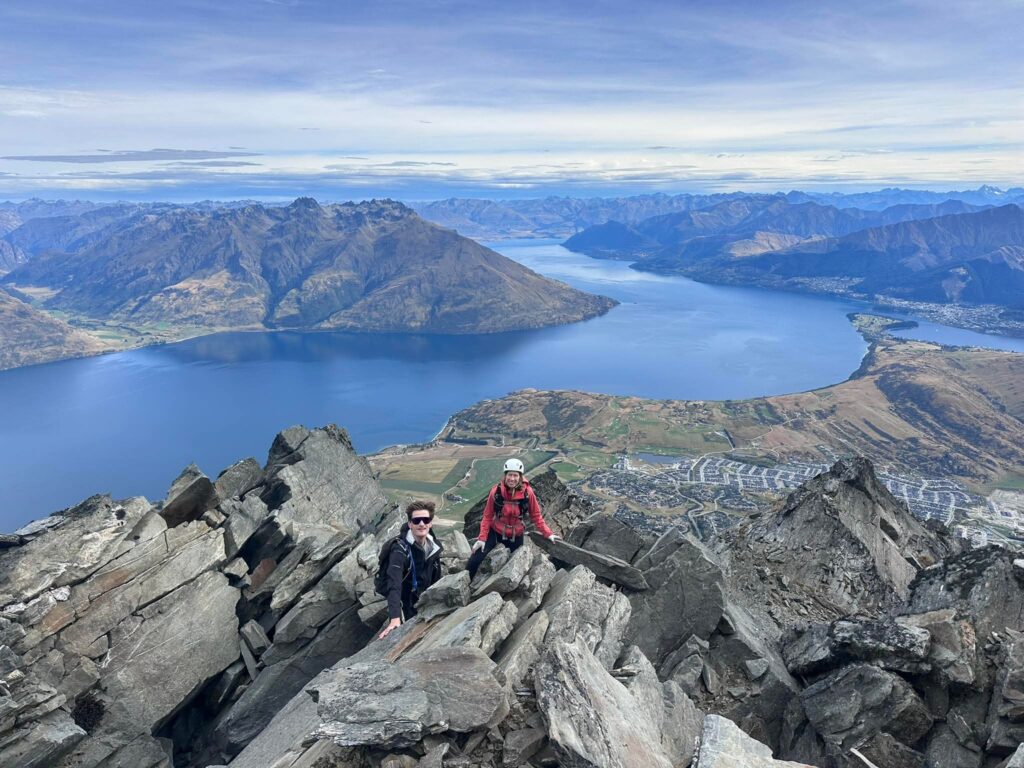
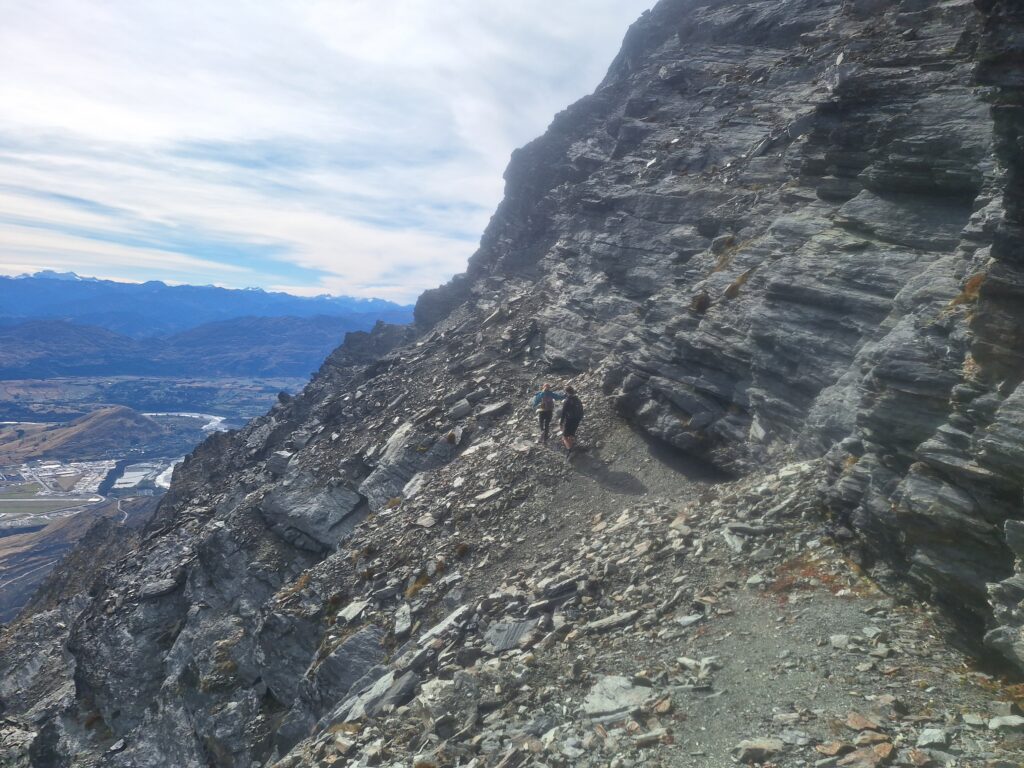
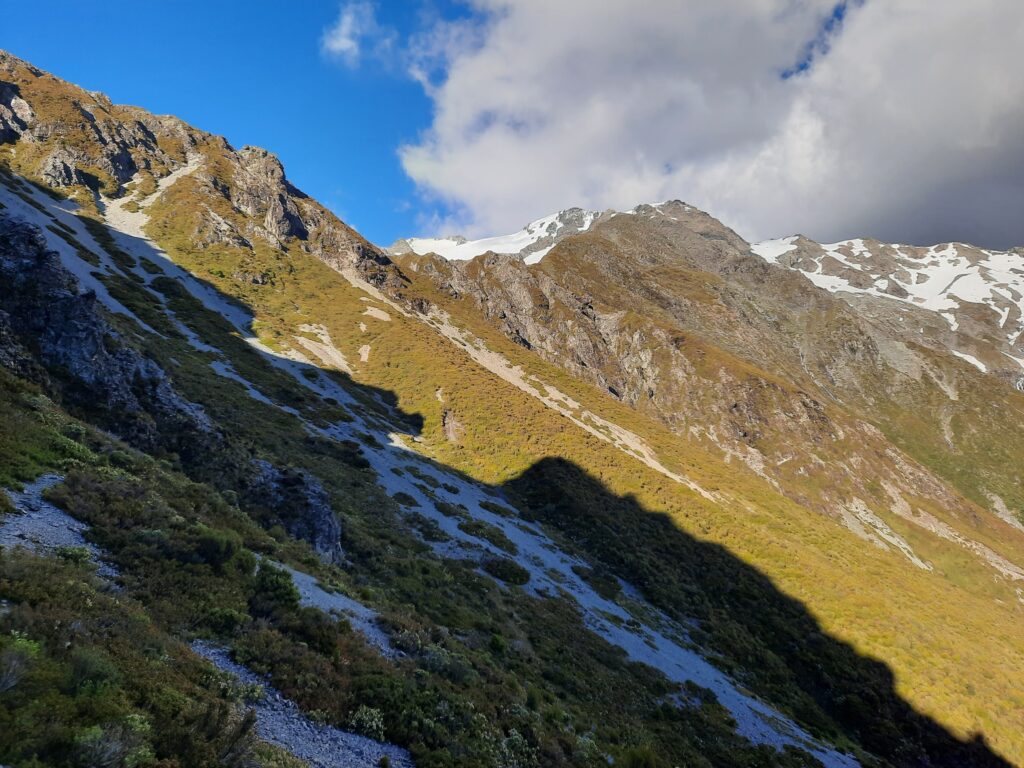
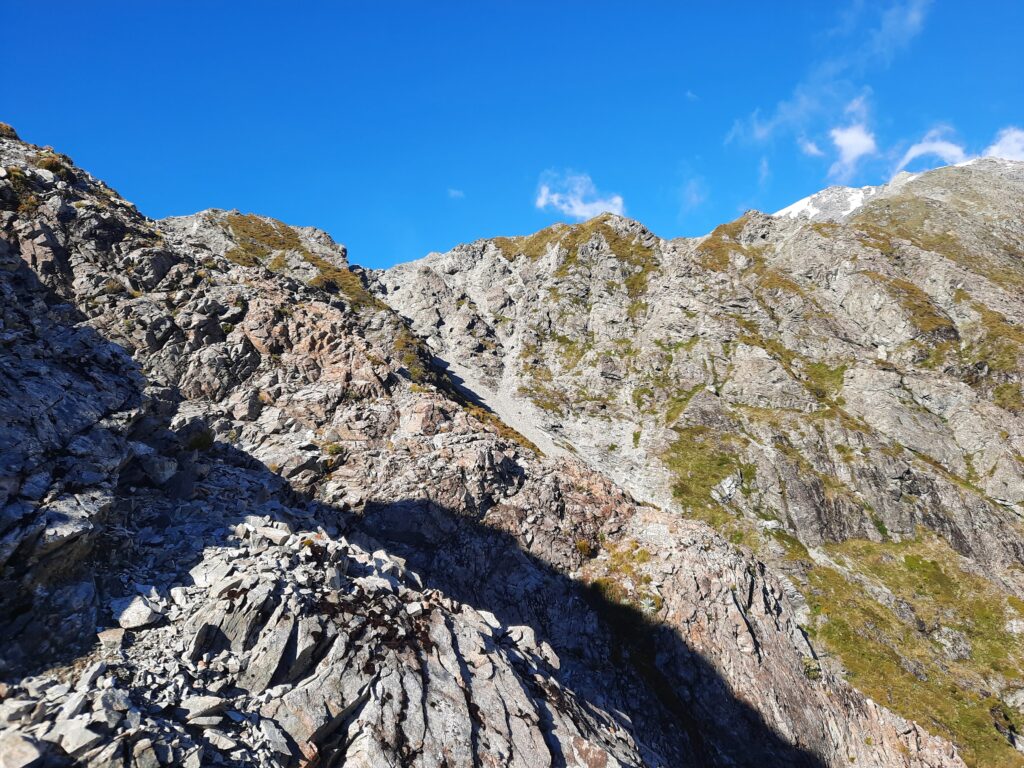
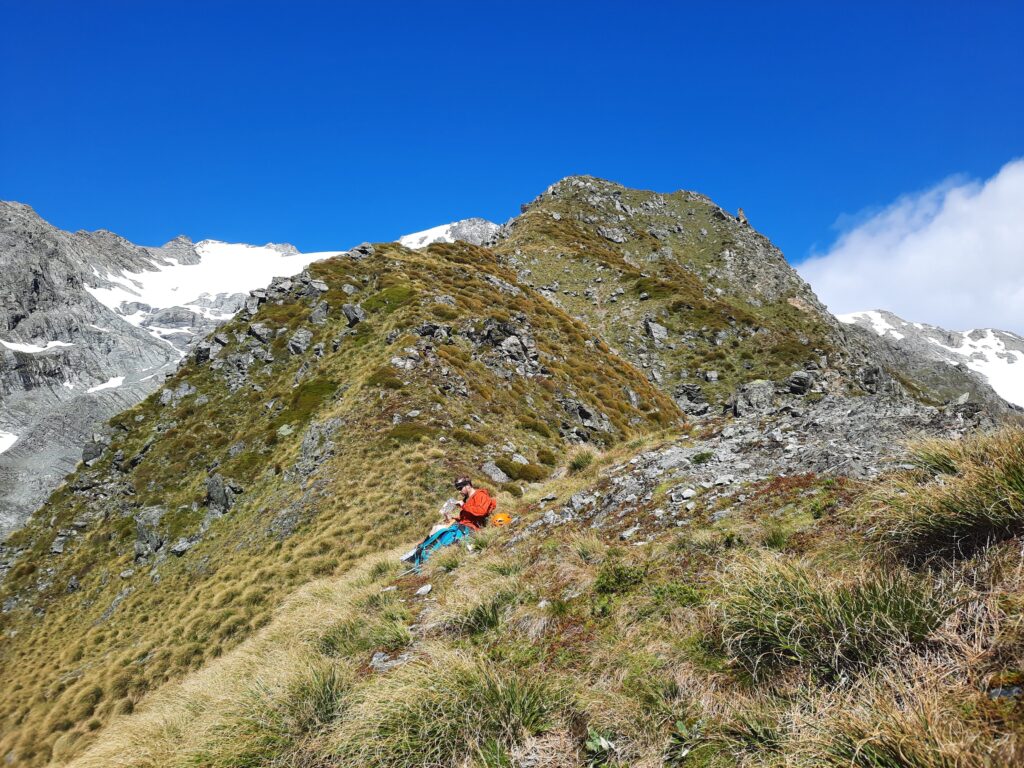
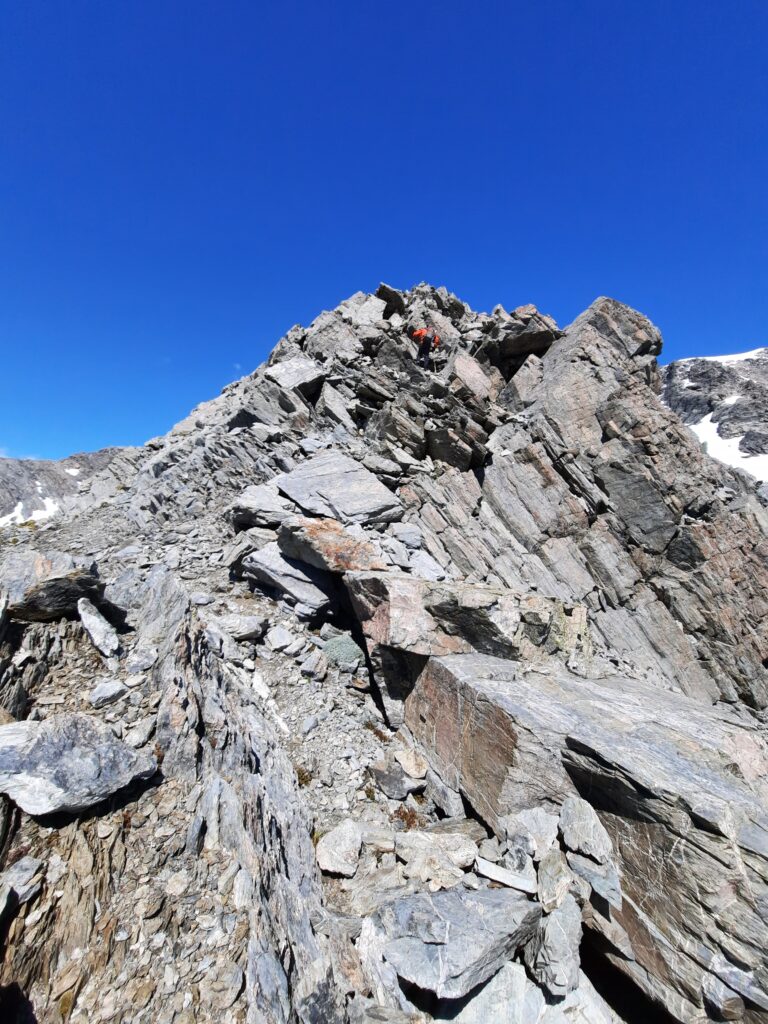
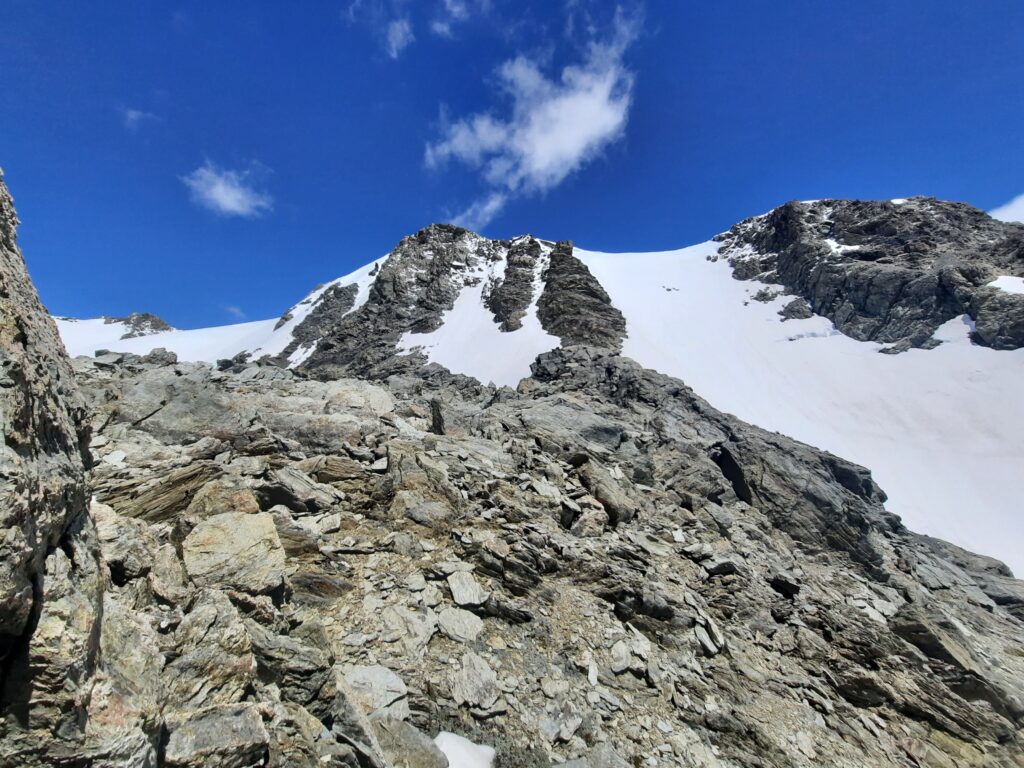
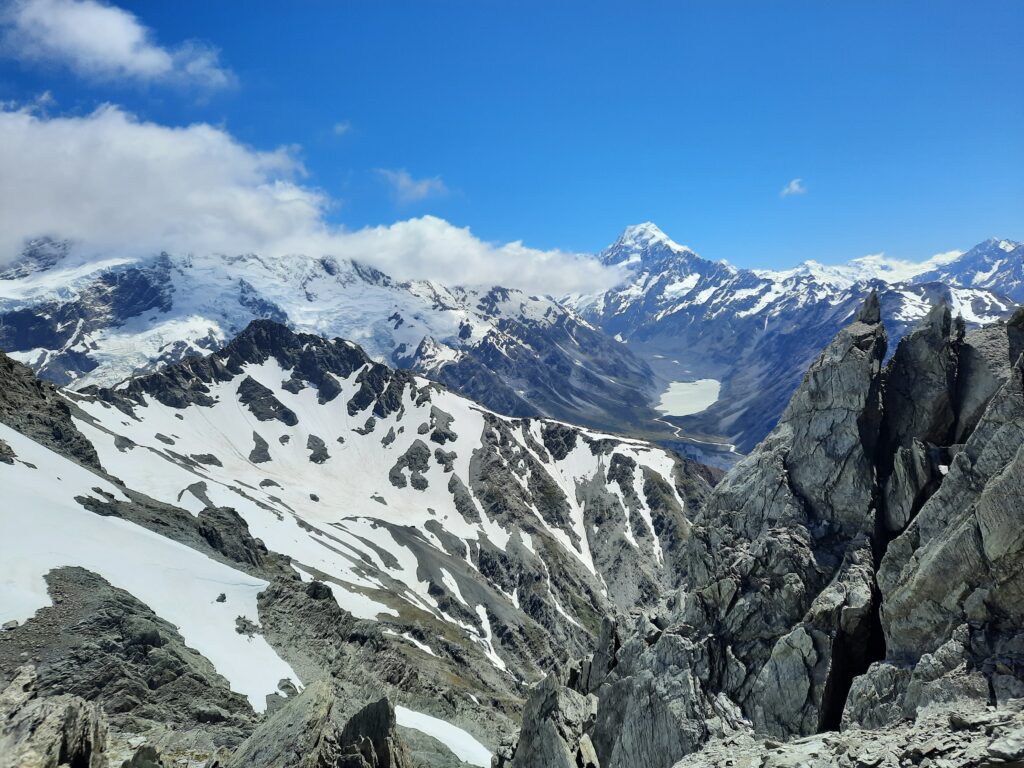
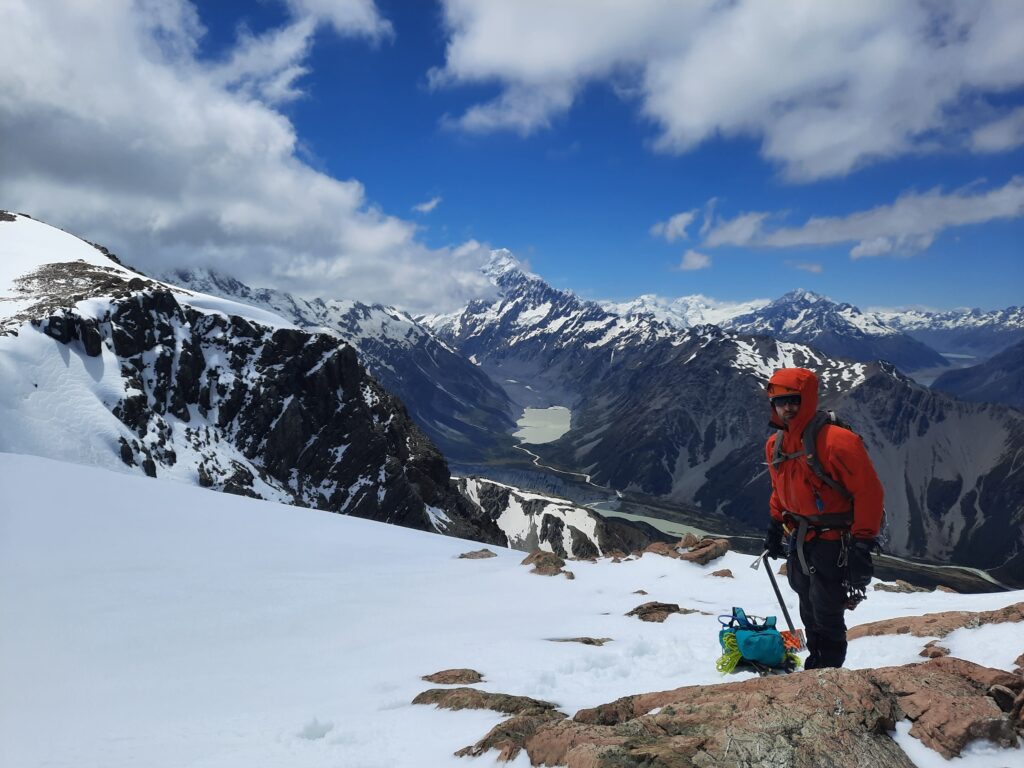
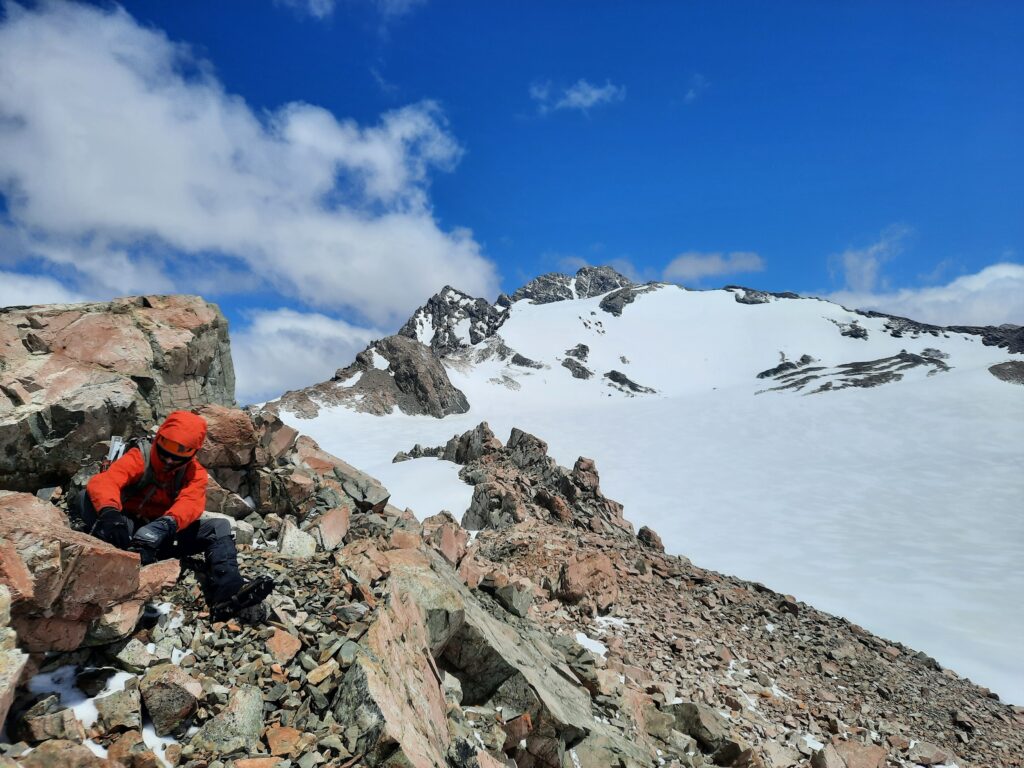
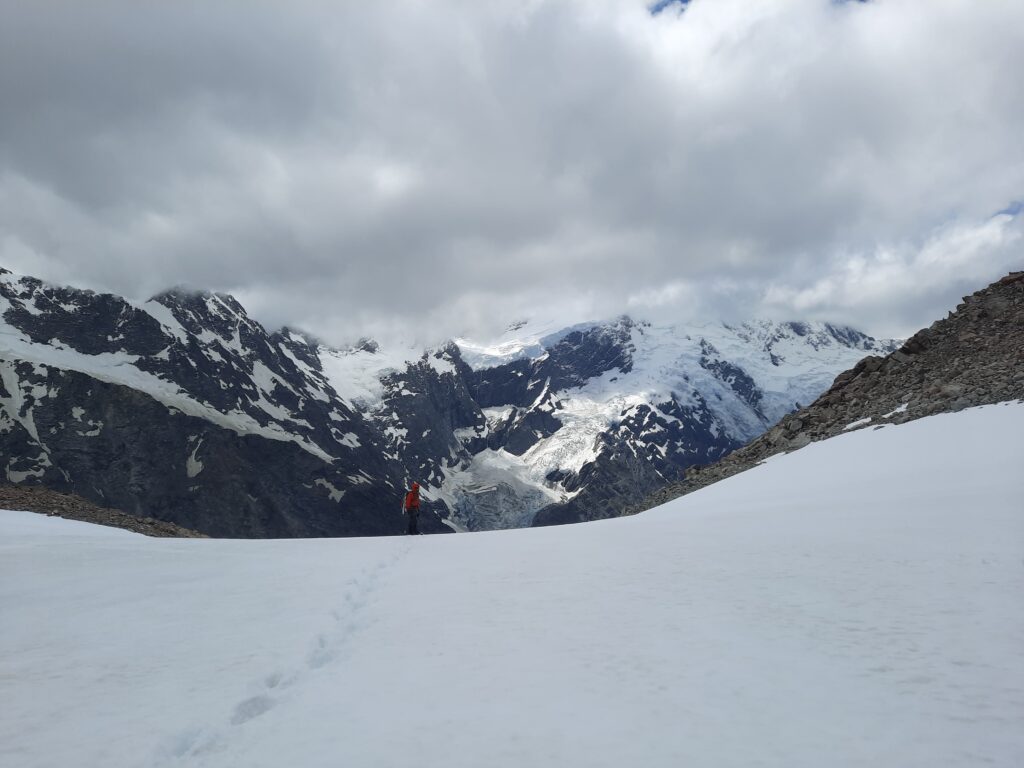
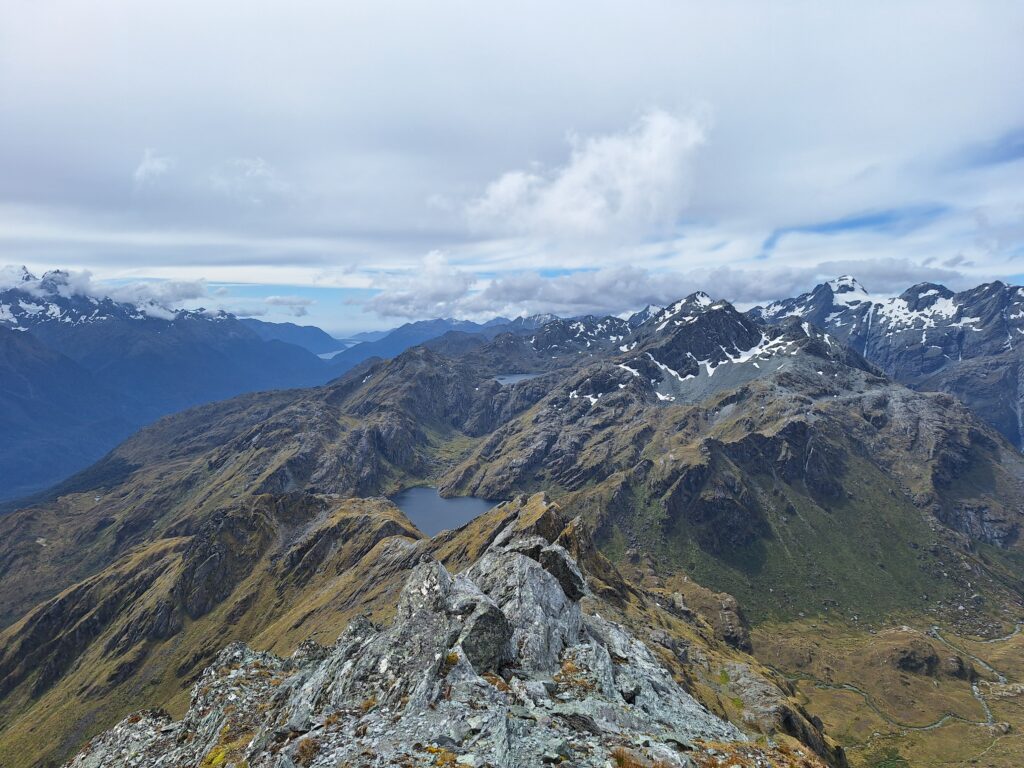
An accessible, non-technical and very scenic day hike. Around 1,400m of climbing, and around 6-7kms each way. There are many scenic locations to break or use as a turnaround point if you don’t want to go all the way to Mt Wakefield. There isn’t water up here – so take what you need with you.
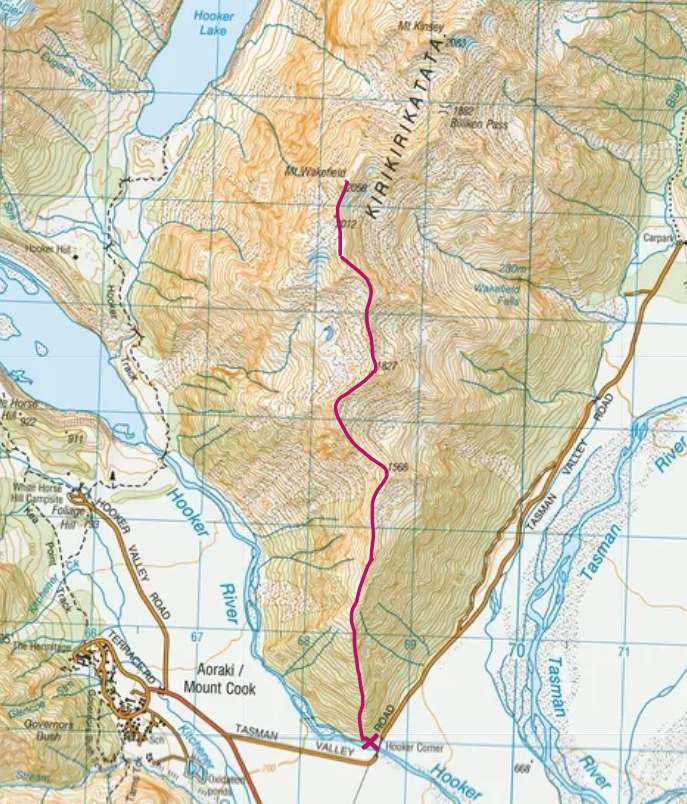
Begin by parking on the north side of the Hooker River just across the Tasman Valley Road bridge (see below). Find an obvious track in the bush next to a small parking area here to begin.
Topo of our route
The navigation is simple – basically follow the ridge and obvious track all the way! Below are a small collection of photos just to highlight the nature of the terrain, and amazing views. A highly recommended day hike.
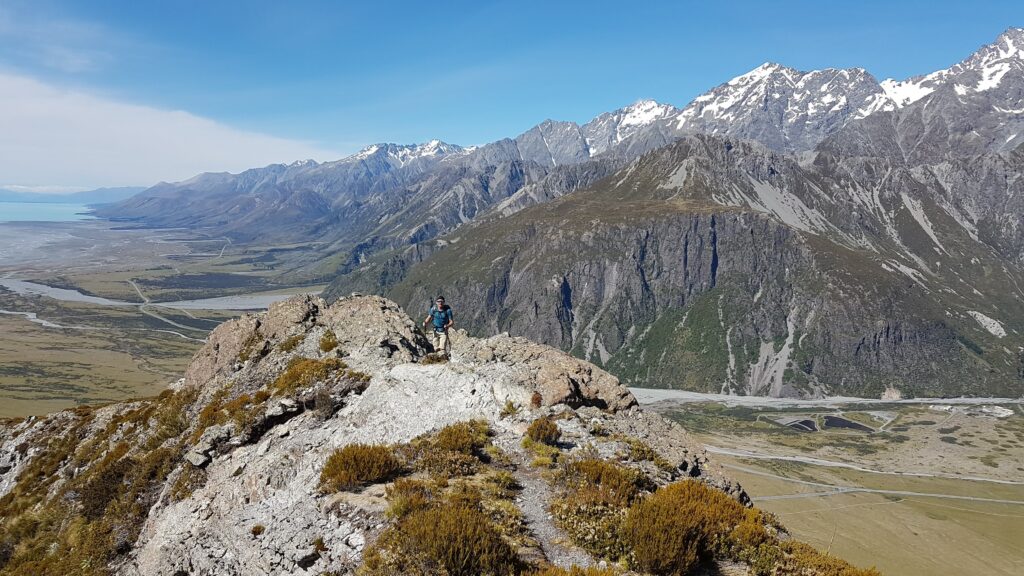
Making our way up the ridge with Sebastopol ridge in the background
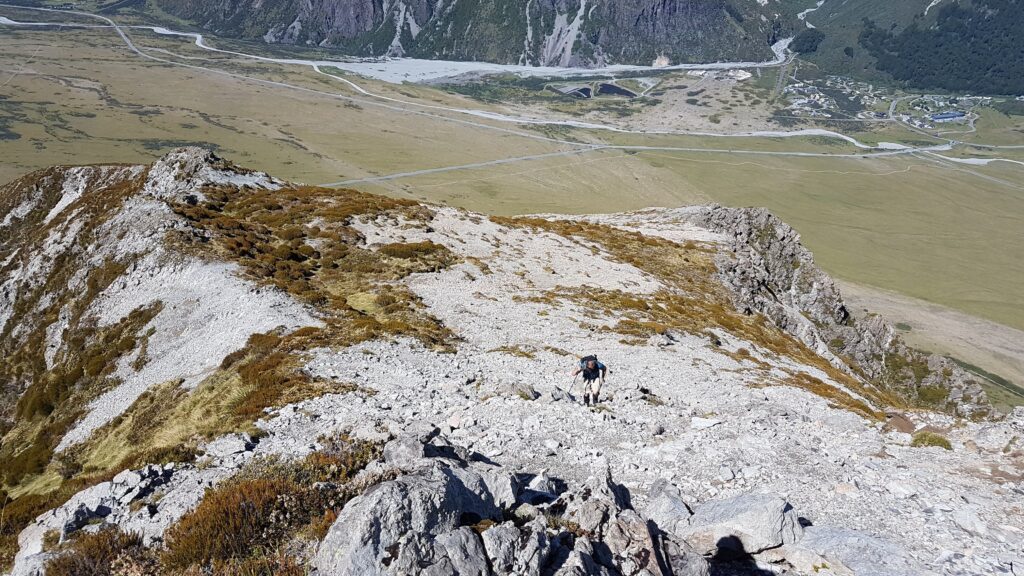
More climbing with Mount Cook village in the backdrop
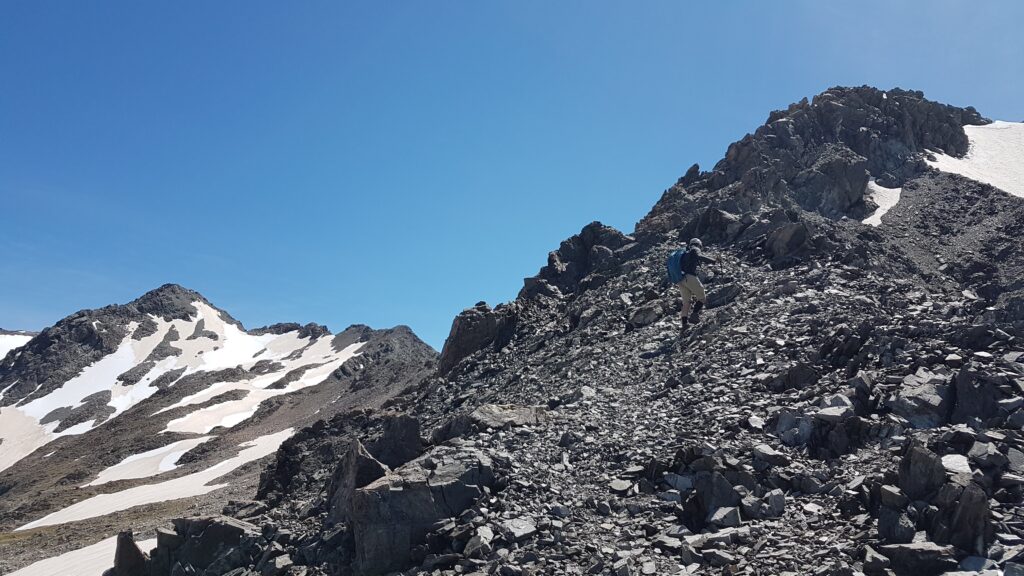
Climbing a little higher on the ridge
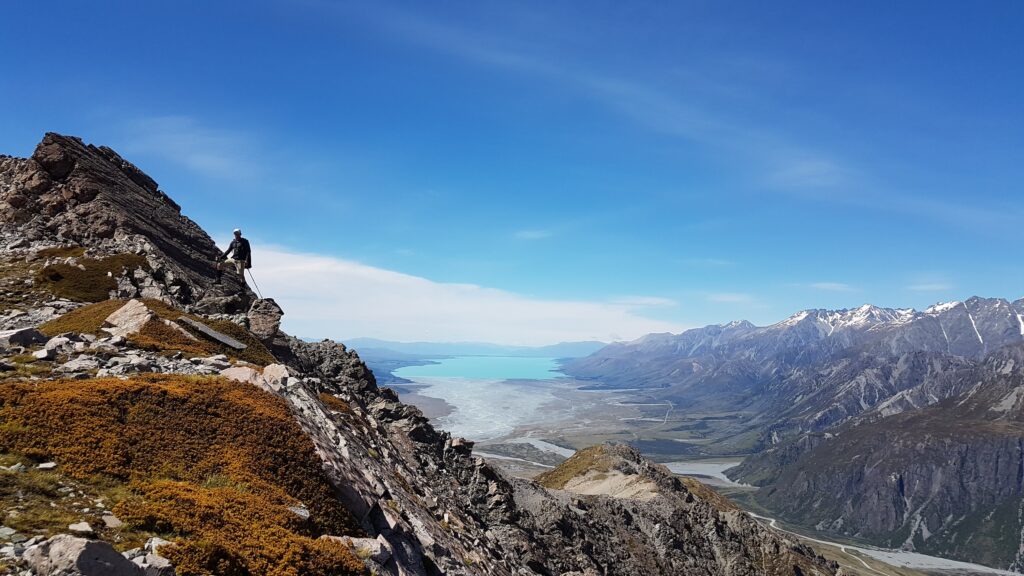
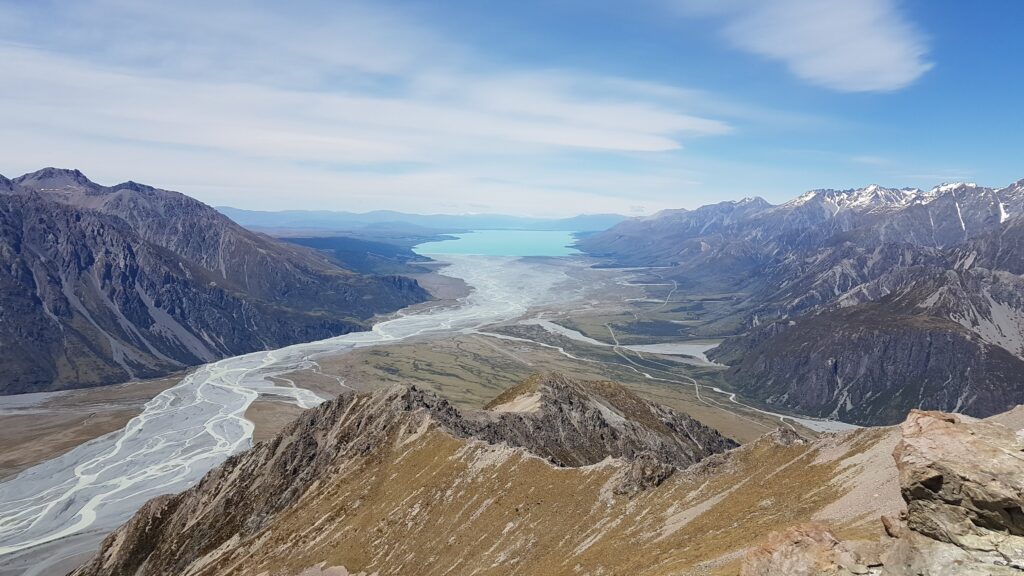
Beautiful views back to Lake Pūkaki, with a good view of the ridge to walk
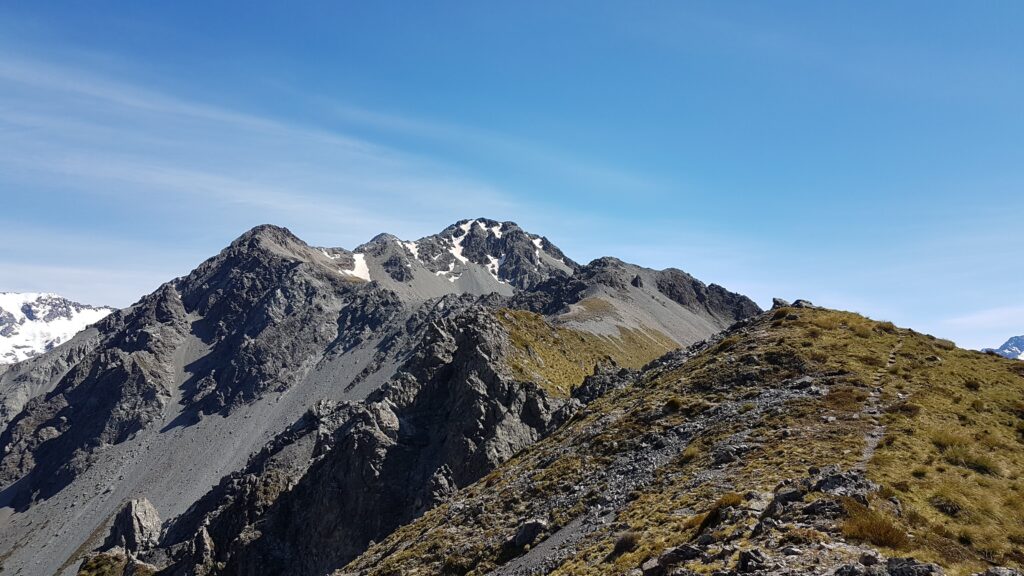
Looking ahead on the climb
Climbing, not far from Mount Wakefield
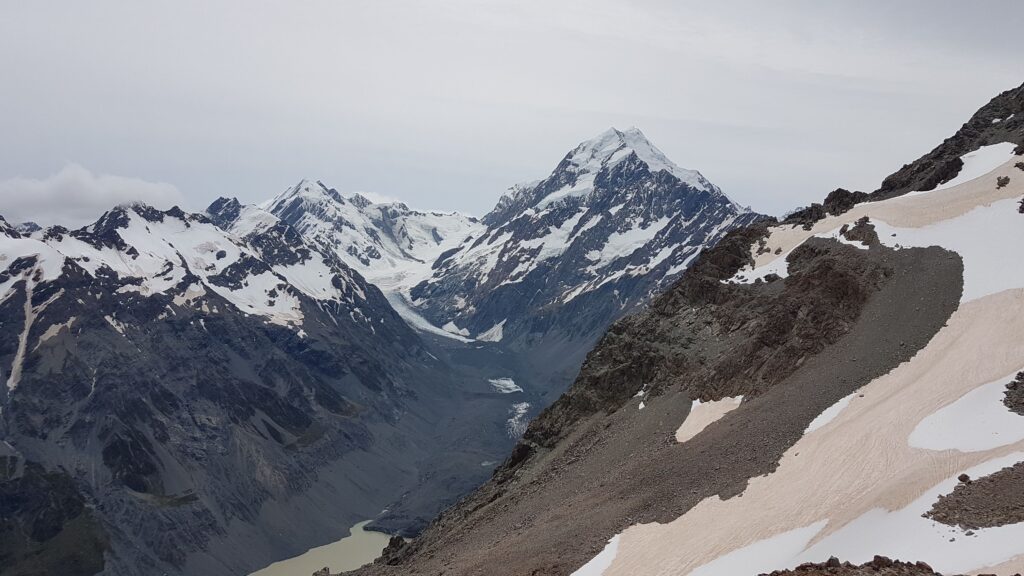
Dropping West from Mount Wakefield a little you see Mount Cook
View to Mount Sefton from the top of Mount Wakefield
If you want to try something utterly unique and extremely remote – read on for this edition of ‘Dart of destiny – Fiordland edition’. A fly in – fly out, 3 day / 2 night mission on a remote mainland peninsula between Wet Jacket Arm and Dusky Sound.
First – what is the ‘Dart of destiny’ concept? Basically, it was a random idea for a friend and I to create a unique mission in one of the best outdoor locations in NZ – Fiordland national park.
The concept was to each throw a dart at a map of Fiordland, pick between the two, helicopter into that location, and make our way out.
Details below on the selected mission outcome. Disclosure – the trip outlined here represents an adjusted exit from our intention at the time of the heli-drop due to potentially impassable sections later in the trip (spotted via heli), much slower than expected bush travel time (driven by navigating bluffs), and the consequential likely situation of running out of food.
Anyhow, heaps of good learnings – read on to get inspired for a create-your-own-adventure type mission!
Mission scoping and throwing the dart
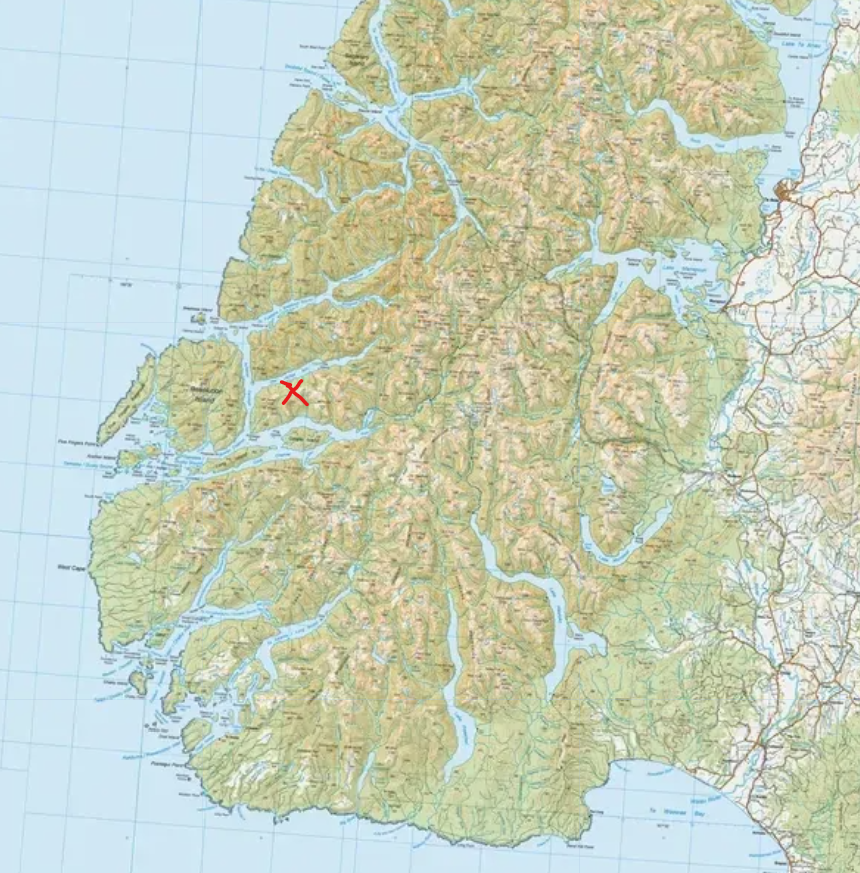
With a large map of Fiordland printed out, and some basic principles agreed (our choice of a dart-throw-each, and ideally a 4+ day mission for the logistics effort), we threw our darts and the selected location is shown by the red ‘x’ on the topo map below. Now it was time to figure out how we would get out…..
The red cross marks where our chosen dart landed
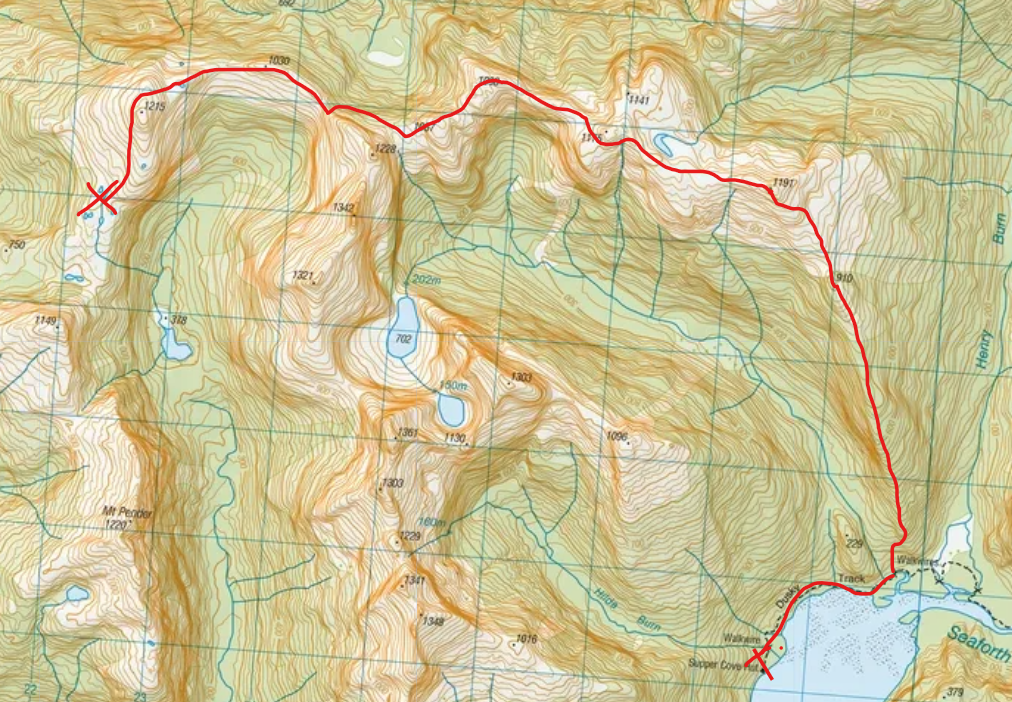
Our way out from our heli-drop ‘x’ location included a hike over some tops (with some committing choices along the way), and a float plane out from Supper Cove Hut, Dusky Sound. See the topo of our route below.
Our full topo line: helidrop at the left ‘x’, camp spot at the middle ‘x’, and second night at Supper Cove Hut
Some last minute recruitment saw 2 others join our party and I’m quite sure all involved found it one of the most adventurous and unique outdoor missions any of us had done in a while!
Day 1 – Dart of Destiny
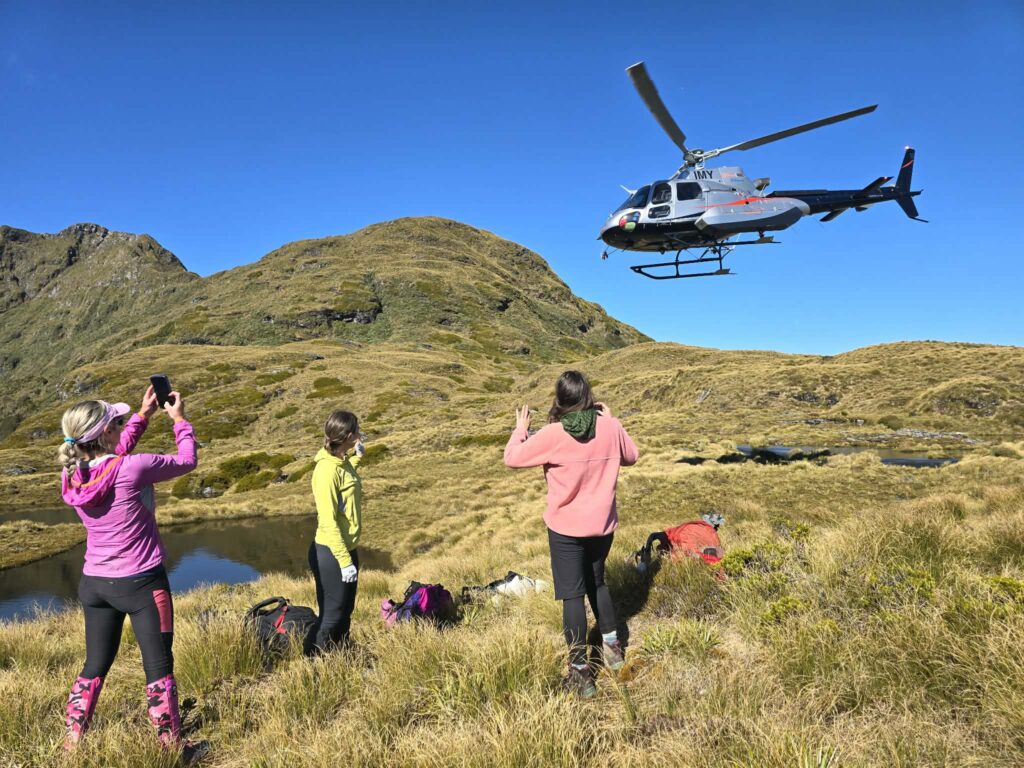
After an early morning drive from Queenstown, four of us left Manapōuri Airport via helicopter around 10am to our drop location. It was a beautiful day, and it really did feel remote once the heli left, and we knew we were likely the only humans on this peninsula at the time.
Heli drop at our ‘dart’ location around 11am day 1
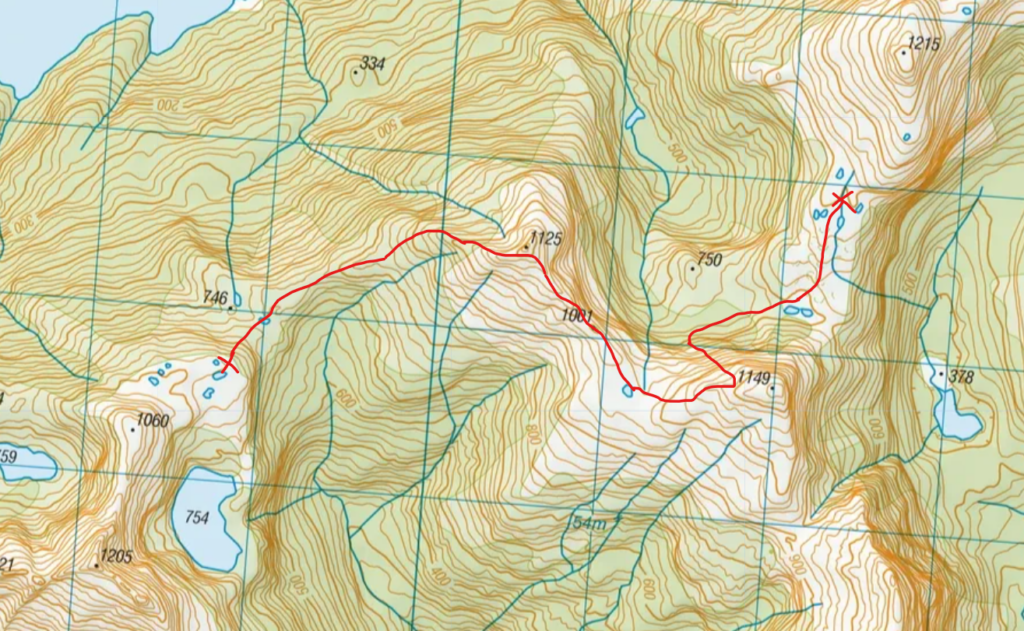
A zoomed in topo line of our day 1 travel below.
Day 1 topo route from heli drop to camp
Prior to our trip, I compared Google Earth imagery to the topo – just to see if there was more to pick up re density of the bush or tarns. Google Earth showed quite a few more tarns than the topo map, which turned out to be quite aligned with what was on the ground i.e., there was no risk of running out of water!
Travel over to pt 1125m was pretty good going – relatively open and no major bush bashing. Heading up the broad tussock ridge to the high point was quite pleasant with great views down to Wet Jacket Arm.
Day 1 – a few kms on from the heli drop
Day 1 – a few kms on from the heli drop
Day 1 – making our way up to point 1125m
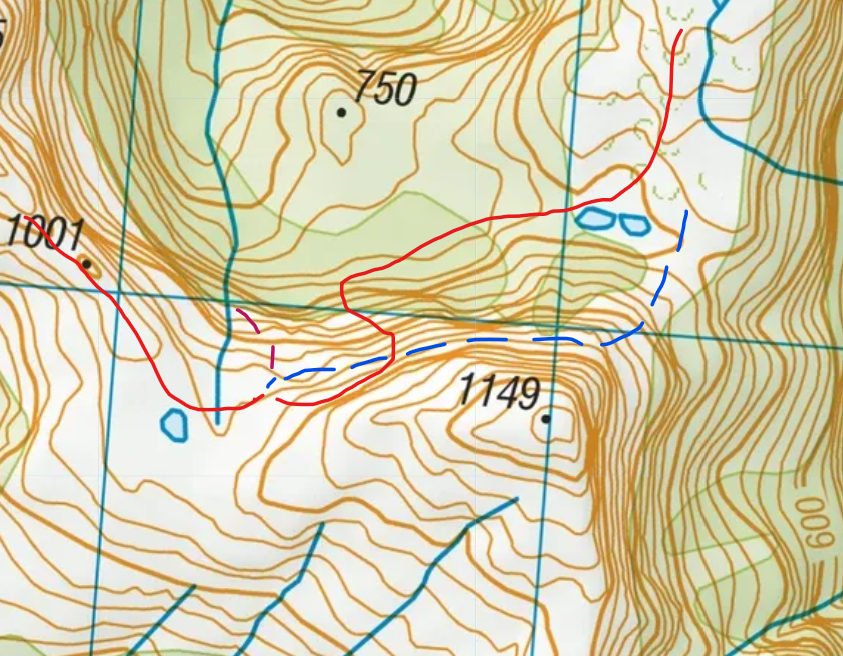
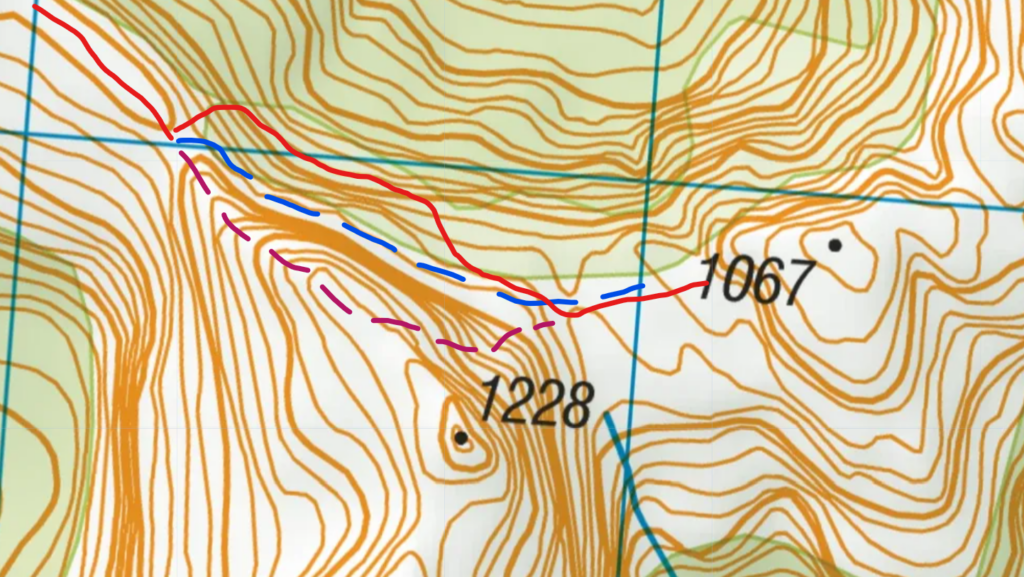
As we made our way to some tarns at the 1,000m saddle ahead of pt 1149m we all did some scoping of what lay ahead. Prior to seeing things in person, we had intended to hold elevation on the north side of pt 1149m at around 980m (blue dashed line below), but on arrival the terrain appeared notably steeper than the topo and not passable.
We talked through choices of going up to point 1149m and down (which a few in our party preferred, to avoid slow bush travel). And we also spotted, and opted to try first, a shelf shown by the red dashed line below, which avoided exposure risk in steep snow grass if we went to the high point.
It’s fair to say that for most other back country locations I have navigated – alignment between the topo map and what is on the ground has been relatively good. In a Fiordland context, it didn’t just seem that there was a lot more happening between the 20m contour lines, but in places the terrain was quite different to what you’d think based on the topo map. We wondered if there had been large slips in the past not reflected on the map. It was certainly very vertical in places!
After being turned back trying a few different lines around that red dashed line, we concluded we weren’t going to find a way through the bluffs and started to head back up.
As we climbed, we spotted another potential route – which is what we had success with – marked via the red line below. It definitely wasn’t a sure then as we started, so the more confident in our party scouted 15-20m ahead to confirm if it continued to be viable or not.
Entering the steeper section here around 1,000m was quite intimidating for me, with one very steep and exposed 10-15m section in particular at the start through snow grass/tussock. Having had a decent grass slide in the past, I have no desire to experience that acceleration where consequence is involved.
Anyhow, we made our way down section by section and soon we were at the bush line which made travel much safer and more secure.
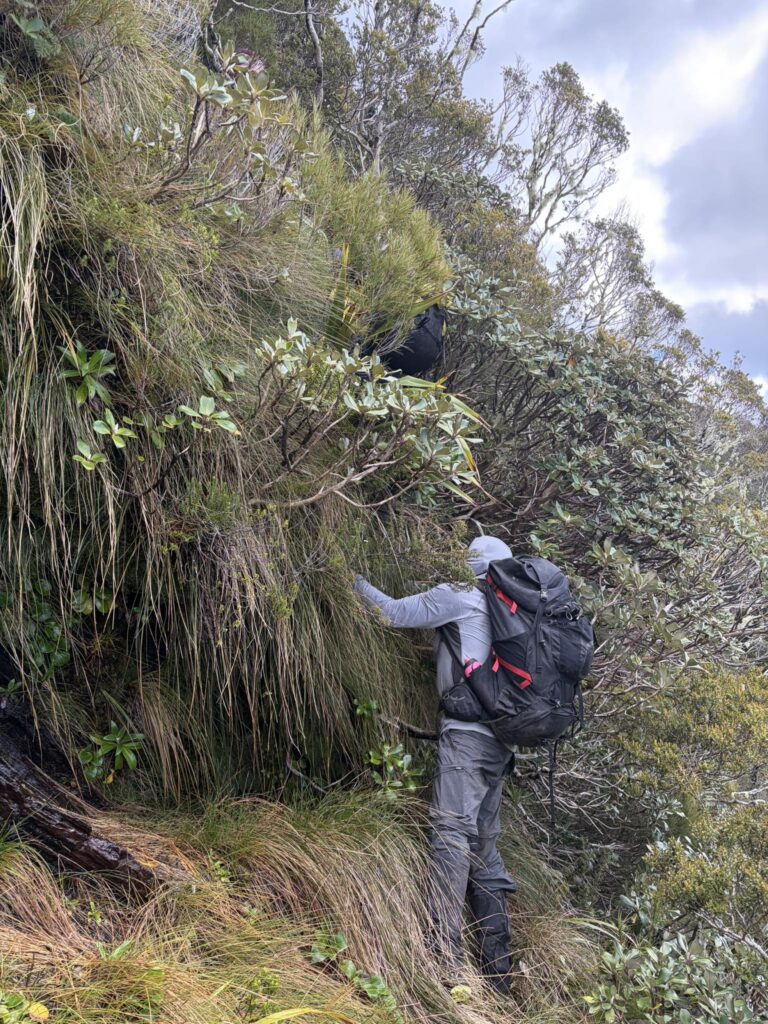
We clearly weren’t taking pictures where things were more intense, but a few images from the bush travel section down to around 780m elevation are below. There were still quite a few bluff sections we had to navigate through to get down but thankfully, we found a viable (but slow) path down.
Day 1 – a long and tricky nav to get past point 1149m
Day 1 – making our way down around 900m elevation
Day 1 – navigating below point 1149m, at around 800m elevation
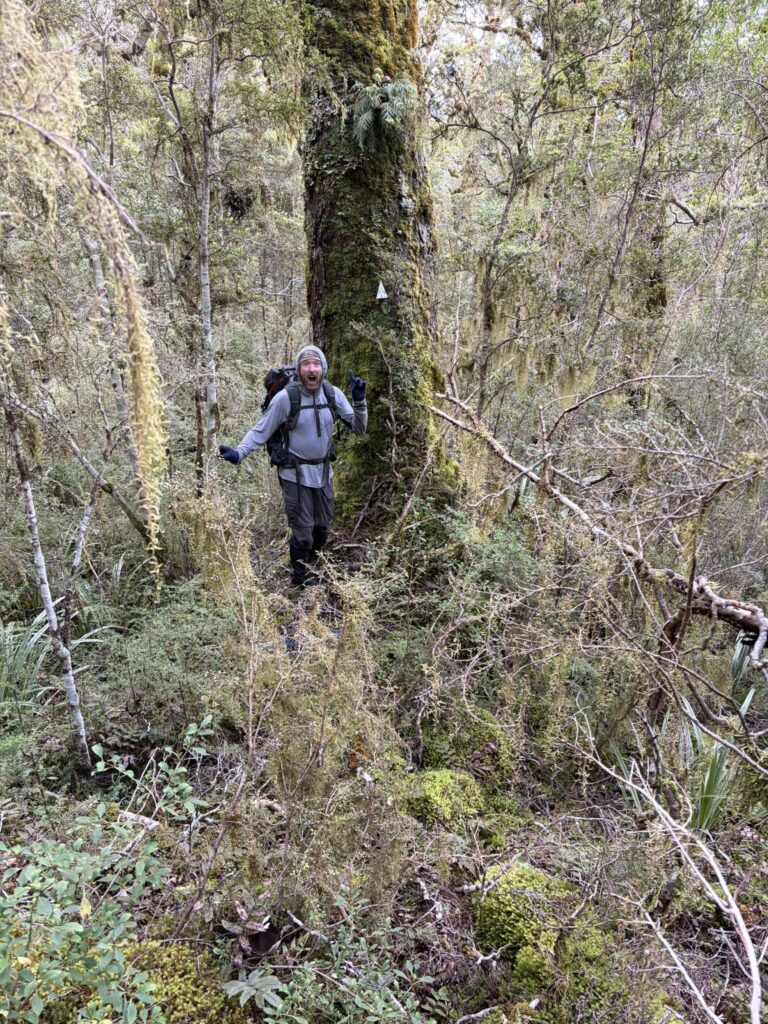
Day 1 – navigating below 1149m, at around 750m – just when you thought no human had been there before, an old metal marker on a tree!
Once we got down to around 750-780m, the terrain noticeably flattened off and we were able to move quite quickly. Despite feeling like we were in extremely remote terrain at this point – considering what we had travelled through to get there – it was quite a surprise to find an old metal triangle on a random tree. Someone had been here before!
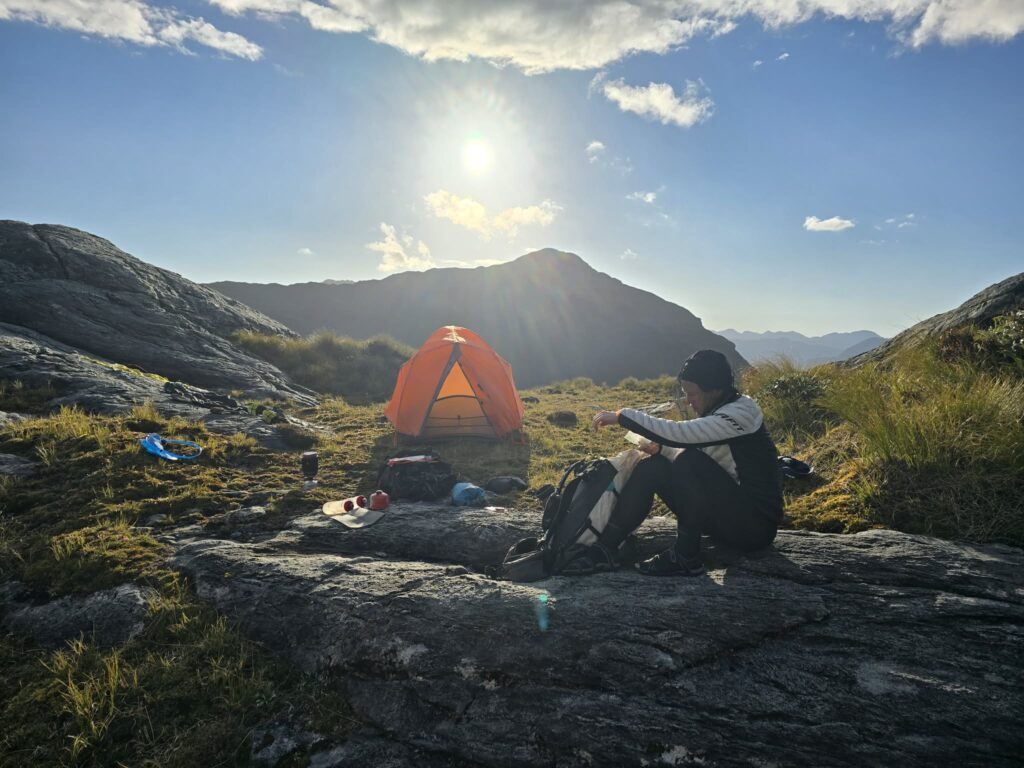
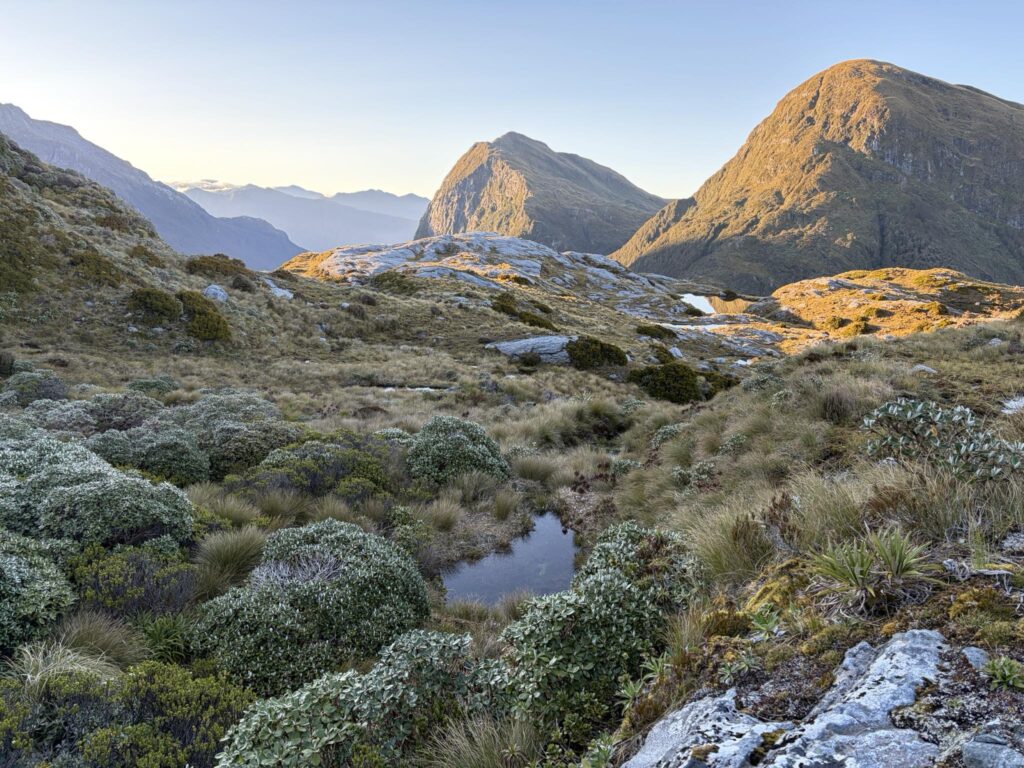
It took us a good 5 hours to get from saddle-to-saddle below pt 1149m, materially more time than expected. So we camped early at a really scenic group of tarns between points 1215m and 1149m. This camp spot was a highlight, and a touch surprising that there were still a good number of sandflies about at this elevation. The sandfly head net came in handy!
Day 1 – a beautiful camp spot
Day 2 – Dart of Destiny
We started day 2 feeling refreshed, but conscious of another ‘crux’ to get around pt 1228m on our intended route – which was similar on the topo map to pt 1149m from the day prior. I knew I was not up for repeating the level of exposure from day 1 in snow grass, but we agreed to get to the saddle and make the best call for the group after a better chance to scout things on the ground.
Day 2 – our track between camp 1 and night 2 at Supper Cove Hut
Day 2 – not long from camp 1 in the morning, looking back at pt 1149m
Travel from camp 1 to the saddle before 1228m was really pretty, and straight forward. It wasn’t long before we got a first good look at the north face of pt 1228m (below).
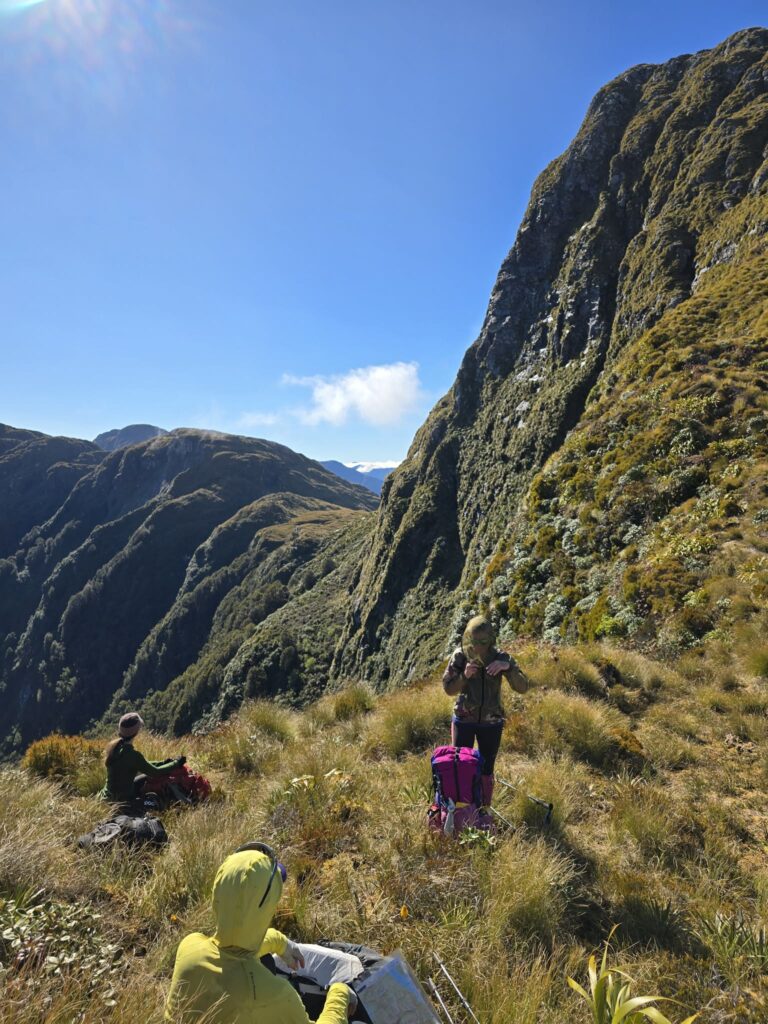
Again, in our trip planning we had expected to traverse here by holding elevation at around 980m (per the blue dashed topo line below), but comparing the topo to the photogragh immediately below should highlight that this was not viable from our perspective. There was also a waterfall section (not fully shown) along here which created a very impassable ‘gut’ on the main face.
Again, we had split preferences in the group to get over to the next saddle – largely around avoiding slow bush travel vs steep, exposed snow grass/tussock terrain. We had good team and collectively decided to go the way where everyone felt safe – that meant slower bush travel and reducing elevation to get around pt 1228m.
Thankfully we had spotted a good route from the saddle by hugging the bottom of the cliff around 900m.
Good visibility (i.e., no cloud / fog) helped us spot a way around tricky sections on this trip – given how different things were on the ground relative to the topo map, this was an important lesson for future trips. We purposefully did this trip (adjusted out dates) to make this work during a good weather window. I would not recommend attempting ‘new’ terrain like this if the weather outlook was anything other than good.
Day 2 – view from saddle around 1,000m looking across below pt 1228m – our intended topo route holding elevation here was a no-go!
Day 2 – choices we considered to get back 1228m
The topo above shows routes past 1228m that we considered either before or during the trip – the actual route we took (red line) – ended up being quite efficient for bush travel and it took us around 3 hours saddle-to-saddle.
Once we were past pt 1228, the balance of travel on the tops was really great and quite open country. There were some interesting features to get around but again – really straight forward relative to getting past those prior high points and our travel speed picked up a lot. We spotted a few deer along the tops too.
Day 2 – ridge travel
Day 2 – looking down on a large tarn just after pt 1175m
Day 2 – looking down pt 1191m to the ridge that would take us to Dusky Sound
We had thought all the ‘hard stuff’ was behind us once we left pt 1228m, but the terrain kept of offering the odd challenge as we continued. For example, heading SE below pt 1191m there was an unexpected cliff we had to navigate around by heading East a bit to loop back around to the ridge.
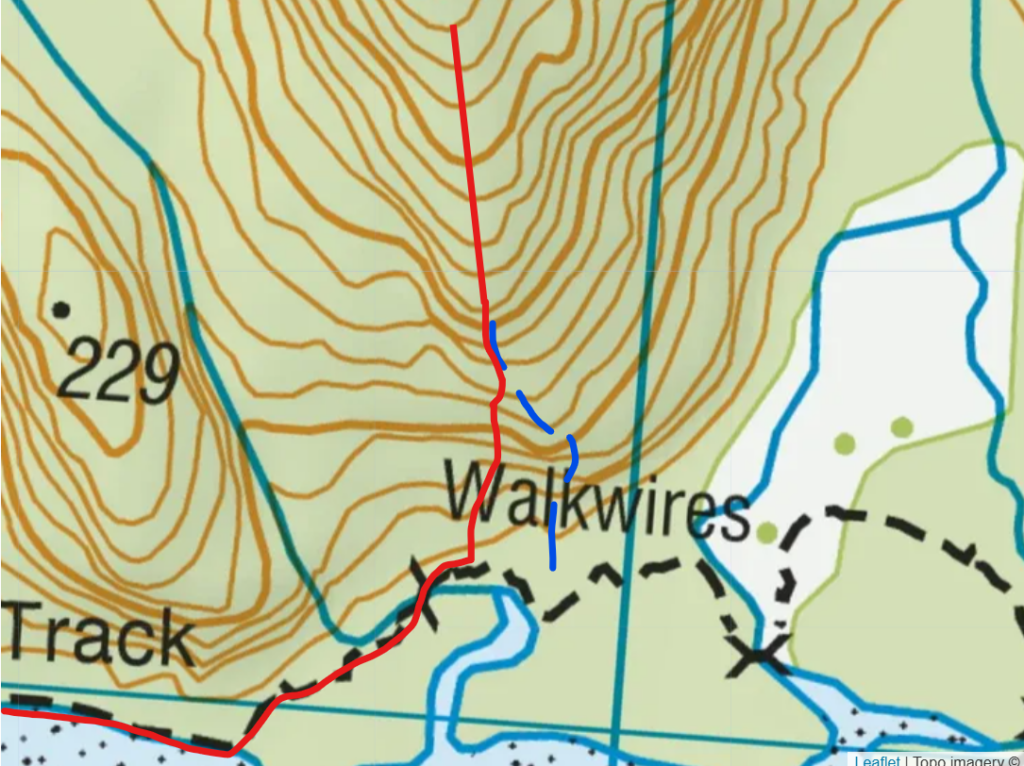
We also noted the potential for bluffs in the last few hundred metres of elevation before Dusky track – which turned out to be a lot more challenging that expected based on the topo map. Our intended line to intersect Dusky Track is shown below via the blue dashed line, but as we got to around 150m, things got very bluffy and it was not possible to go down straight. It was round 9pm at this point and having scouted a few options that were a no-go, we were aware we had about an hour of light left to figure out a way down before we were likely ‘camping’ on the ridge.
The topo made the obvious choice look to be heading West, but with major bluffs in this direction, it certainly did not look like the obvious choice on the ground. After a little scouting East and West of the ridge – with neither direction looking ‘obvious and certain’ – we decided to head West assuming we must ‘on average’ have more viable terrain closer to the river shown East of pt 229m on the topo below.
We had to ascend around 50m to get above a cliff in the bush, and the more confident member in our group (rock climber :)), picked a way through tree fall / steep terrain down. We always made sure to scout ahead and look at what the trees were doing below to get a sense of what might be happening on the ground ahead. It did require us to do some things that were not reversable, so we had to be confident enough that we could get through the next section. It was helpful to know at this point that we had a short 30m rope in the backpack to sling over a tree if we needed to get down a bluffy section.
Thankfully – it felt we had found one of the few (or only?!) viable ways down, and we were quite happy to reach Dusky track around 10pm.
Day 2 –getting to Dusky track
Day 2 – walking Dusky track around 10pm after getting off the ridge
After getting off the ridge, the walk to Supper Cove Hut took 45-60 minutes. Whist there wasn’t a navigation challenge anymore, the track itself it still quite rocky, with sections walking in the bay.
We were pretty happy to arrive at the hut around 11pm and get changed and have some dinner!
Day 3 – a nice morning at Supper Cove Hut
It was quite luxurious to have a relaxed few hours waiting for the float plane, and to basically get a good view of the full ridge we travelled in the days prior on the flight out.
A 10/10 unique adventure trip, and a great create-your-own-mission experience with a good level of navigation challenge for our group. Highly recommended for those already very experienced in the back country.
Day 3 – our float plane arriving
Day 3 – float plane from Dusky Sound looking north to the ridge we traversed
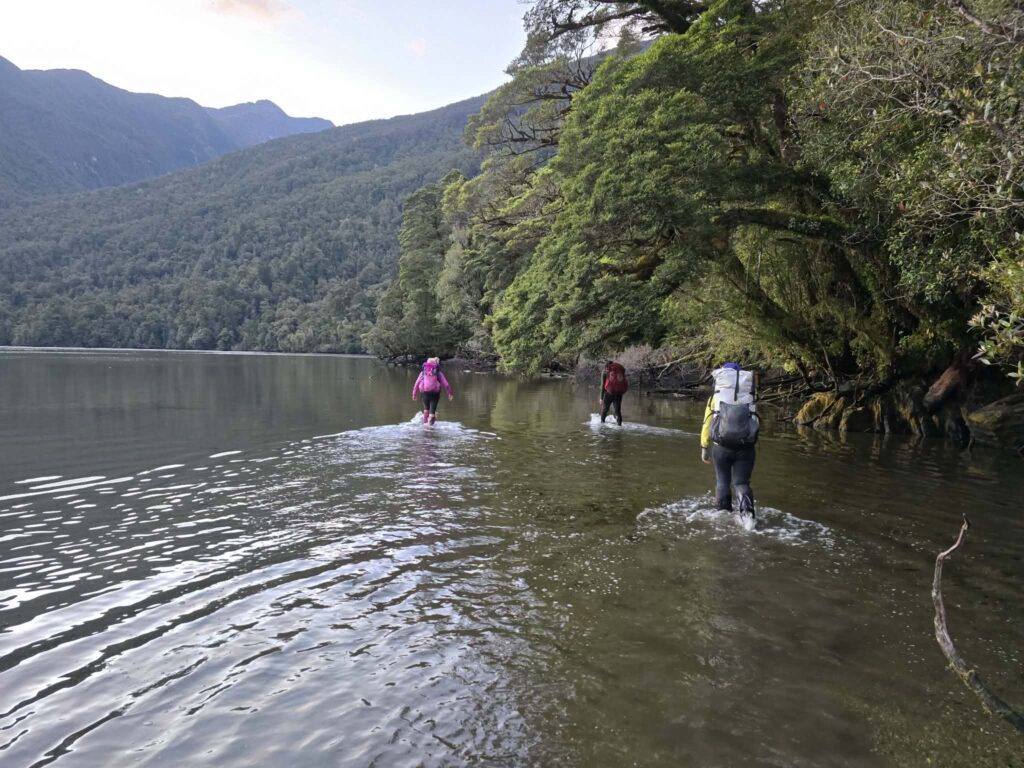
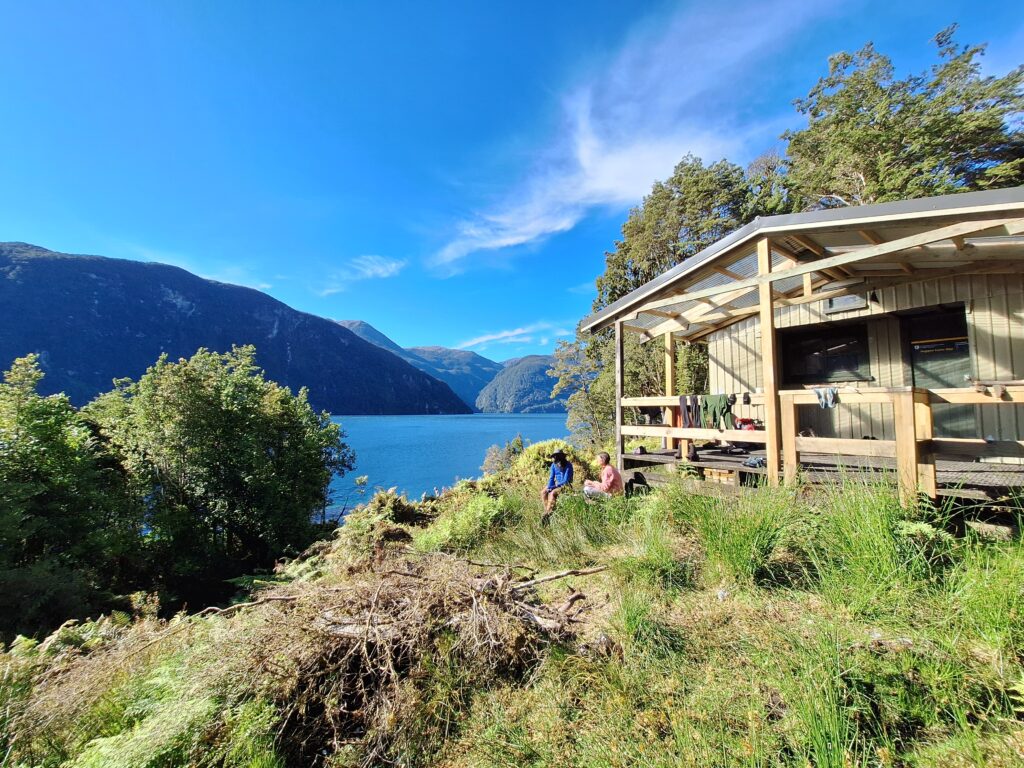
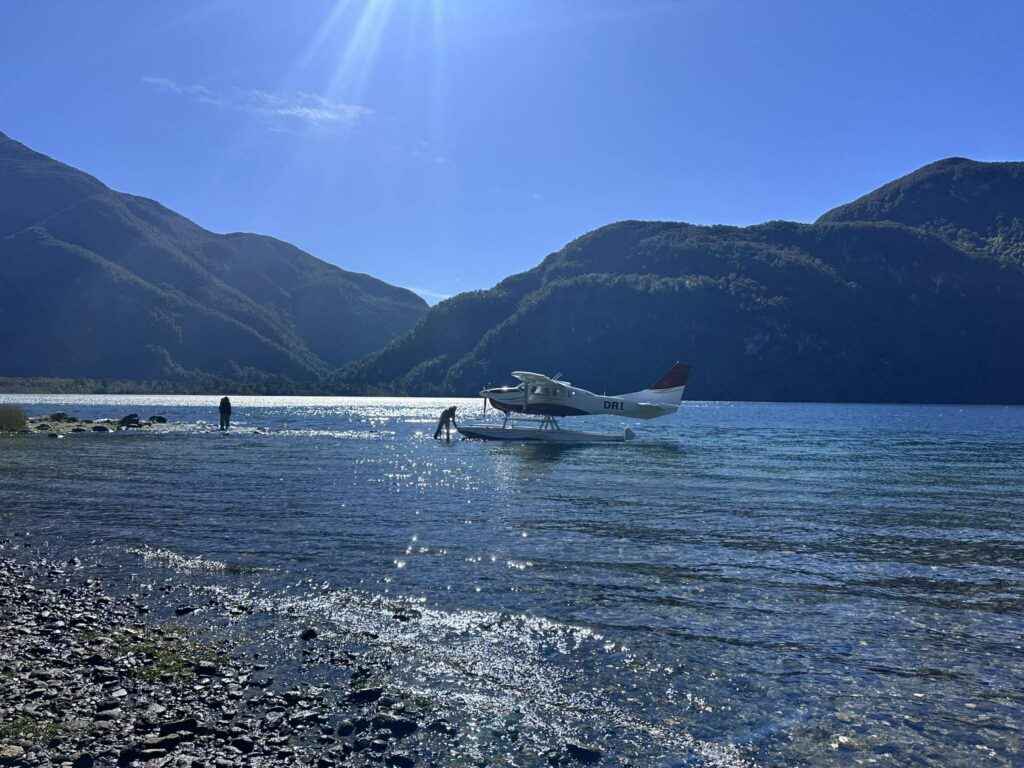
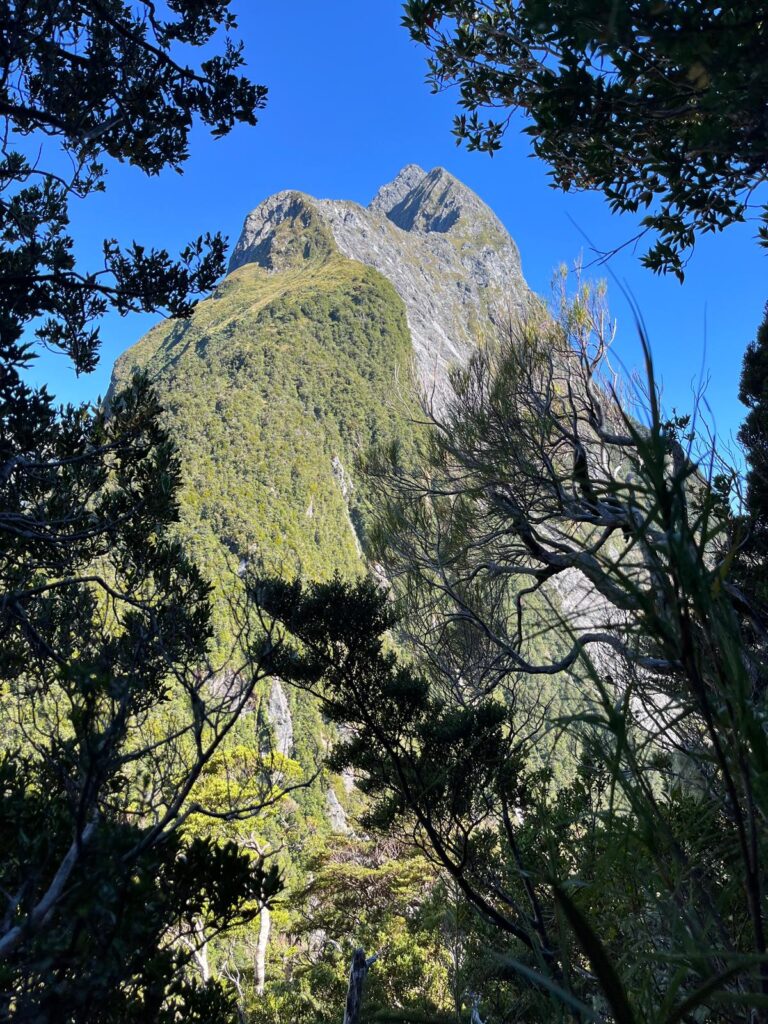
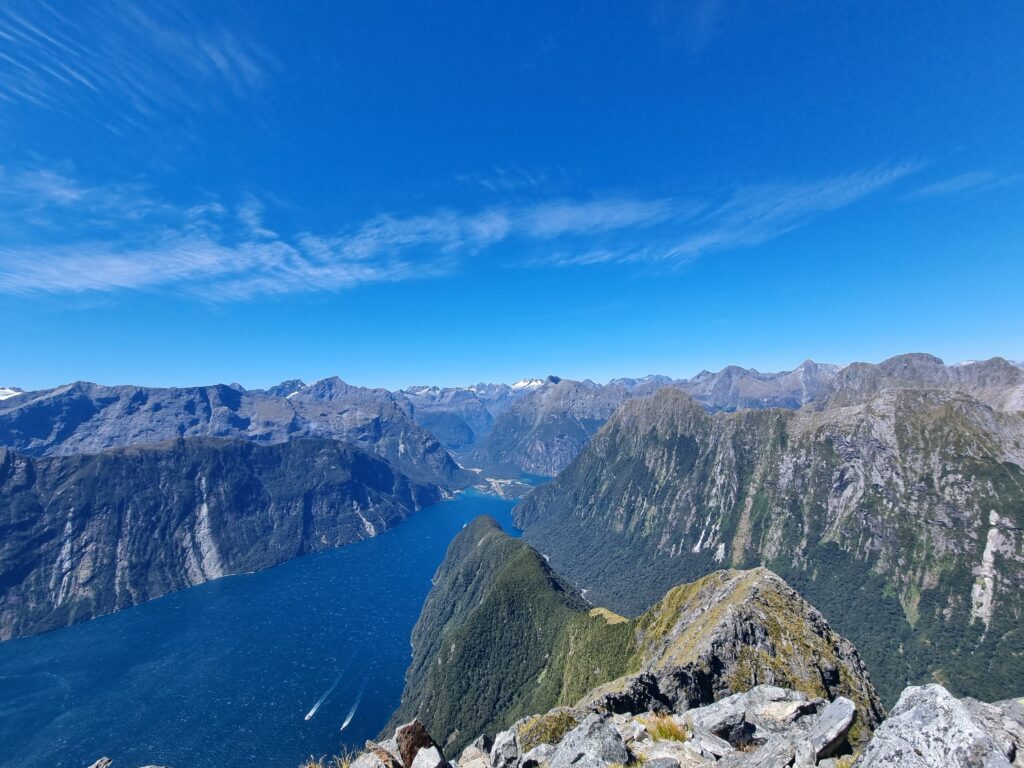
Mitre Peak is a very memorable day out with dramatic views, needing a short paddle to get to the base of the climb and back. I would recommend this for those comfortable with a lot of exposure, and on a fine weather day only (no rain/moisture and take note of the wind forecast for the return paddle).
We started paddling around 7.30am, returning to the car around 8pm – so around 12.5 hours return for our trip.
We were a party of 3 people and paddled there in a single sea kayak and double packraft. We took a short rope in case needed, but didn’t end up using it. Assume you won’t get any water on the climb, and so fill up at the Sinbad Gully creek for a full day.
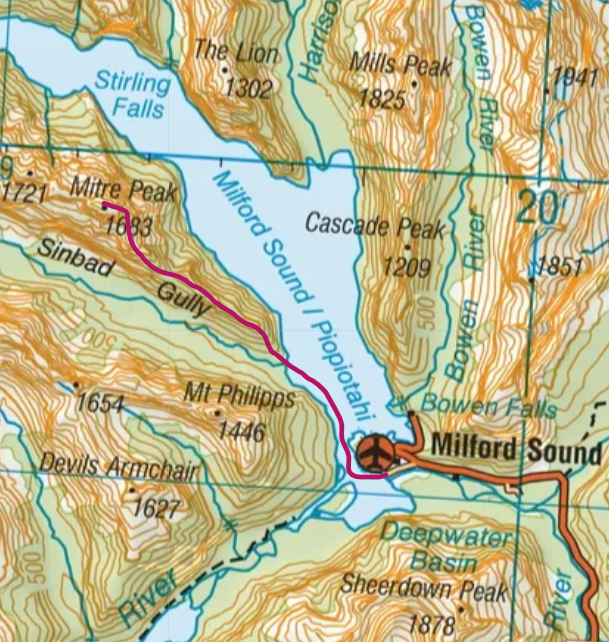
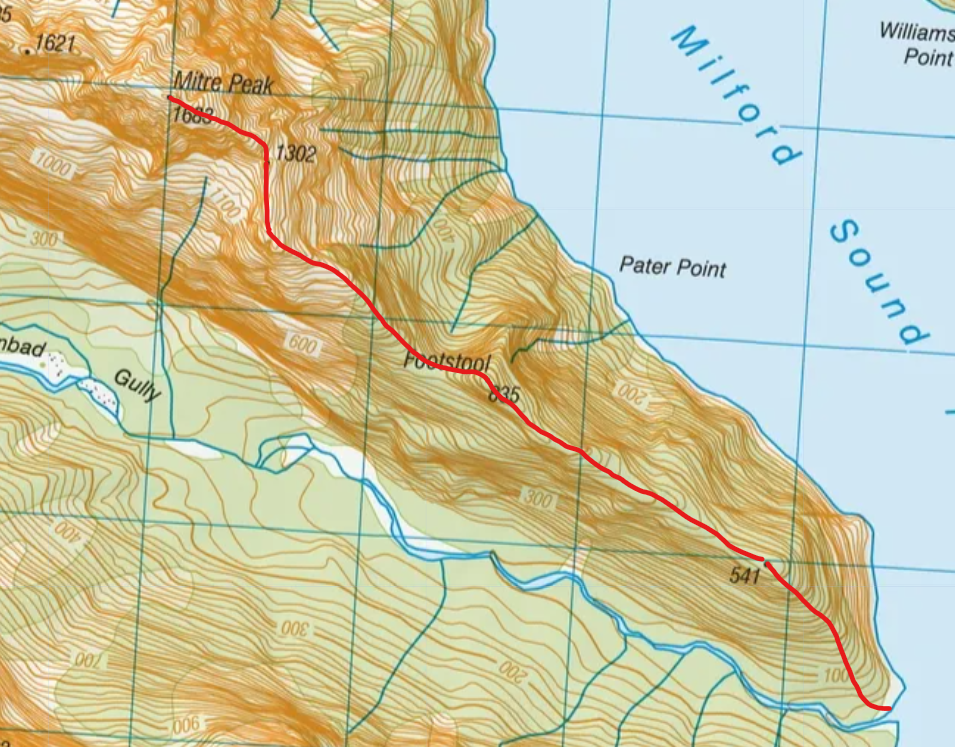
The Mitre Peak route
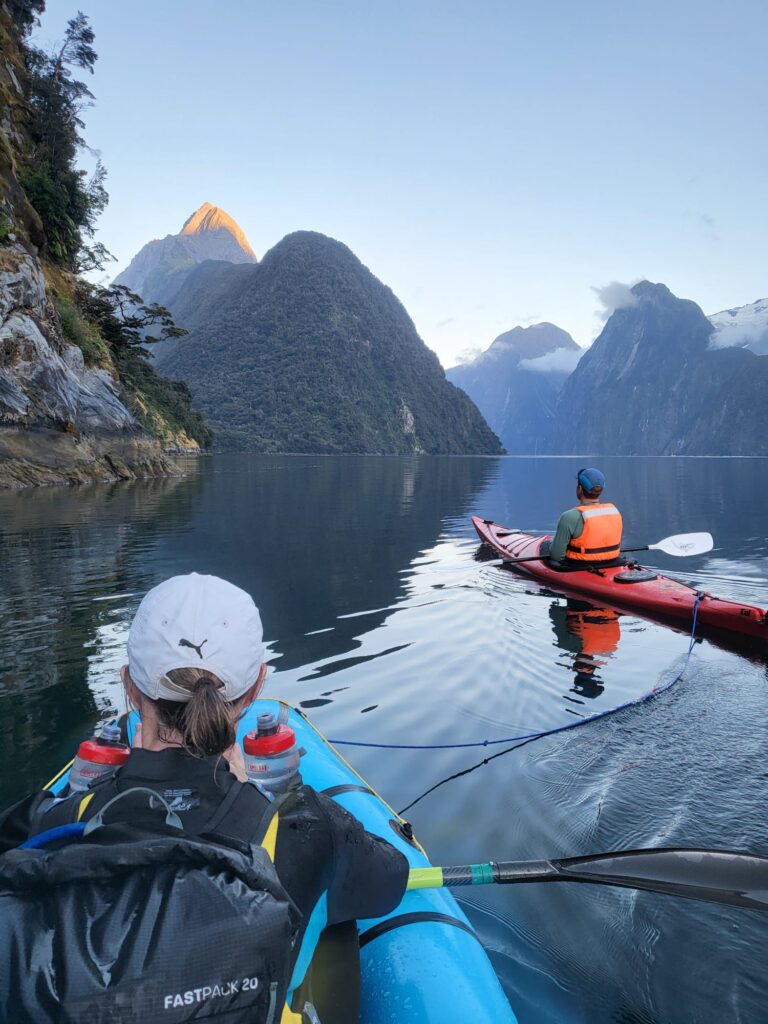
Our morning paddle to the base of the climb
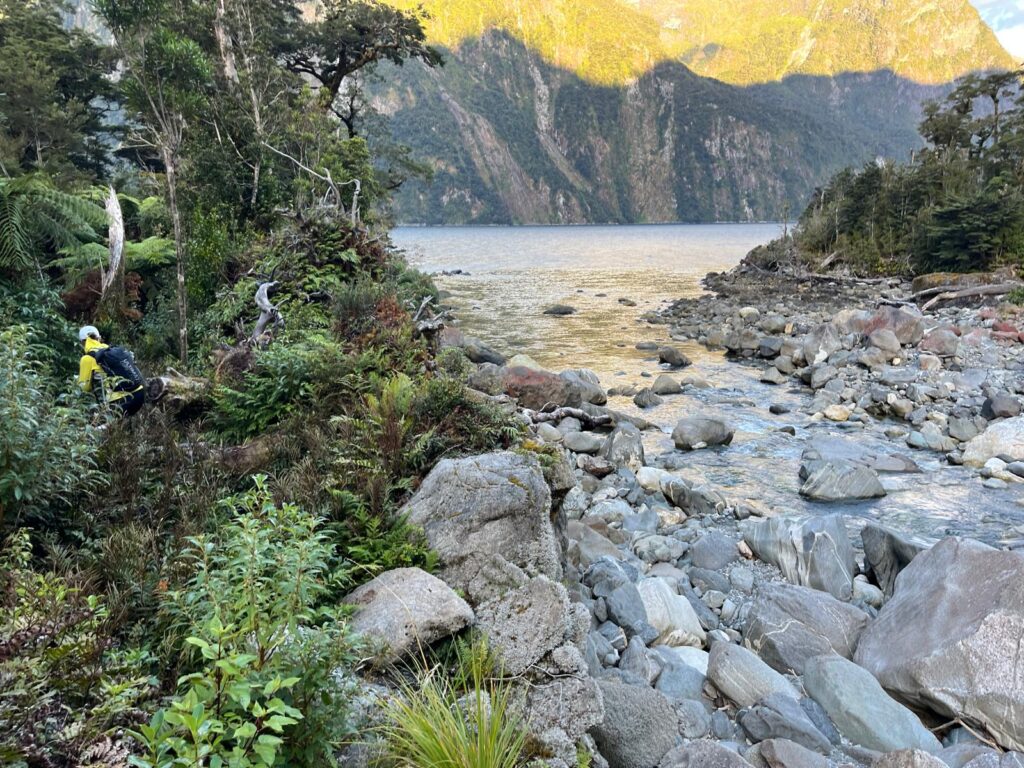
Our short paddle over the base of the climb was nice and calm, and gave a us a chance to scope the ascent. On arrival to Sinbad Gully we stashed our paddling gear (quickly due to the arrival of sandflies!), and started up a trap line on true left of the river.
We had been told there is a track off the trap line and up the ridge if you head along this river for a bit (a good few hundred metres). If we hadn’t been told this, my inclination based on the topo would have been to head straight up the ridge, but if there was a track up – worth the effort to find it.
We were actually just engrossed in our conversation and didn’t spot / overshot the track, so ended up bush bashing a few hundred metres of elevation gain and slowly made our way diagonally back onto the ridge until we intersected a track heading up. Later that day as we finished the descent, we noticed a damaged sign on the ground marking this turn off so propped that back up.
A topo of our line, a bush walking picture and first views of the upper ridge are below.
Arriving at the base where we stashed our paddle gear
Topo of the ridge-route up to Mitre Peak
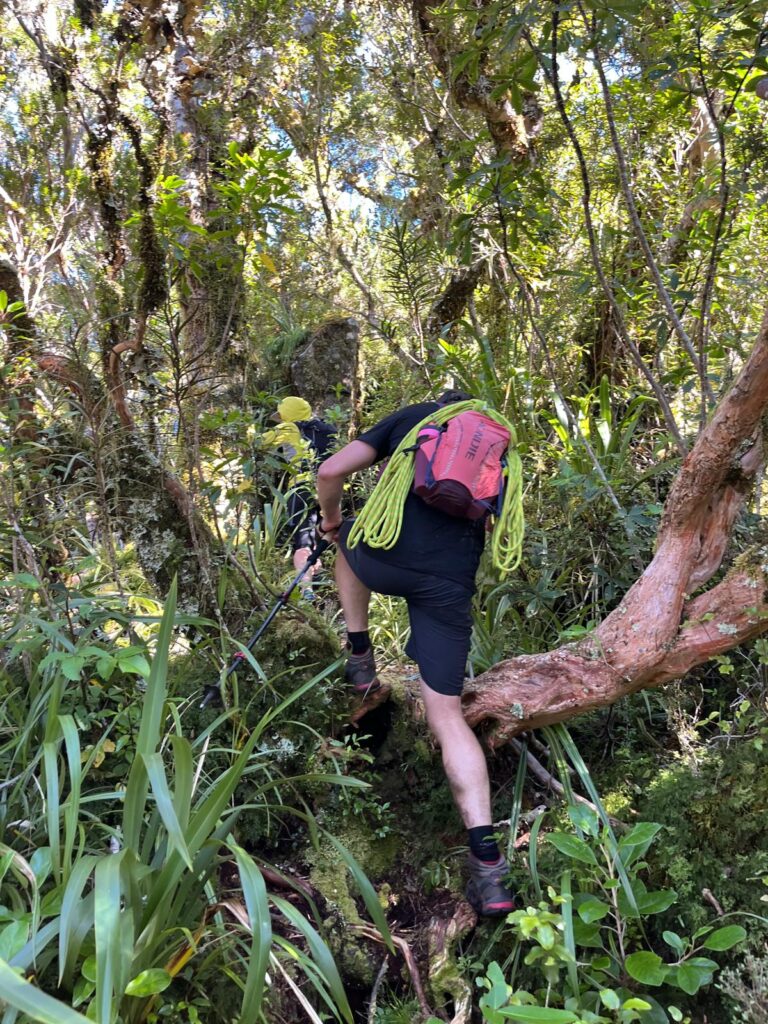
Bush travel on the way up
First views of the higher ridge section
On the top of the Footstool we stashed some water to collect for the way down and lighten for the climb ahead, and a little further along before the steeper ascent started, we left our walking poles to collect on return for the descent. It was good to be hands-free for the upper ridge.
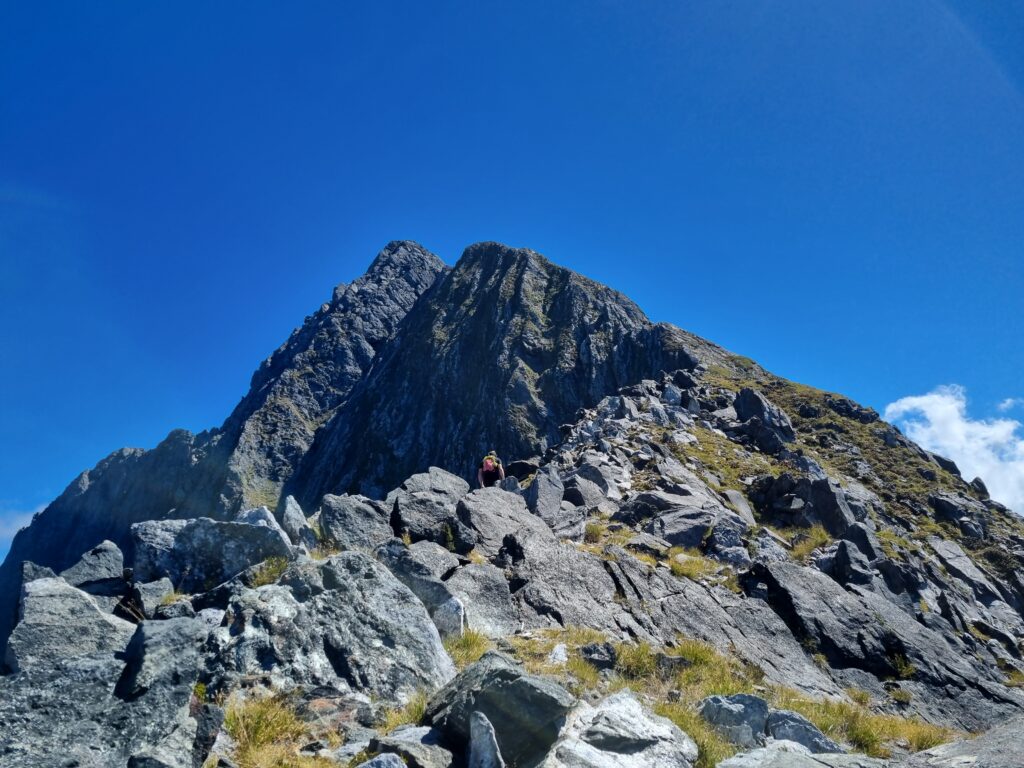
Shortly after this nice broad ridge section in the image below, you can see the incline increase. As we hit this, the exposure is suddenly very present within a few steps as you look right down to the ocean below. The views are great, but from this point on I just went section by section to maintain head game – and was definitely not too proud to turn around if needed. What worked for me was to just be sure everything I did was reversable for me.
Travel on the saddle after the Footstool
A rocky broad ridge section, after the first exposed ascent section just below this
After the first notable and exposed grassy ascent section, it was great to be on rock again (more secure) and have a nice broad ridge to have a little break from the exposure (image above). The climb is a mix of highly exposed sections, with little bits where there is some relief. For me personally, the breaks from the highly exposed sections (and taking it section-by-section), are what made the whole thing achievable. The two others with me had no trouble with the exposure at all – you never know how you’ll be until you’re in it (or have done things with comparable exposure before).
A few images of our ascent and descent are below to get a sense of the type of travel. Arriving nearer the top, things definitely flattened out. I was a little surprised that I found coming down simpler than going up from an exposure perspective – perhaps it was just getting used to it.
Coming down as you hit the bush again, there are quite a number of false trails that take you left(and to very vertical terrain). Just take note it’s easy to follow these as the trails look so established. It’s worth paying attention to keep to the ridge proper!
Making our way up
A view down the ridge as we climbed
Nearing the summit, things flatten off
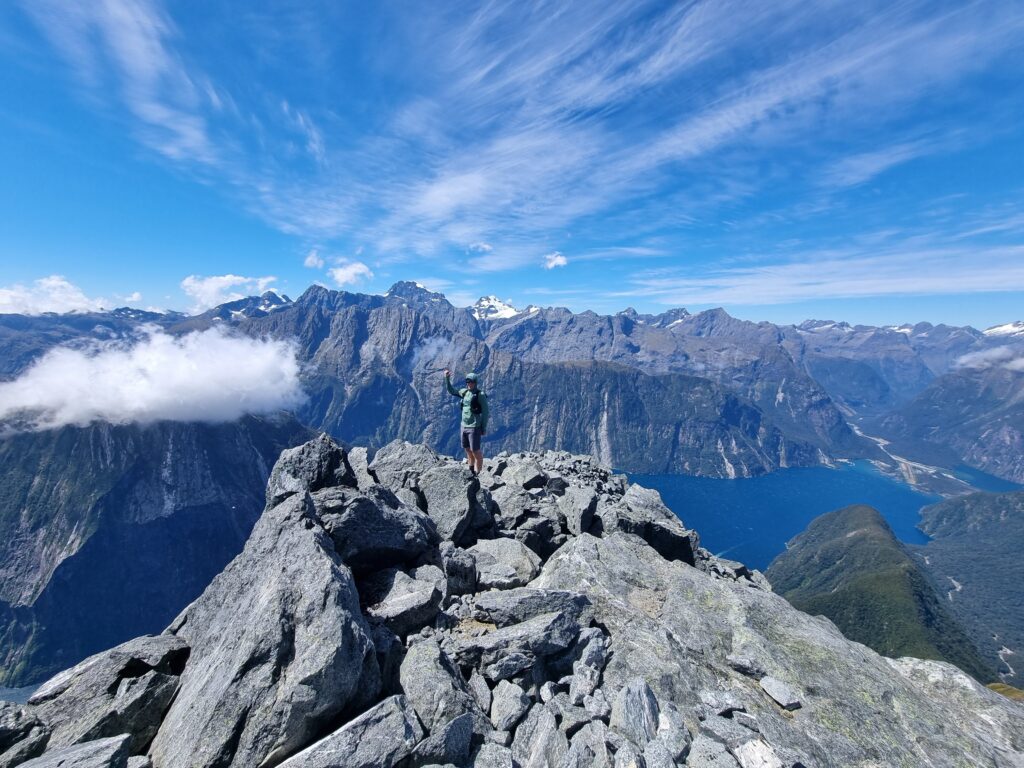
Summit shot, before beginning the careful descent
A shot of the descent through weaknesses in the rock
One of the little notch sections on the way down
We got to the base / Sinbad Gully around 6.30-7pm which was perfect timing to get onto the water and paddle back in daylight. The wind had picked up notably since the morning with some healthy waves behind us. This was great for speed / getting back, but definitely trickier for the two of us in a packraft – we were envious of the sea kayak.
Overall – an extremely rewarding and adventurous day out. Definitely recommended for those comfortable and experienced with exposure – but I don’t think this is the trip you do without prior experience in steeper terrain and knowing your abilities quite well.
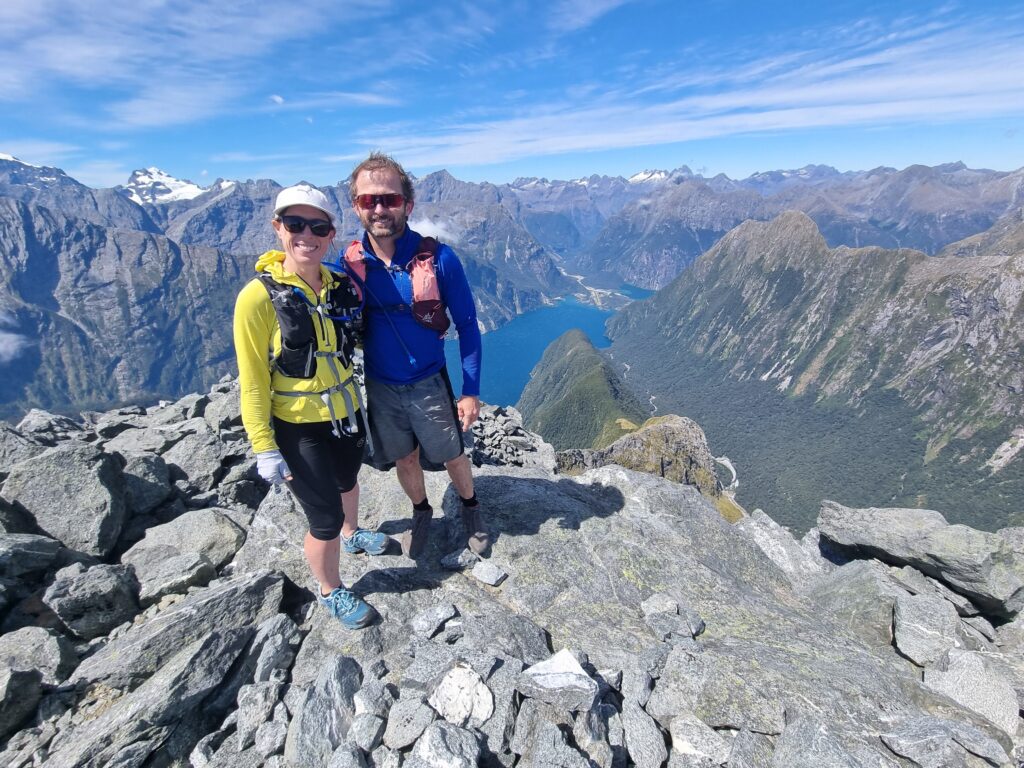
A great traverse up the front of the Remarkables, and around Queens Drive to the upper Remarkables ski field car park. Typically 5-7 hours depending on fitness and route finding – this trip took us 5.5 hrs.
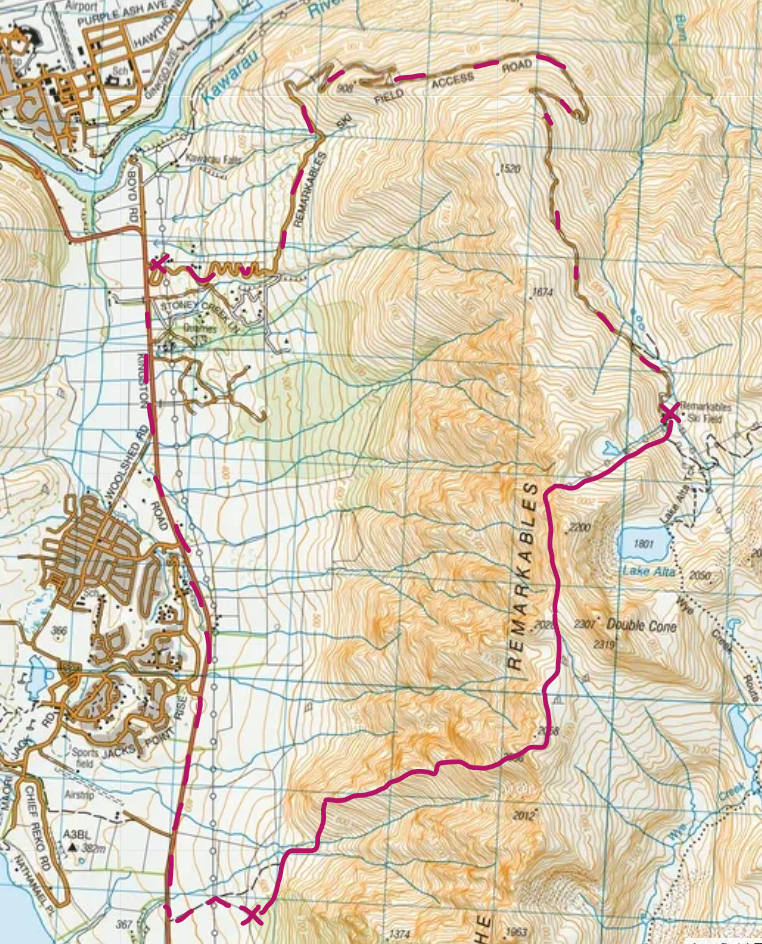
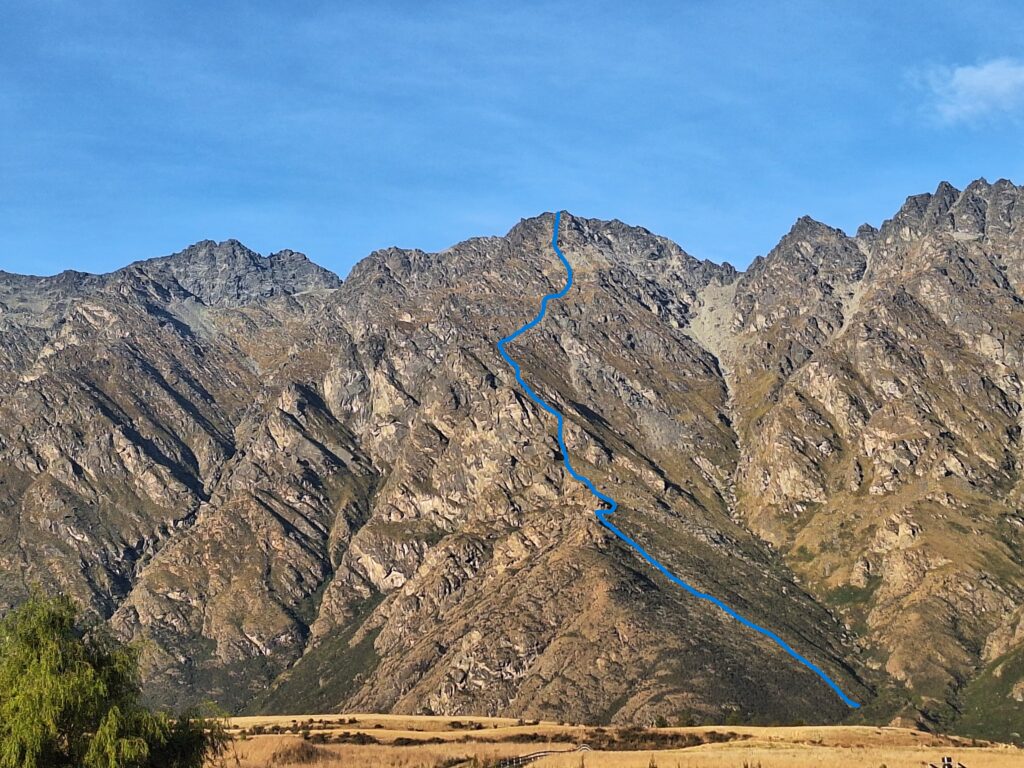
Topo of our traverse from Jardines Boulders (x at bottom), up Te Tapuae ridge, along Queens Drive and down the ski field to the car park.
We parked at Jardines Boulders to start the day. The boulders are open to the public via access from a Deer gate on the main road (sign posted) – be sure to check with the Queenstown Climbing Club for current information on access (i.e. can be closed due to lambing season / fire risk).
From here we followed the fence line along to a small ridge between the two streams around 600m elevation and made our way through a (rough) track to cross the northern stream. I’m sure there are a few ways through here but if you find the track, it avoids a little bush bashing through this creek.
Once on the other side, it is relatively open bush / grass / rock to gain the ridge around 850m. There are some cairns up to this ridge – lots of ways go – but maybe these are most helpful if you were coming in reverse and wanted to find the track through the creek.
Once on the ridge, you are typically on the ridge or southern side of it (never north side), all the way to point 2036m.
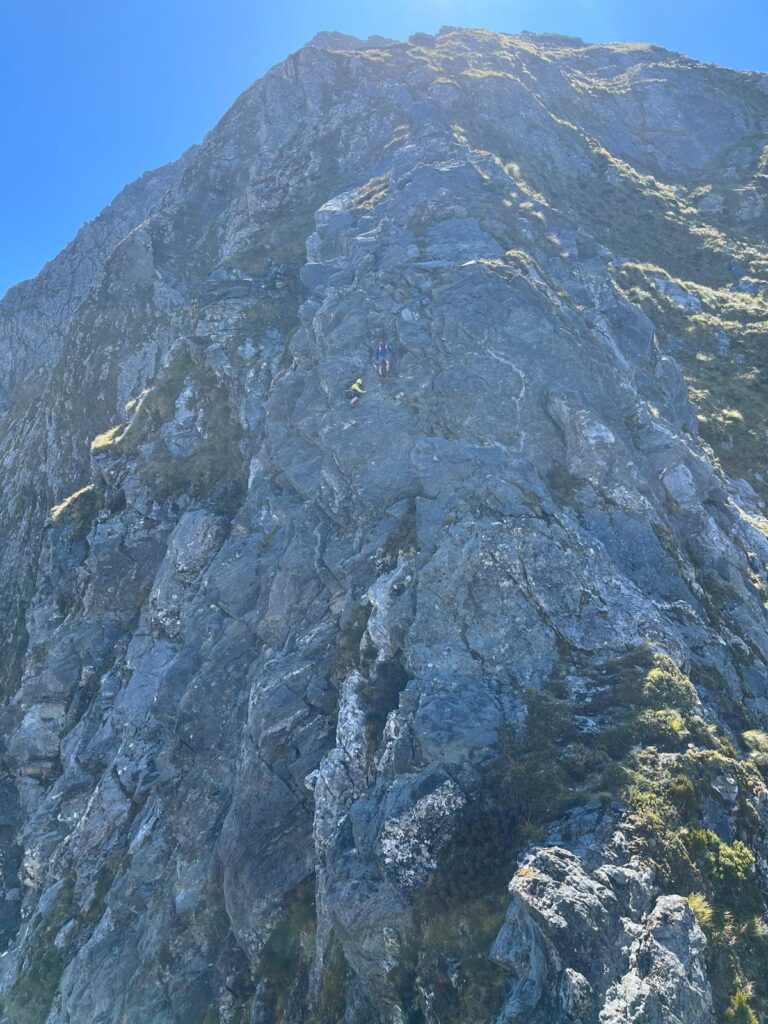
A few images below show the route we took and type of terrain covered. In short – amazing views, a mix of rocky ridge travel, steep tussock / bush sections, a little steep scree sidling (to be respected), and a couple of smaller rock-moves right at the top. I opt to wear a helmet on this, many don’t. On this trip I followed at the top and so it was useful to have a helmet in case of the odd rock fall triggered accidentally by trip-mates above.
In the winter/snow or the wet, the steeper tussock/bush sections could feel more intense I expect.
It took us 3.5 hrs from our car at Jardines Boulders to point 2036m.
An estimate of our line up
Viewswest (around 850m or 950m)
Views up (around 950m)
Some fun scrambling up
View from around 1050m up, as it gets a little steeper. Our line hugging a bluff on our right, up a tussock shoot.
Pick your way through some of the steeper sidling sections – a few ways go
Nice views SE as we get closer to the top
Picking our way through some slabs – really pleasant rock
The plod up the rock field before the top
So close!
One little move to gain the top from the south side (avoidable if you prefer)
Summit of point 2036m and views west
After a little bite of lunch, we traversed to Queens Drive (around 1950m), walking below Double Cone and point 2200m. Queens Drive I think it is good to have a bit of respect for and watch your footing on a few of the angled gravel sections with not much to support you. Sometimes poles along here are helpful for balance / extra support in these sections.
Once around to the ski field area, it is an easy walk through the ski field to the upper Remarkables car pack. It took us 2 hours from point 2036m to the ski field. All up, 5.5 hours from our car at the bottom.
Getting down you can either hitch hike (usually works out!), or on this occasion one of our party had driven up in the morning to leave a car there and biked down. After a little car collection logistics at the end, it was time to enjoy an autumn beverage looking up at our hike of the day. 10/10 traverse.
A rewarding, scenic and big circuit that can be done in a day.
Overall this is an advanced scramble, with the technical difficultly increasing a bit in the last few hundred metres (rated II, 2+ by ClimbNZ). For the time of year we did this, the difficultly is a little less. We took crampons, axe, a rope, harness and some trad gear. Car to car took us around 12 hours.
Topo of our route starting / finishing in Mount Cook Village
We parked in the Mount Cook village, heading up the Red Tarns track before starting the sidle to hit the saddle West of point 1422m.
Beginning our sidle from the Red Tarns Track
Our sidle to meet the ridge getting into rock territory
Once up on the ridge, it’s a nice walk up with great views along the way. Nothing overly technical until the top.
A bite of lunch on Sebastopol Ridge
Higher on the ridge we are back in rock territory
We found it valuable to scout our line to gain the last 150m or so to the plateau. We considered the steep snowfield on the right but opted to stay amongst the buttress / rocks once we got there to gain most of the height. A little before the top there was a steep snow shoot we had to cross – I opted for a belay across that just because of the consequence of a mistake, and the snow was getting quite soft around this point (late morning).
Looking up at the crux. We ascended the buttress – left of the snow field.
Heading up the ridge, good views to Water Tank ridge and Mount Cook
Once we ascended the last steep section we were greeted by a pretty ‘flat’ snow field on top and enjoyed the views to Mount Sealy and around before walking around to Mueller Hut.
Arrival at the top – a nice shelf.
A view to Mount Sealy from Mount Annette
Walking Annette Plateau around to Mueller Hut
Once we got to Mueller Hut we had a much needed water resupply, before heading down Mueller track and back to the car.
A great day out with good views and a little spice to gain Annette Plateau. Recommended.
A great overnight scramble, with a little exposure heading over Gladstone Peak in the Takitimu Mountains – topped off by a stay in a cute, tucked away hut.
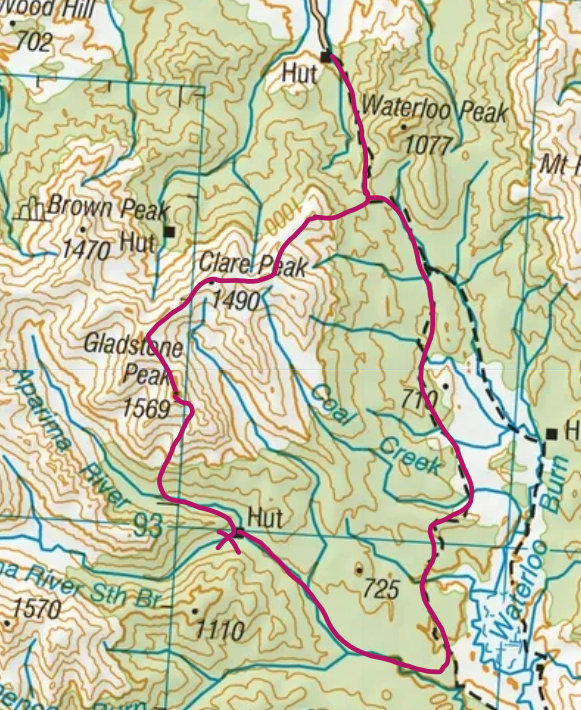
Topo – our full overnight circuit
We parked and started our hike at Lower Princhester Hut and headed up Princhester Saddle Route to the 800m saddle. From here, it was helpful to have a map/compass to get through and above the bush line. Pretty bush and a few ferns to get through…
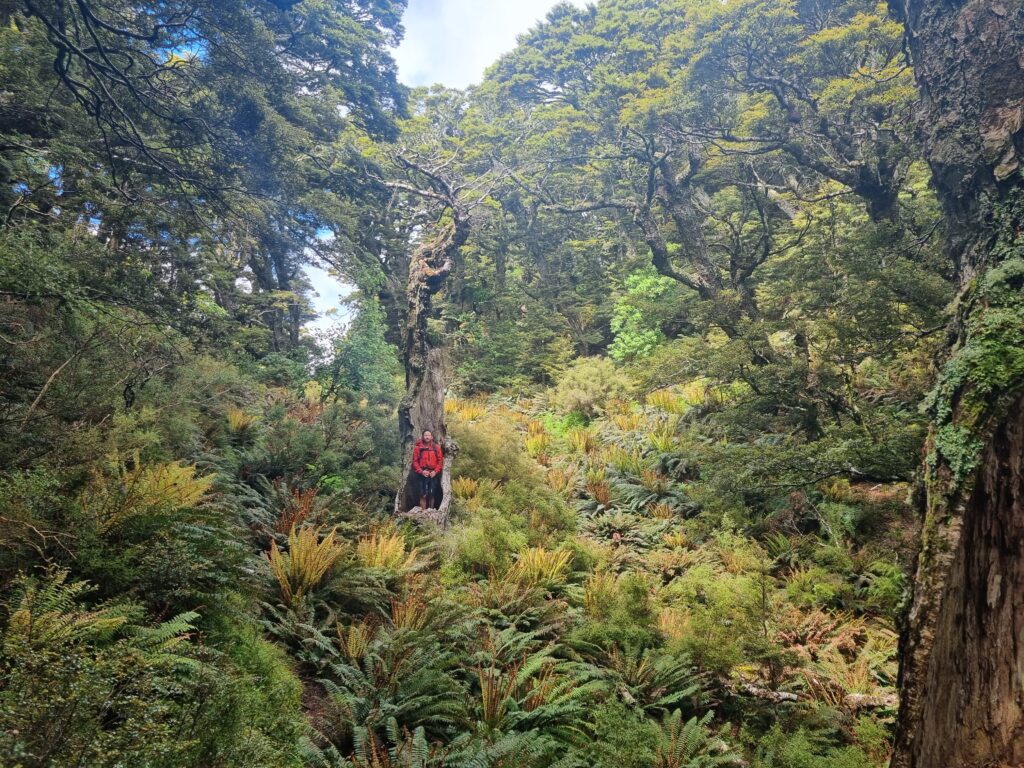
In the bush having left the 800m saddle
Once we cleared the bush line, it was a decent angled climb in the scree up to the ridge, enough of an incline that it was good to pay attention for slips.
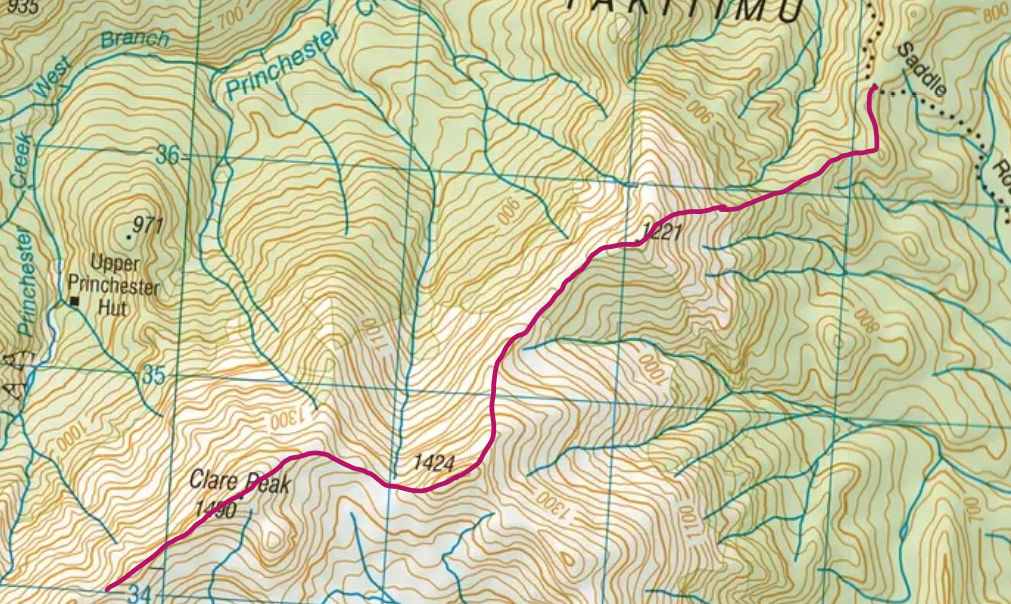
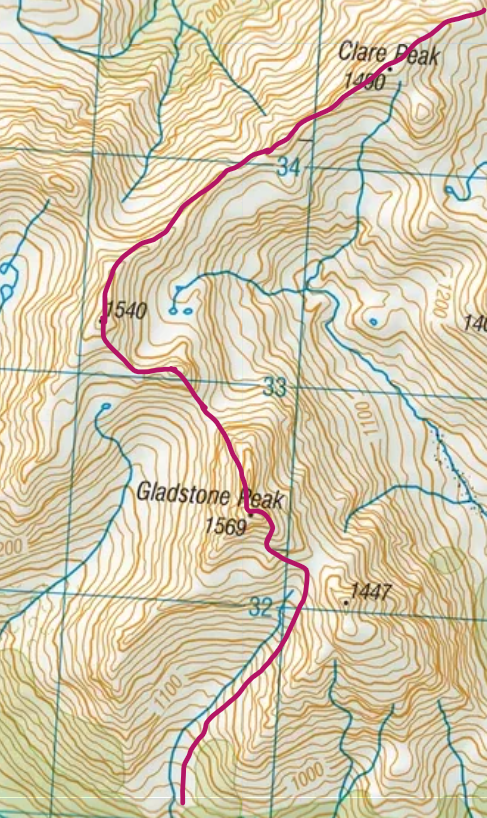
Our line from Princhester Saddle Route up to Clare Peak
Once up to the 1221m high point, it was really nice ridge travel along to Clare Peak. I can imagine on a very windy day this could be challenging!
Carrying on past Clare Peak around to the base of Gladstone continued to be nice ridge travel with a few rocky sections easy enough to get through.
Ridge travel between Clare Peak and Gladstone Peak
Topo – our line from Clare Peak to Gladstone Peak
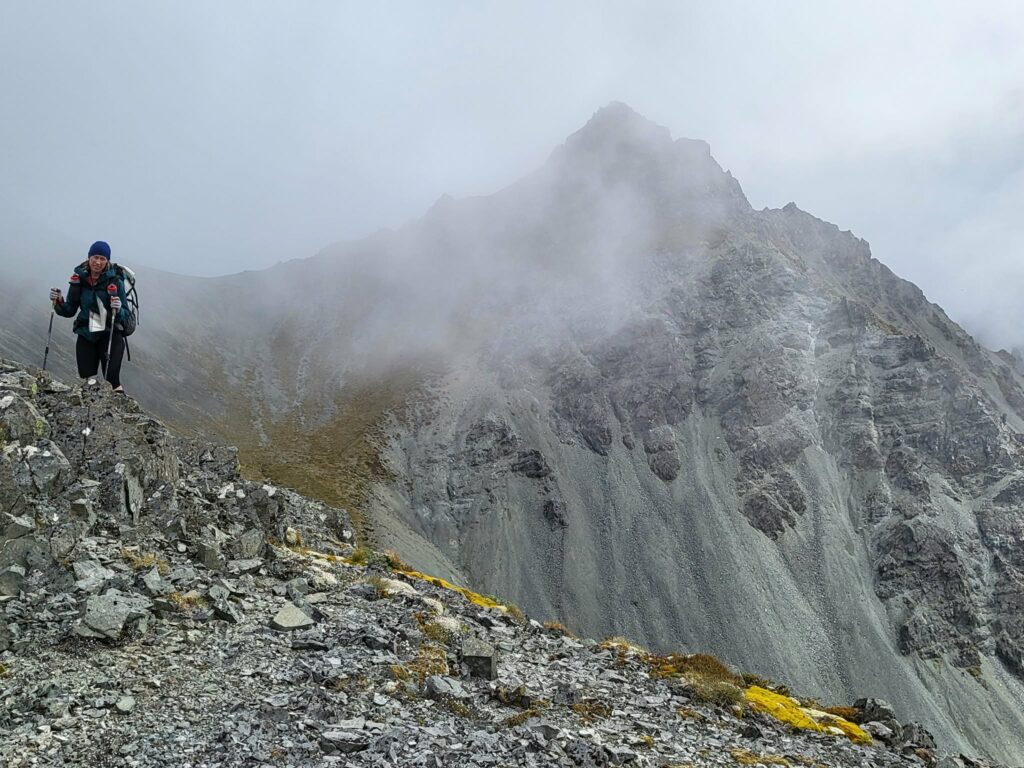
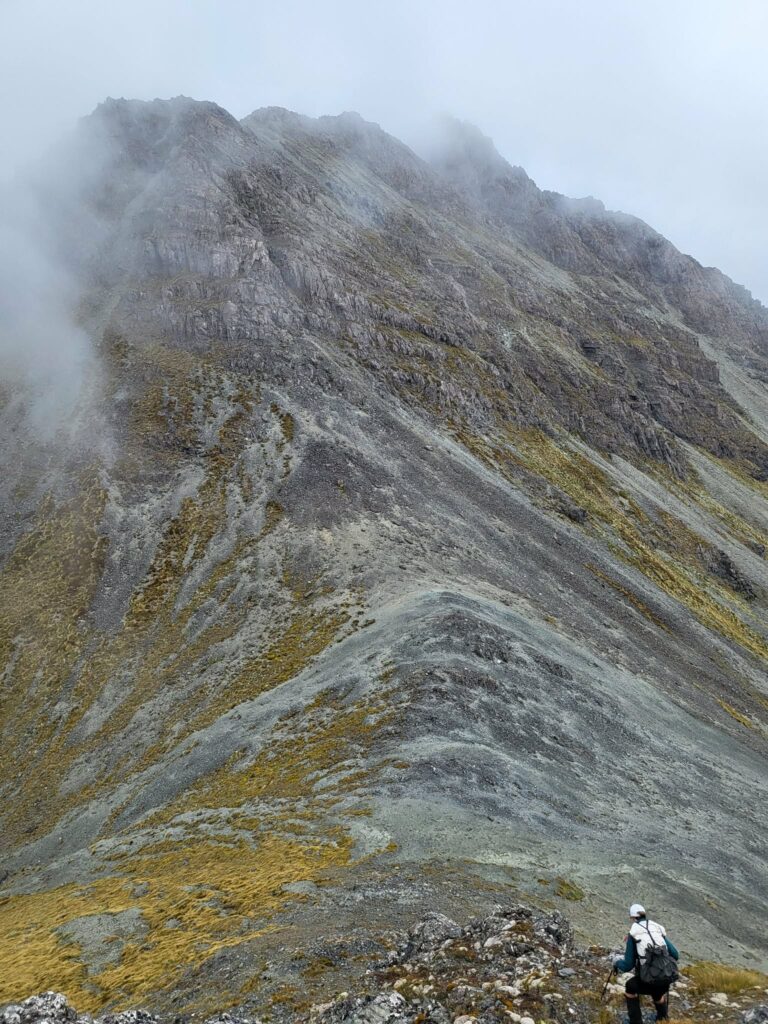
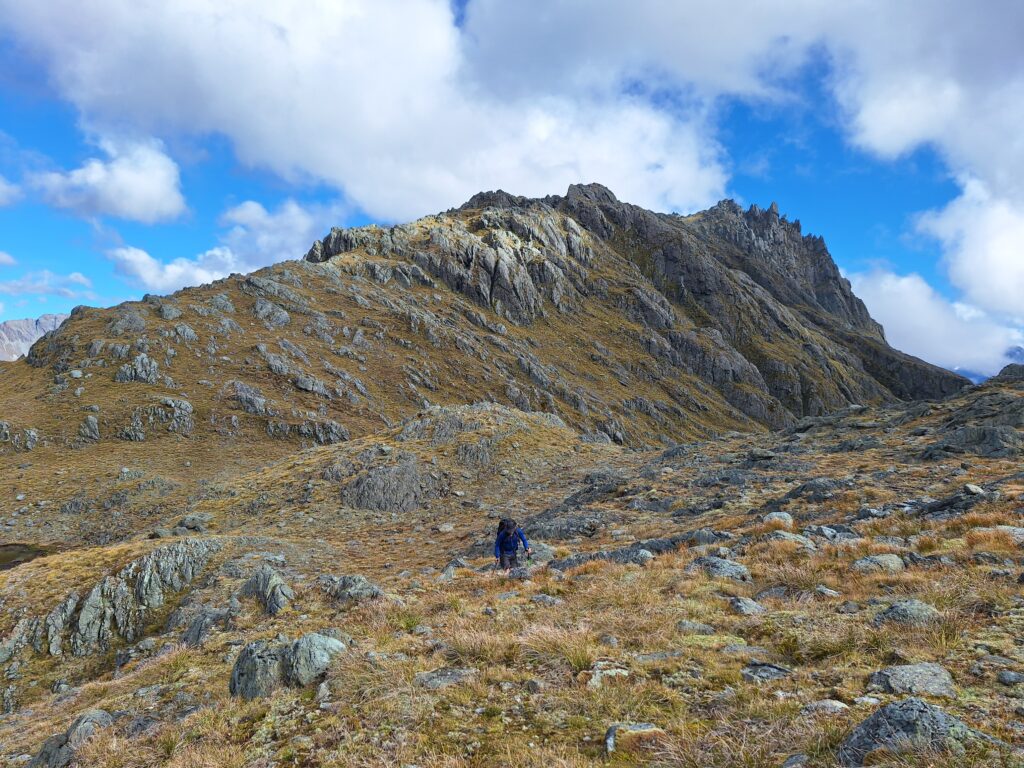
Initially Gladstone appeared a little intimidating – it was definitely a step up in the scrambling level from what we’d done so far. We opted to approach it from the NW following weaknesses in the rock to the top. There were some definite ‘hands and feet’ moves towards the top but it was all ok.
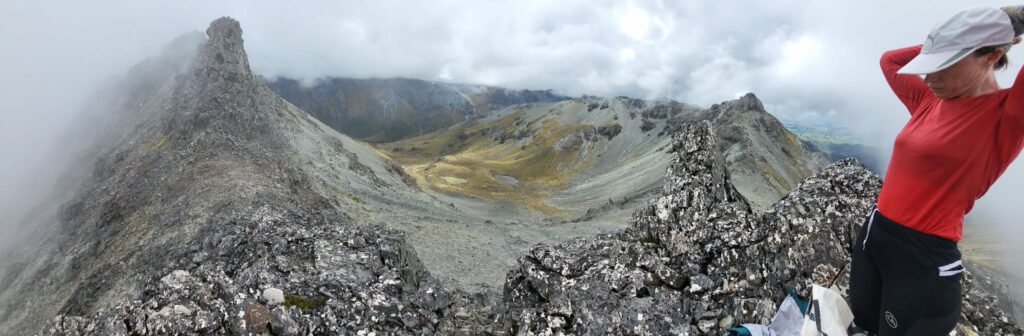
Approaching Gladstone Peak
On arrival to the top of Gladstone Peak, visibility had reduced a lot which made it tricky to make a good call on how to get down to the saddle ahead. It was very bluffy immediately in front of us and looking south. We ended up finding a good way by heading off the peak NE before coming back around and down to the saddle. Getting down off Gladstone Peak at the top, was probably the spiciest part of the trip for us.
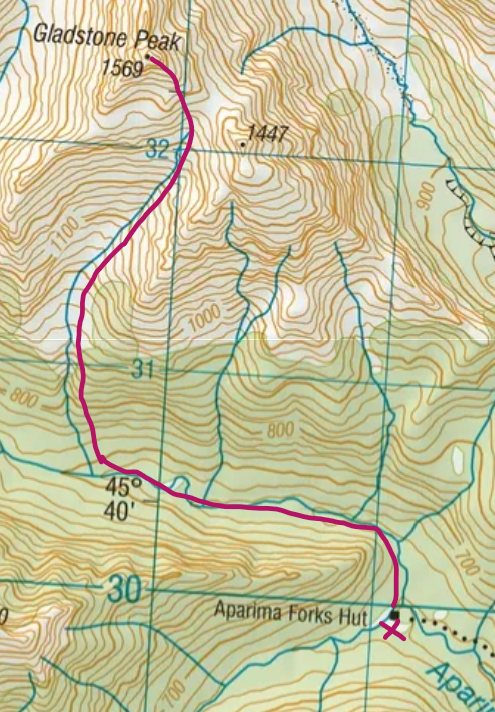
Our line from Gladstone to Aparima Forks Hut
Once we got to the saddle SE of Gladstone, travel down to the valley floor was pleasant and straight forward. The bush was relatively open and ok to get through.
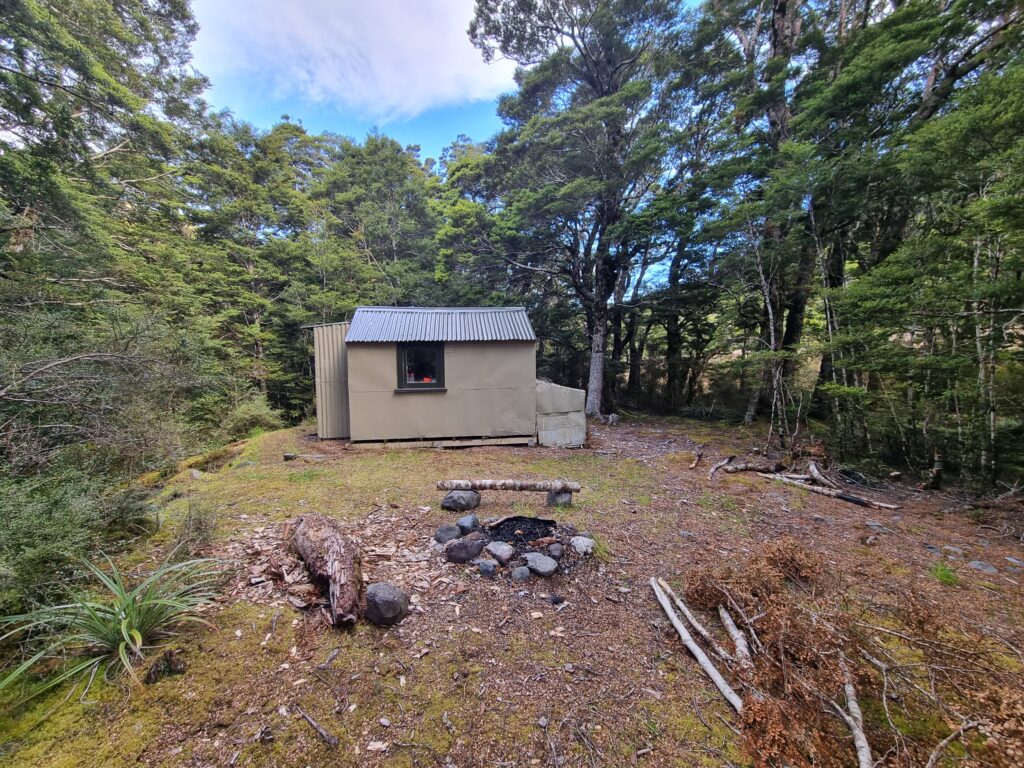
We were greeted by the super cute Aparima Forks Hut and enjoyed the rest and food after a big day.
Aparima Forks Hut
After a pleasant stay in the hut (thankfully with good sandfly protection), we spent the next day on the trails headed back to Lower Princhester Hut.
A great little loop with some interesting navigation and ridge travel.
A memorable 3 day / 2 night circuit with a glacier highlight and alpine lakes.
We started and finished at the Route Burn track car pack (Glenorchy end).
Day 1 – Routeburn track / Serpentine Range (19kms – ish)
We left around 10am and aimed to reach some tarns for our first camp at the north end of Serpentine range, arriving around 6pm going at a moderate pace.
Day 1 Topo – from Routeburn track car park to the tarn on Serpentine Range
The hike up the Route Burn to Harris saddle is easy walking on the trail before heading off up through Valley of the Trolls (an obvious trail here), via Lake Wilson, and along Serpentine range.
Day 1 – Lake Wilson
Day 1 – Looking back to a tarn and Lake Wilson
There were a couple of little sections closer to the tarns that had some steep down climbing but nothing too extreme / exposed.
Day 1 – Serpentine Range
Day 1 – Camping at a tarn, Serpentine Range
We opted to camp at the first major tarn on the Range as you didn’t need to descend quite as low as the upcoming second tarn (although it did look nice passing by the next day).
Day 2 – Serpentine Range to Park Pass Glacier (16km-ish)
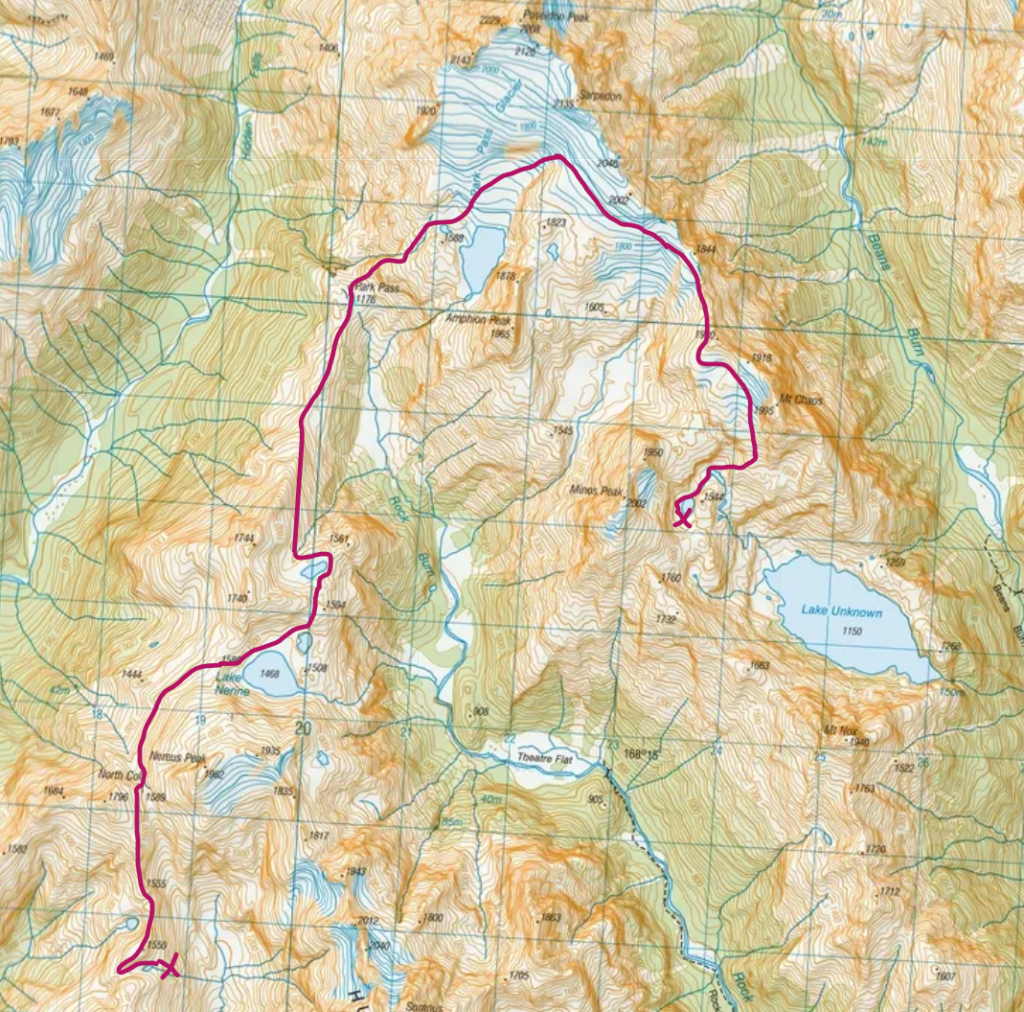
The highlight day from Serpentine Range via Lake Nerine and Park Pass Glacier to camp at some high tarns above Lake Unknown. We departed around 8am and arrived around 7pm.
Day 2 – Topo from Serpentine Range via Park Pass Glacier to some high tarns for camp
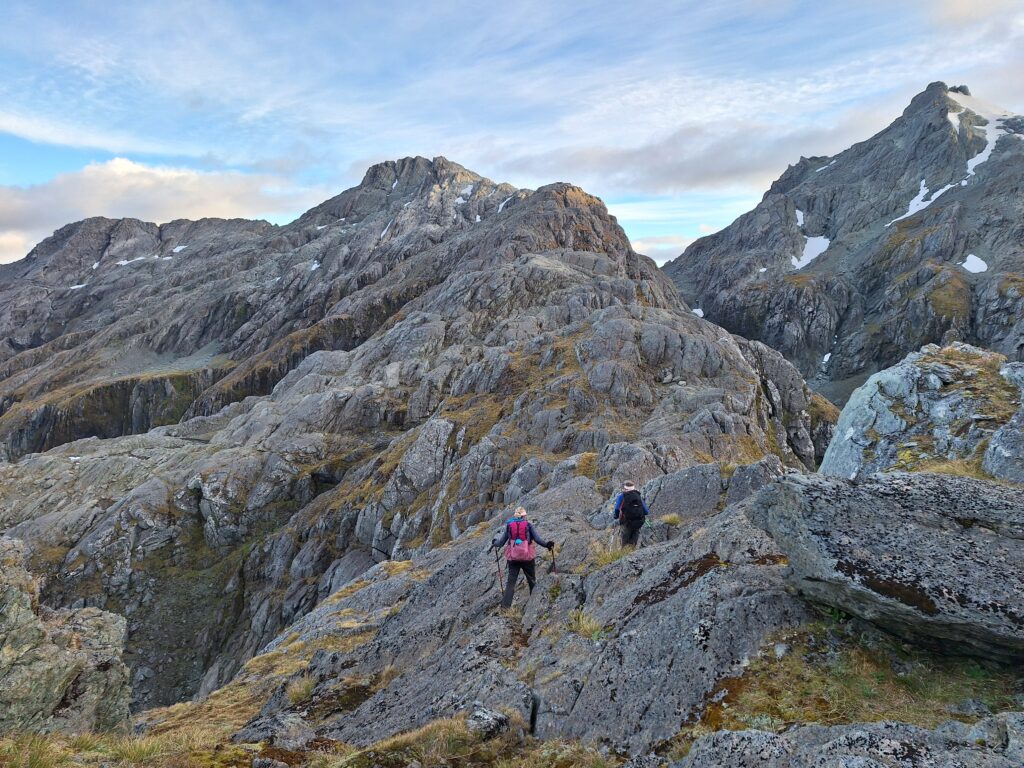
Hiking the rest of Serpentine Range was really nice terrain. Great rock and views, a nice scramble. We thought it would get steep getting down to North Col but there was a nice ledge system and plenty of cairns.
Day 2 – Serpentine Range, nearing North Col (in the distance)
Day 2 – Serpentine Range views down to Route Burn North branch – super scenic
The hike from North Col around to Lake Nerine had good views but a bit of bouldery sidling to get through. Dropping a good 100m of altitude from the Col to make your way around worked well for us.
For those that ever did Godzone chapter 7 coming up Hidden Falls – the views from this part of the hike serve as a reminder of the suffering that occurred in that valley in the middle of the night, ha.
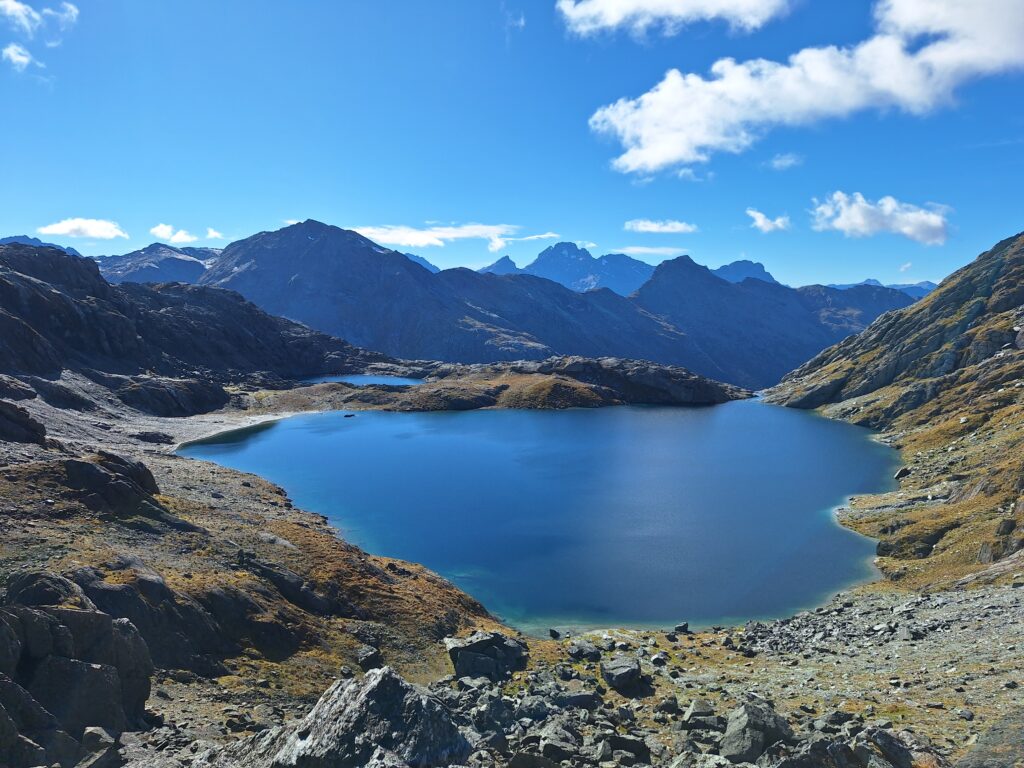
Arriving at Lake Nerine is super beautiful. We camped here on a prior trip, but this time we had a mission to get beyond Park Pass Glacier so didn’t hang about too long. We got cloud-free views this trip though!
Day 2 – Lake Nerine
Having been up to Park Pass a few times before, it was great to get into new territory and head up to the lake below Park Pass Glacier.
Day 2 – Heading up from Park Pass to the Glacier with Hidden Falls (aka trauma valley) in the background
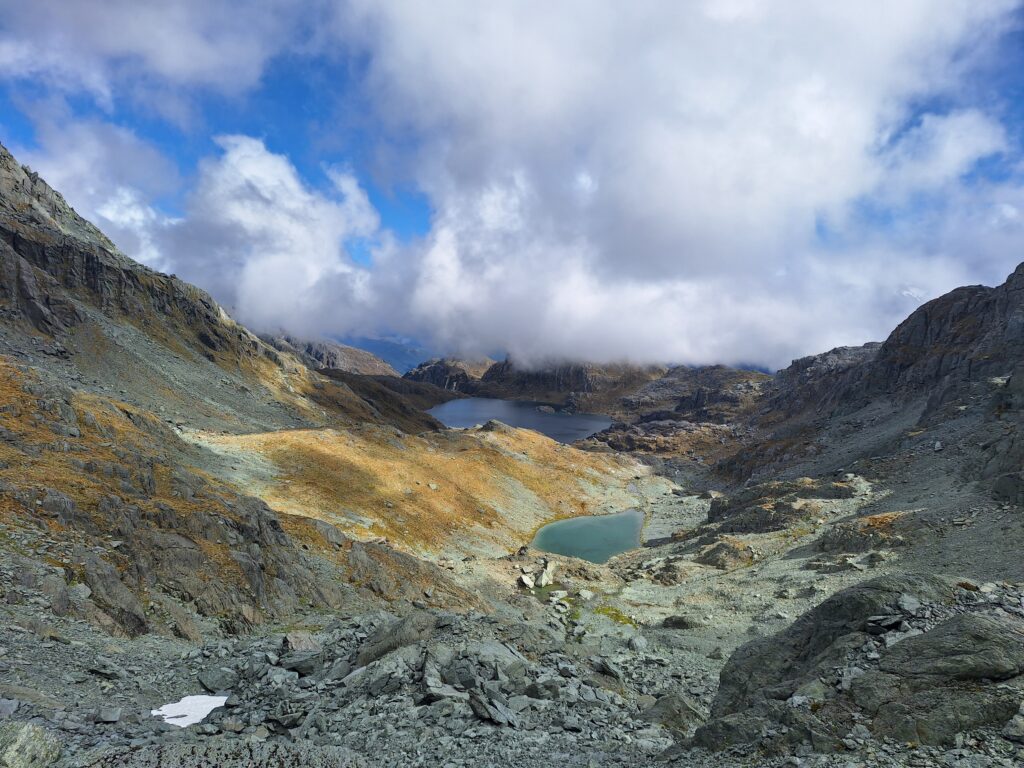
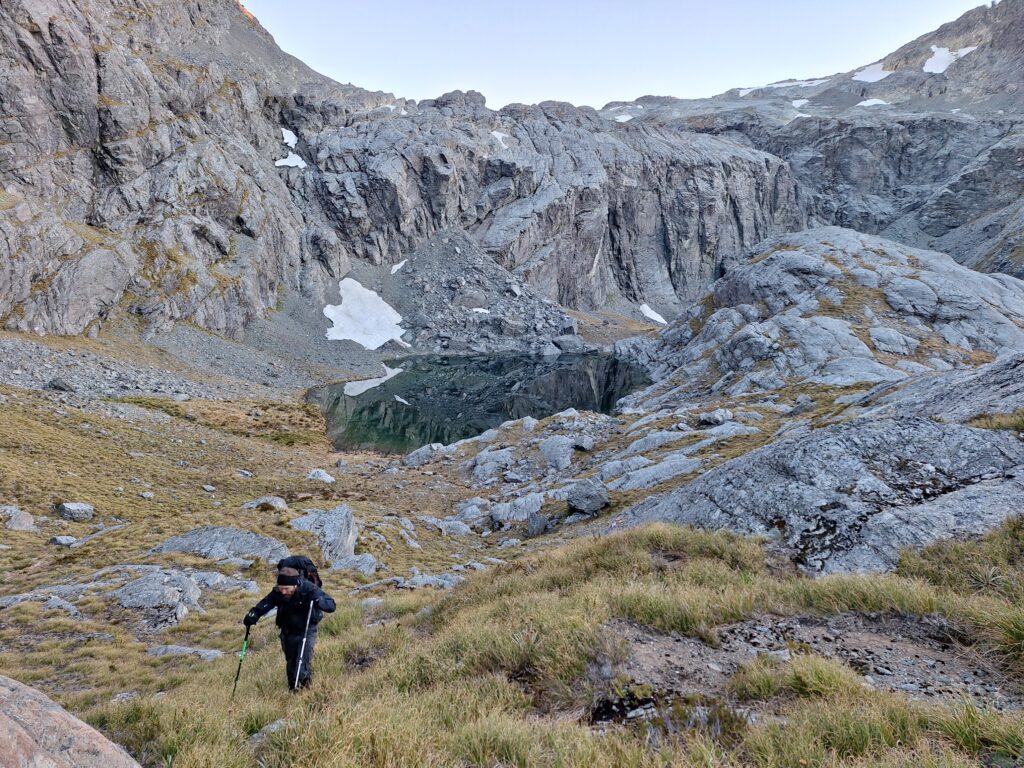
Day 2 – Arriving below Park Pass Glacier at the tarn (next to the large Lake, not in view yet)
We had originally planned to head up the main Park Pass Glacier to around 1880-1900m elevation and then follow this above the cliff band over the alpine lake. However, we were conscious of day light and options for a more time-efficient line. We spotted a viable way heading up to the Glacier, travelling in a NE direction below the cliff band up to that same elevation, which saved a little distance and time.
Getting past the Lake and up onto the glacier was probably the riskiest part of the trip on this occasion. Largely because on the sharp, bouldery rocks we had to navigate around and over (not shown). The rock was a bit loose here, so you didn’t want to trust anything entirely. We took it with care to avoid unnecessary trips and rock movement.
Arriving up on the Glacier was a highlight of the trip – the views were particularly amazing, and we knew we would now make our intended camp spot.
If things had taken longer than we planned, our fall back option was to return to back down to the lake before Park Pass Glacier, camp there, and hike down via Park Pass / Rock Burn the next day.
Day 2 – Park Pass Glacier around 1880m
Hiking from Park Pass Glacier around and under Mt Chaos and down to our tarn for camp #2 was 100% excellent. It was a nice rest from the elevation gain on the trip so far, the rock quality was good, and the snow was nice and firm for fast travel. We had crampons, an axe, and a glacier rope – opting to use crampons and an axe at the time. For a future trip, camping at the tarns below Amphion Peak looked amazing (and potentially giving that peak a go).
Day 2 – View to Amphion Peak from Park Pass Glacier
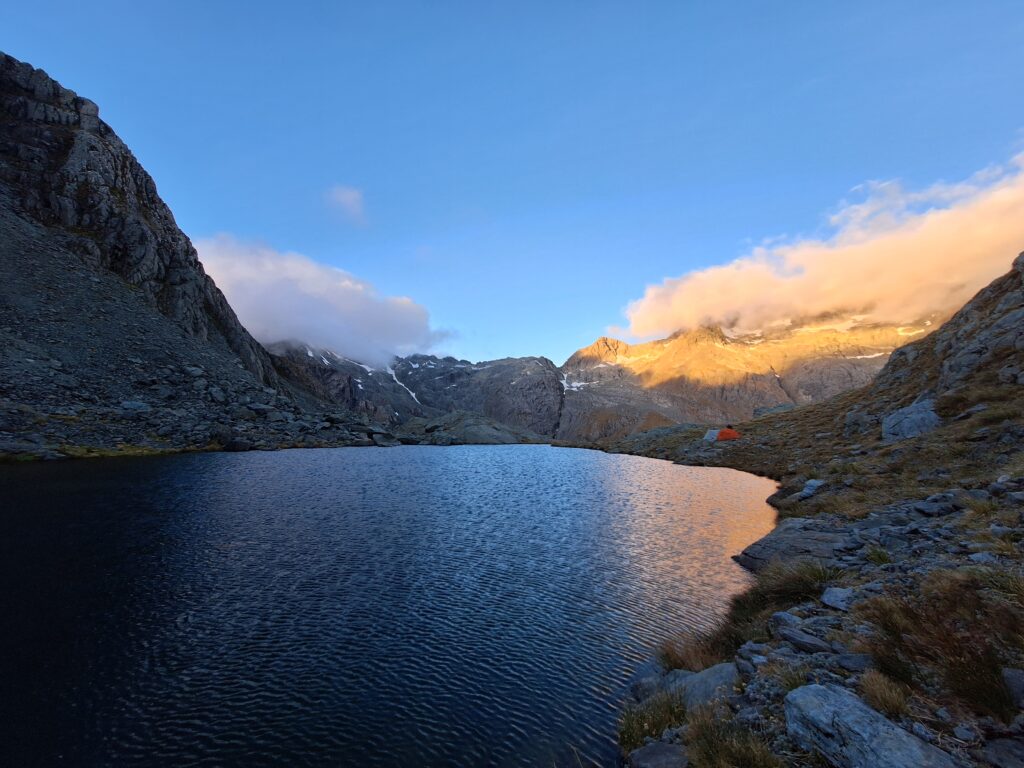
We arrived at our camp spot at some beautiful tarns a bit above Lake Unknown around 7pm, ready for dinner and some camp time.
It was surprising to see a decent chunk of snow break off above the tarn around 8pm at night (i.e., cooler/no sun), we weren’t quite sure what that was about!
It felt a little more secluded here (than the night before) – I’d definitely go back. A surprising number of hares on the rock up there and around the tarns too.
Day 3 – Down to Theatre Flat Rock Burn, over Sugarloaf pass and out (13km-ish)
After a solid sleep and calm night, it was time to head out.
Day 3 – Leaving camp from tarn above Lake Unknown
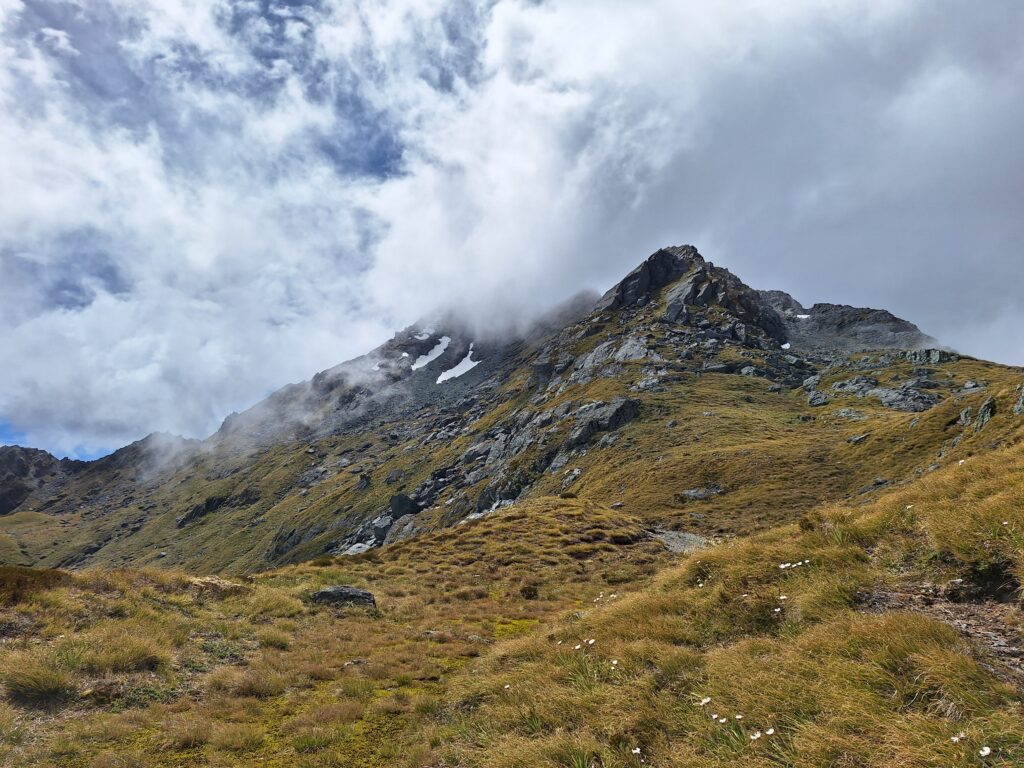
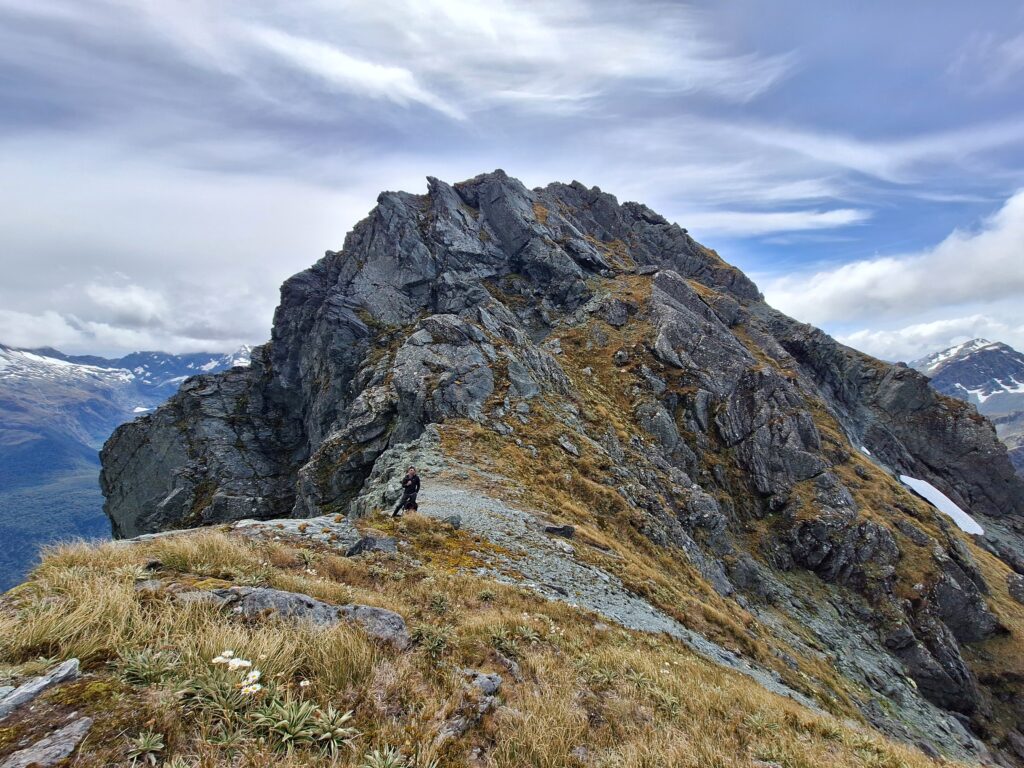
I was a little anxious leaving camp as I wasn’t quite sure how it would feel exposure / slide risk wise getting down to the Rock Burn. Following a recent Fiordland trip in steep terrain, I have a little PTSD around topo map trust (a lot can happen within 20m – and sometimes entirely different things under the canopy line!). Anyhow, turns out it was absolutely all good for us.
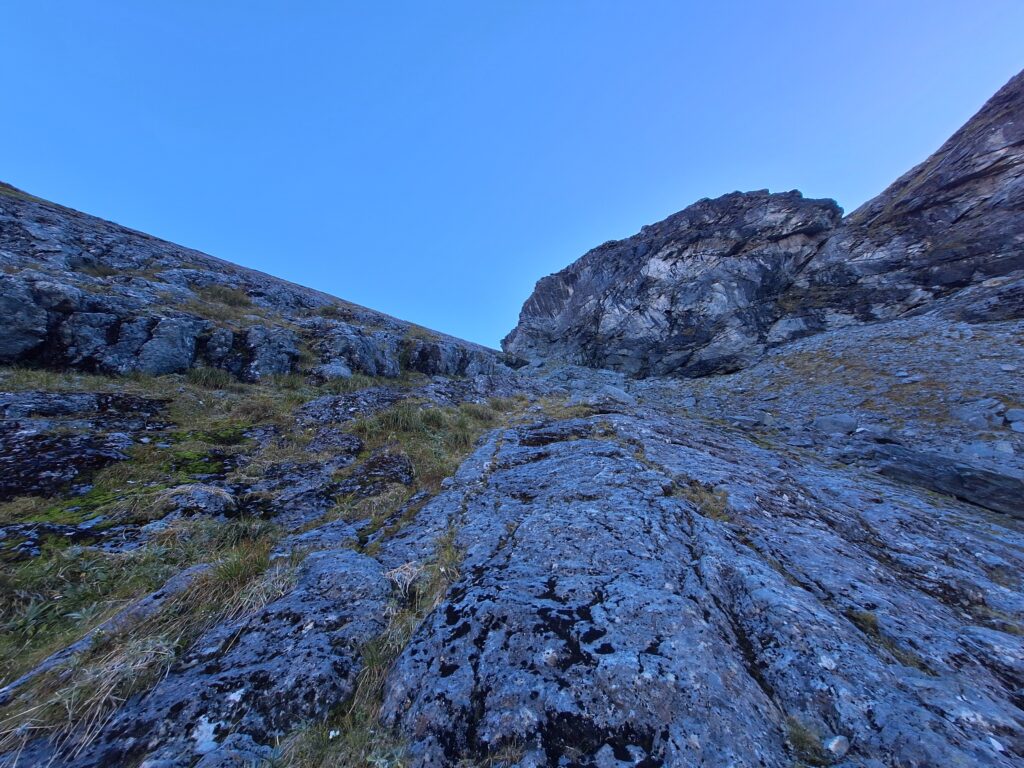
We stayed true right of the ‘creek’. Walking along weaknesses in the slabs in the upper section (between 1450-1500m). We had to do one ‘trust the grip/feet’ move for a few metres but I’m sure there are plenty of ways to avoid that if preferred. If it was raining, I’m not sure it would have felt that great on those slabs. We could see a way down the gut on true left hugging the bluffs on true left (around 1450m-1500m) – possibly that would have been the way to go in the wet to avoid slabs before crossing back to true right a bit further down.
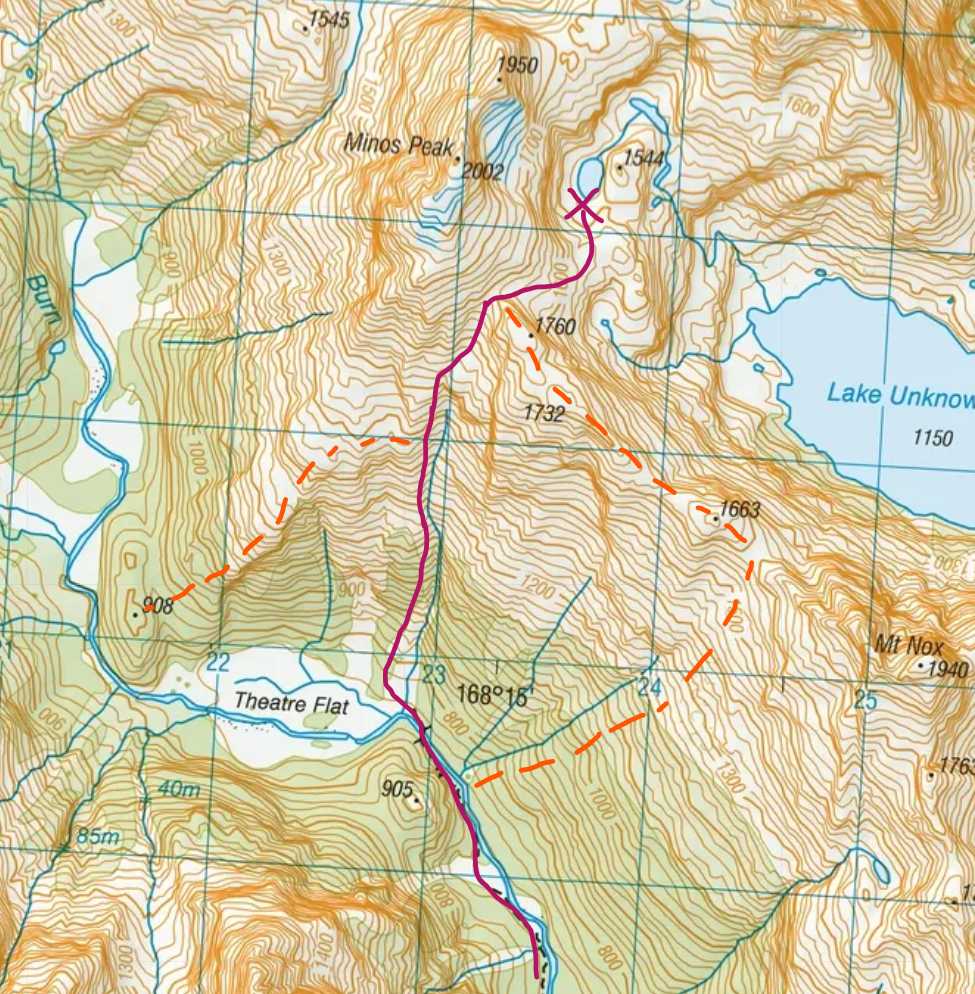
On the topo below is the line we took, and a couple of other dotted lines I heard that others have done. I understand the ridge to pt 908 could be the most straight forward (as was out intended way down), but as we got into following the creek straight down – it felt very comfortable for us and more direct, so we stuck with that. The most niggly bit was closer to the bottom navigating around a respectable bluff. We saw some tracks from others going along overhanging stuff in the bush that we weren’t up for, so we found another way down by coming a bit closer to the river that was great (a little bushy, but safe). We left camp around 8am and got to Theatre Flat about 11am.
Day 3 – our line down to the Rock Burn, we originally considered to point 908m, and heard there is a line down from the saddle south of 1663m.
Day 3 – looking up at the ‘gut’ around 1450-1500m between the slabs on true right (we came down) and the bluffs on true left
Day 3 – our route down from camp #2 to the Rock Burn (Theatre Flat)
Day 3 – topo of our route from Theatre Flat Rock Burn out to the Route Burn track car pack
The rest of the walk was on the Rock Burn track and up over Sugarloaf Pass which we’ve done a few times before. A scenic walk, but a bit of a plod after all the interesting previous navigation choices.
We got to the car around 4pm which was perfect timing for a stop via the Glenorchy pub before heading home.
Ocean Peak, off the Routeburn trail can be completed in a day from either end of the trail – for a fit scrambler at least!
We traversed over Ocean Peak from the Route Burn track Hollyford entrance, coming down to Harris saddle, before a bivvy in the Valley of Trolls on Day 1. Day 2 we did some further ‘tops exploring’ in that area before exiting back along the Route Burn track the next day. This trip report focuses on the Ocean Peak traverse from Day 1.
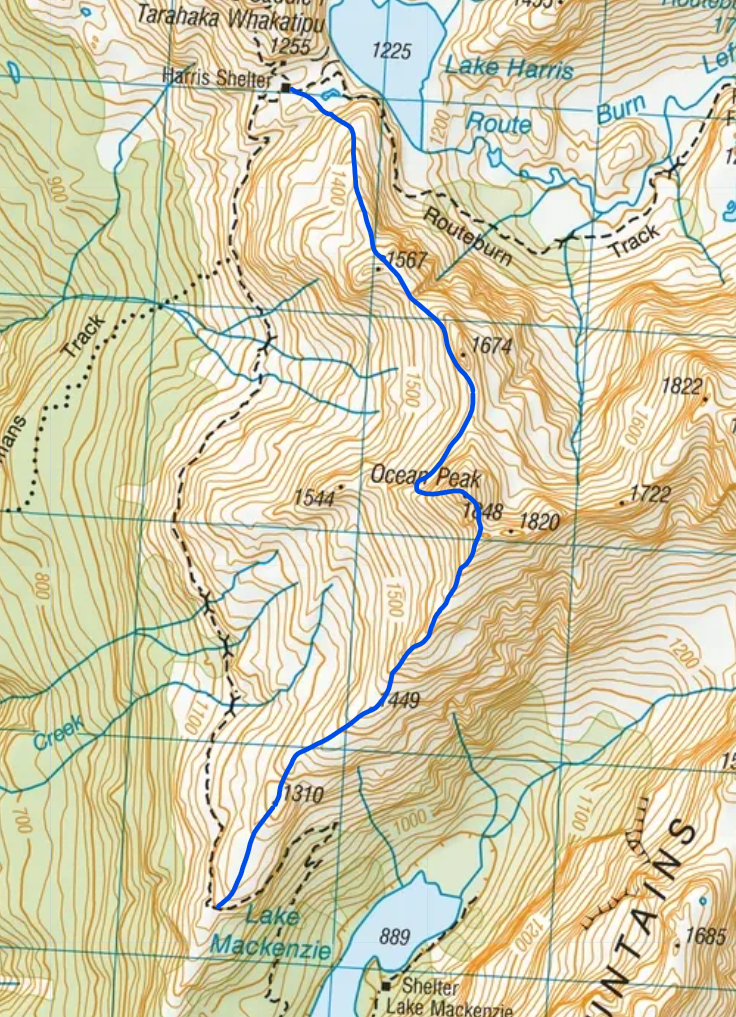
Hike from the Route Burn track start to Lake McKenzie hut is around 10kms of easy walking on the Great Walk trail. A further 2 kms from the hut brings you at an obvious ridge heading NE up to Ocean Peak (see topo below). There is a noticeable track here from prior scramblers heading onto the ridge from the Route Burn track (around 1200m).
Head up the ridge past points 1310, 1449m and up past the 1600m elevation line.
View up ridge to Ocean Peak (in cloud) – around 1449m.
From here we meandered left and right of the ridge. If you prefer more straight-forward walking, it looks like staying right of the ridge heading up was good. We hit the saddle between 1820m on the right, and Ocean Peak 1848m on the left (see pic below).
Around 1800m saddle point between Ocean Peak (shown) and 1820m.
We ascended the right-hand side of the ridge from here (see grassy ledge above, before transitioning to the rock) to reach the top of Ocean peak. The Peak has great views out to the West Coast.
The West Coast Ocean view from Ocean Peak.
Getting down off Ocean Peak could be as easy or difficult as you want it to be. We opted for nothing too exposed and walked off the Peak on the west, probably dropping to around 1600-1650m before traversing under bluffs to the obvious saddle between Ocean Peak and 1674m.
There is probably a way to stay on the ridge the whole way down to Harris Saddle. We opted to sidle West of point 1674m before coming to the saddle before 1567m. There was a bit of a ravine at this saddle to navigate through, before climbing back up to 1567m and down.
We did a straight line from around 1400m to Harris saddle – in hindsight it may have been easier/possible to continue on the ridge and intersect the Route Burn track before turning left and back along to Harris saddle. There was a steep section to get through the line we chose, from around 1300m to Harris saddle.
For anyone that wanted to make this a (big) day trip, it is easy enough to hike out from here back to the road end (roughly 16kms from Harris saddle). Total distance if doing as day trip would be around 32kms-ish, with around 1350m gain (excluding undulations).
See our route on the topo below for the off-track traverse over Ocean Peak.